
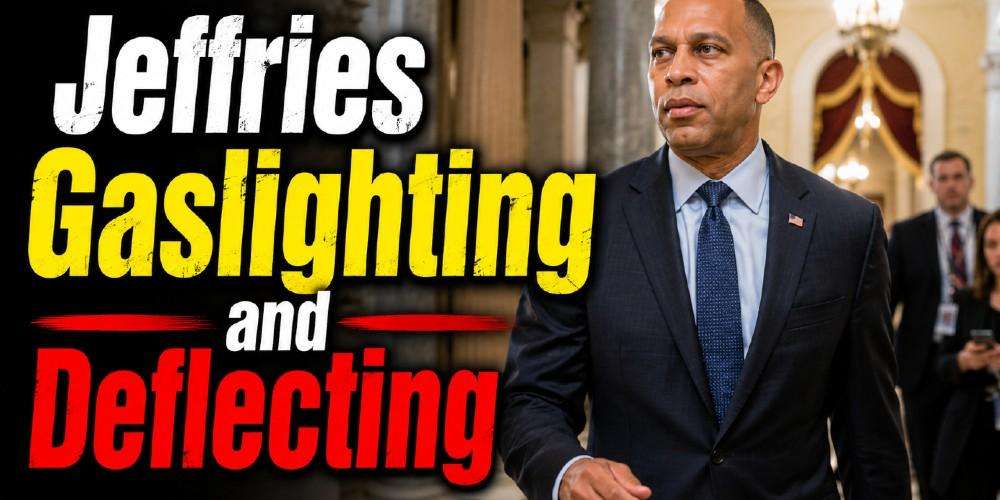

Hakeem Jeffries contradicted himself in public, dismissing President Trump’s concerns about voter fraud in Los Angeles as a conspiracy while days later accusing Republicans of plotting to steal the midterms, and we . This piece walks through that clash of statements, points out the obvious double standard, and explains why the pattern matters for voters and for fair media coverage.
In one interview Jeffries waved off concerns about ballot integrity in Los Angeles as baseless, treating those worries like a fringe theory not worth attention, and that dismissal was presented as if facts were already settled. From a Republican perspective, that tone is striking because it demands certainty when critics point to problems but offers none when making counterclaims. The complaint here isn’t about civil disagreement; it’s about expectating strict proof for one side while allowing the other to sling accusations without evidence.
https://x.com/WesternLensman/status/2065032939981746551
Then, less than two days later, Jeffries went on camera and accused Republicans of scheming to steal the midterm elections, making a serious charge with no public evidence to back it up. It’s an exact inversion of his earlier posture, and anyone paying attention sees the inconsistency: one standard for Trump’s concerns and another for his own accusations. That kind of selective skepticism looks less like principled inquiry and more like political theater designed to shape headlines instead of illuminate facts.
What we’re watching is a classic play from the modern political playbook: project what you’re doing onto the other side, shout louder than the questions, and let the media decide which version gets oxygen. When your party can’t run on results, you pivot to fear and allegation, and casting doubt is the tool of choice. Voters deserve better than a duel of unproven claims and emotional appeals that substitute for transparency and hard answers.
In this video, JD breaks down both interviews side by side so you can see the contradiction for yourself. Jason and others lay out timestamps, quotes, and the mismatch in tone so the inconsistency isn’t just a talking point but a documented pattern. Watching both clips back-to-back makes the rhetorical sleight of hand obvious, and it shows why insisting on consistent standards for evidence matters in a democracy.
Media outlets that treat one set of claims as dispositive and the other as speculative are complicit in the confusion, and that tilt erodes trust across the board. If journalists apply different thresholds for proof depending on who’s speaking, the public is left to sort truth from spin without a reliable referee. Republicans should press for uniform scrutiny so accusations and denials are both treated with the same demand for verification.
The stakes go beyond talking points; this behavior corrodes confidence in election systems and in the institutions that are supposed to protect them. Citizens who see elite figures change standards on the fly will naturally distrust the process, and that cynicism is fuel for angry, polarized civic life. Holding everyone to an even evidentiary bar isn’t just fair, it’s essential to preserving willingness to accept outcomes and to participate in future elections.
Call it hypocrisy, projection, or plain politics, but the remedy is straightforward: ask for proof and insist the press do its job. Demand explicit evidence when allegations are floated, and require the same level of skepticism when dismissals are offered as final answers. That’s how you keep public debate honest and how voters can tell when they are being informed rather than manipulated.




You must be logged in to post a comment Login