
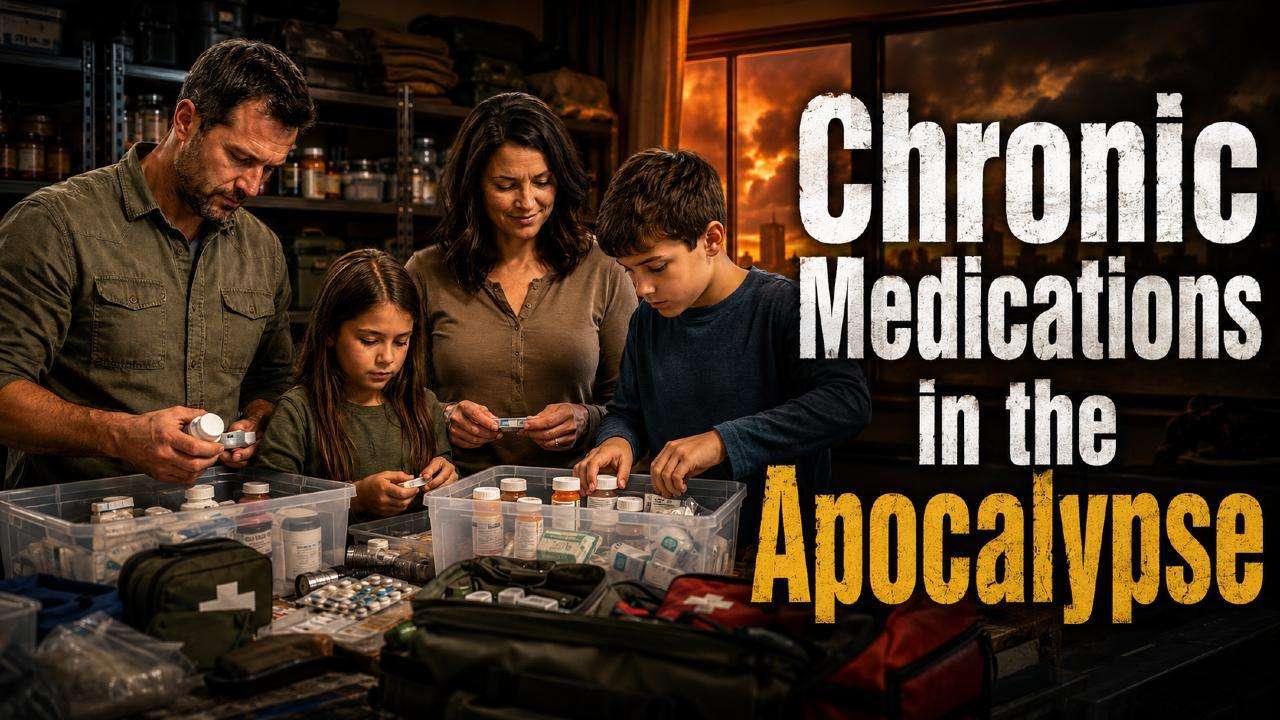

This article presses a simple point: medication dependence is a prepper vulnerability that rarely gets the focus it deserves, and there are practical strategies to manage it now. You will read how to talk to your doctor, use telehealth and compounding pharmacies, research natural alternatives, consider international access and veterinary overlaps, and reduce dependency through lifestyle. Each option has tradeoffs, so the goal is to build layers of protection long before a crisis arrives.
Most prepping conversations land on food, water, shelter, and security, which makes sense, but daily medications change the calculus completely. Around six in ten American adults live with at least one chronic condition, and many of those people need regular prescriptions to avoid serious harm. A disruption to supply chains or local pharmacy services can turn inconvenience into life-threatening risk, so this is a category that demands its own plan.
Start with plain talk: be honest with your physician about your concerns and about wanting to build an extended, rotating supply of medications. Many clinicians will work with patients to prescribe longer fills where safe, such as 90-day supplies, and to advise on which drugs tolerate extended storage. Proper rotation—always using the oldest stock first and topping up from the front—keeps a reserve viable without waste.
It helps to know that labeled expiration dates are conservative in many cases; a Department of Defense study tested drug lots past their printed dates and found 88 percent remained stable and effective. Storage matters: cool, dry, dark, and sealed conditions extend chemical stability significantly. Ask your doctor which of your prescriptions are reasonable candidates for longer-term storage rather than guessing on your own.
Telehealth has opened access to clinicians who understand preparedness concerns and can write prescriptions that fit an extended supply strategy. If a local doctor is unwilling to engage, remote services exist that connect patients to physicians more comfortable with long-term planning. These options aren’t a shortcut around good medical judgment, but they can be a practical alternative for people who can’t get the conversation started with their usual provider.
Compounding pharmacies offer another level of flexibility by creating custom formulations tailored to a patient’s needs, which can include preparations better suited to storage or alternate delivery methods. A compounding pharmacist can work with your physician to adjust strength, dosage form, or packaging to improve longevity and usability. Reach out for a referral or look for an accredited compounding pharmacy in your area to discuss possibilities before you need them.
Know your nonprescription alternatives but be cautious: research herbal and nutritional interventions now rather than waiting until the pharmacy is closed. Substances like berberine have been studied for glucose metabolism, hawthorn for cardiovascular support, and magnesium and valerian for sleep and nervous system regulation. These are not direct substitutes for prescribed drugs, but they can be part of a bridge strategy if explored with a clinician who understands integrative care.
International pharmacy access is another layer to consider, because regulation and availability differ widely across borders. In some countries medications are dispensed more readily and may be chemically identical to U.S. products, so short trips or vetted international suppliers can sometimes supplement a household reserve. Treat this avenue with caution: verify legitimacy, understand import rules, and use it as one component of a broader preparedness plan rather than the sole fix.
This option requires the clearest disclaimer of all: this is informational, not a recommendation, and nothing here should be acted on without thorough research and ideally professional guidance. In extreme scenarios people have discussed veterinary and agricultural pharmaceuticals as contingencies because some formulations share active ingredients with human drugs. The risks are real—dosing, purity, and oversight differ—and those realities must factor into any decision made under pressure.
One of the most productive paths is to reduce drug dependence through sustained lifestyle changes that support health across the board. Improvements in diet, regular physical activity, better sleep, stress management, and weight control can all lessen the need for medication in many chronic conditions. Work with your healthcare team to set achievable goals so you gain resilience that actually reduces vulnerability if access to pharmaceuticals becomes constrained.
Time is the resource you most need: none of these strategies work as a last-minute fix. Start conversations with clinicians, establish relationships with pharmacists who understand long-term storage, and layer multiple approaches so you are not reliant on a single source. Building reserves, backups, and healthier habits now gives you options later when options matter most.
Nothing in this article constitutes medical advice. Consult a licensed physician before making any changes to your medication regimen.






You must be logged in to post a comment Login