
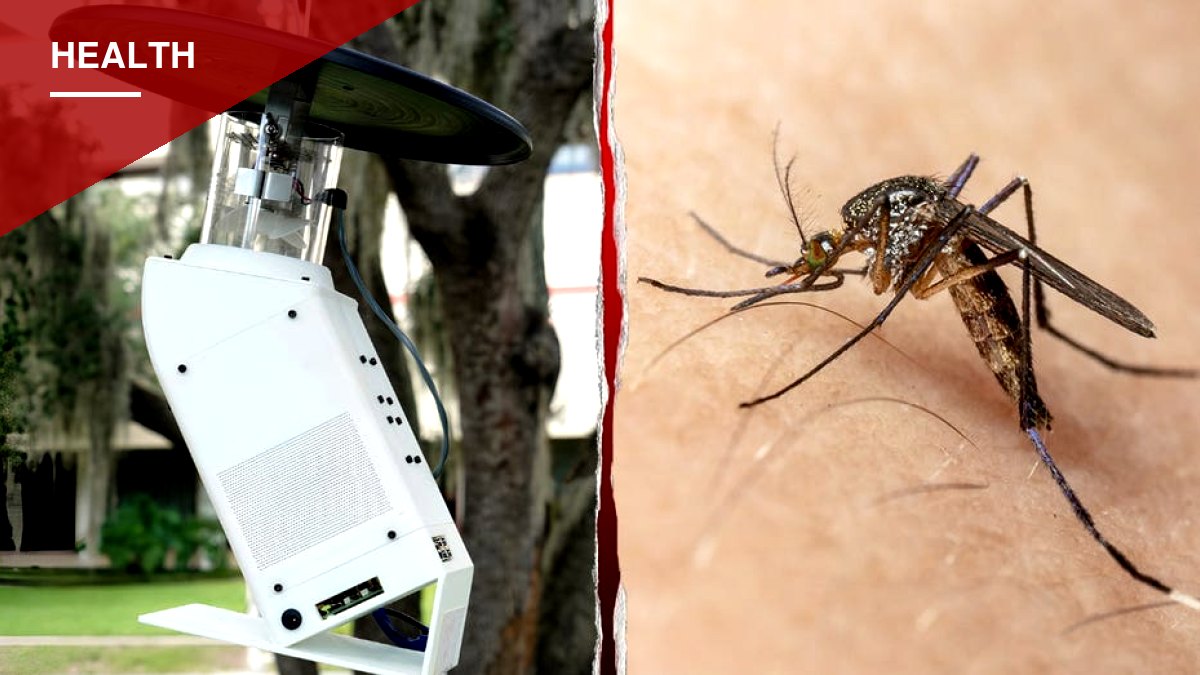

As Hillsborough County battles its largest dengue outbreak on record, researchers at the University of South Florida have built an AI-powered mosquito trap that can identify dangerous mosquito species with more than 98% accuracy in laboratory testing, potentially giving local health officials a faster way to track the disease’s spread.
According to the Florida Department of Health’s latest weekly surveillance report, Hillsborough County has recorded 407 locally acquired dengue cases in 2026, while the state as a whole has reported 524 locally acquired cases through October 31. Locally acquired means people were infected by mosquitoes in Florida rather than while traveling abroad.
On November 13, Hillsborough County extended its state of local emergency through November 19, with mosquito control crews ramping up aerial and ground treatments. County officials say ongoing surveillance continues to detect dengue virus activity in neighborhoods across the area. Dengue can cause high fever, severe headaches and intense muscle pain, and in serious cases can lead to life-threatening complications.
The new trap technology comes from Digitomy, a startup founded by USF Associate Professor Ryan Carney and Professor Sriram Chellappan, who have been developing the system since 2018. The device can be hung from a tree branch or set on the ground, using light or bait to draw mosquitoes in, where a small fan pulls them onto a sticky pad. Two built-in cameras photograph the insects, and artificial intelligence compares the images against a large database to identify the species, along with whether a mosquito is male or female and whether it has recently fed on blood.
Traditional mosquito surveillance can take two to three days because specialists must often examine captured insects under a microscope. Digitomy’s system aims to identify species the same day using AI and cloud computing, which could help mosquito control teams move more quickly to areas where dangerous species are detected.
That speed matters most for Aedes aegypti, the species primarily responsible for spreading dengue in Florida. The trap identifies which mosquito species have been captured, but it does not confirm that a given mosquito is actually infected with dengue — that still requires laboratory testing.
Digitomy can feed its identification data into a mapping dashboard that lets mosquito control teams see where certain species are turning up. The information has already been integrated into a private layer of the researchers’ Global Mosquito Observations Dashboard, which also draws on more than half a million citizen science reports, and could work alongside an existing early warning system Carney developed for dengue and West Nile virus.
The startup has tested its technology at USF and worked with the Anastasia Mosquito Control District in St. Johns County, which covers St. Augustine. Field validation is also planned for Hillsborough County, where the outbreak has been most severe. Digitomy is working with USF’s Technology Transfer office to license the AI system to established mosquito trap manufacturers, and received a $25,000 grant from the USF Research Foundation’s Bull Ring Accelerator in summer 2026 to help with commercialization. No consumer launch date or retail price has been announced.
Health officials continue to urge residents to take basic precautions: emptying standing water from flowerpots and other containers, using EPA-registered insect repellent outdoors, and wearing long sleeves and pants to reduce exposed skin.






You must be logged in to post a comment Login