
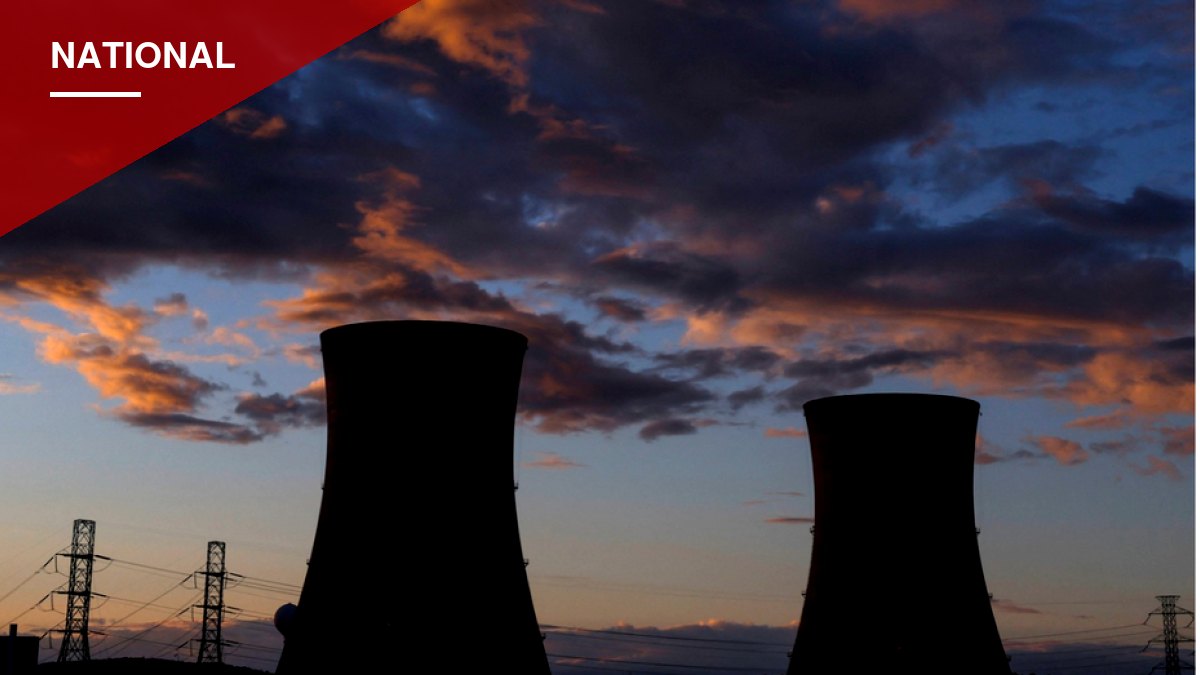

A wave of technology failures across air travel, banking and workplace software last week has reignited warnings from cybersecurity experts that America’s infrastructure is old, fragile and being watched closely by foreign adversaries looking for weaknesses to exploit.
The disruptions began Friday when the Federal Aviation Administration ordered a nationwide ground stop that lasted more than four hours — the longest in 25 years — delaying flights across the country for days afterward. Transportation Secretary Sean Duffy said on “Fox News Sunday” that investigators found no sign of a foreign cyberattack behind the stoppage.
“We think it was the installation or the router that was the bad actor,” Duffy said. “But we’re open, if we see something else, we’re gonna continue to investigate with our federal partners and law enforcement.”
According to the Wall Street Journal, FAA radio sites in El Dorado, Arkansas, and possibly Amarillo, Texas, overloaded the communications system used by air-traffic controllers.
The ground stop was followed by a string of other tech problems. A United Airlines technology failure on Monday delayed departing flights by more than 90 minutes, with no sign of a cybersecurity issue. The National Security Agency reported disruptions to internal systems Tuesday during scheduled maintenance, though officials said critical national security functions kept running. Apple also reported problems Tuesday affecting the App Store, Apple Music and iCloud sign-ins, which it attributed to an internal update.
Separately, a Microsoft Outlook outage lasted nearly 24 hours before being restored Friday morning; Microsoft executive Charles Lamanna said the cause was a previously undetected software defect combined with increased traffic and reduced server capacity. Workday, whose payroll and HR software is used by millions of Americans, also experienced a widespread outage Friday. And on Monday, customers of Chase, Bank of America and Wells Fargo reported trouble accessing online banking, though Chase said accounts and funds remained fully accessible despite transaction delays.
Experts Warn Adversaries Are Watching
Charles Tango, chief strategy officer at cybersecurity firm Hydden, told Fox News Digital that U.S. adversaries already have the capability to deliberately disrupt American infrastructure, and that doing so doesn’t require much sophistication.
“It does not take a lot of sophistication these days to cause this type of attack, especially with the advent of AI, it’s made security attacks much easier and much cheaper, but absolutely other countries like China would have immense capability of impacting our environments,” Tango said. “They’ve spent a lot of time and a lot of effort trying to compromise our critical infrastructure.”
Tango pointed to the Chinese state-sponsored hacking group Volt Typhoon as an example of the threat. Federal cybersecurity agencies warned in 2024 that the group had compromised U.S. energy providers and other critical infrastructure organizations, positioning itself to potentially disrupt essential services during a conflict or crisis.
“Not all warfare needs to be kinetic these days,” Tango said. “A cyber warfare can be very effective. We’ve seen that with Russia and Ukraine. We should be very mindful of the capacities that our adversaries have when it comes to cyber capability.”
Tango said the ground stop illustrates a broader problem: aging systems across U.S. critical infrastructure that create openings for capable adversaries.
“What we saw here is that one very small incident led to a widespread outage. That’s because a lot of these systems are old. They’ve been around for a while. We haven’t invested in upgrading them. And that’s not just for the FAA. That’s across critical infrastructure,” Tango said.
“I mean, the world is watching how we respond to this, and certainly our adversaries are watching this very, very closely,” he added.
Concerns Beyond Aviation
Michael Balboni, a former New York homeland security adviser who also served as a trustee of the New York Power Authority and is now president of Adelphi University, said officials have long been concerned about foreign adversaries accessing American power grids.
“We had reports and information that, in fact, adversaries were in the grids across the country,” Balboni told Fox News Digital. “And that, again, had been there for years. The question becomes, what is their capability?”
Balboni described the stakes in stark terms. “Imagine taking out all the traffic lights in a major city,” he said. “Imagine having the power go off to a hospital. Now, most hospitals have generators, but what if they don’t come back on?”





You must be logged in to post a comment Login