
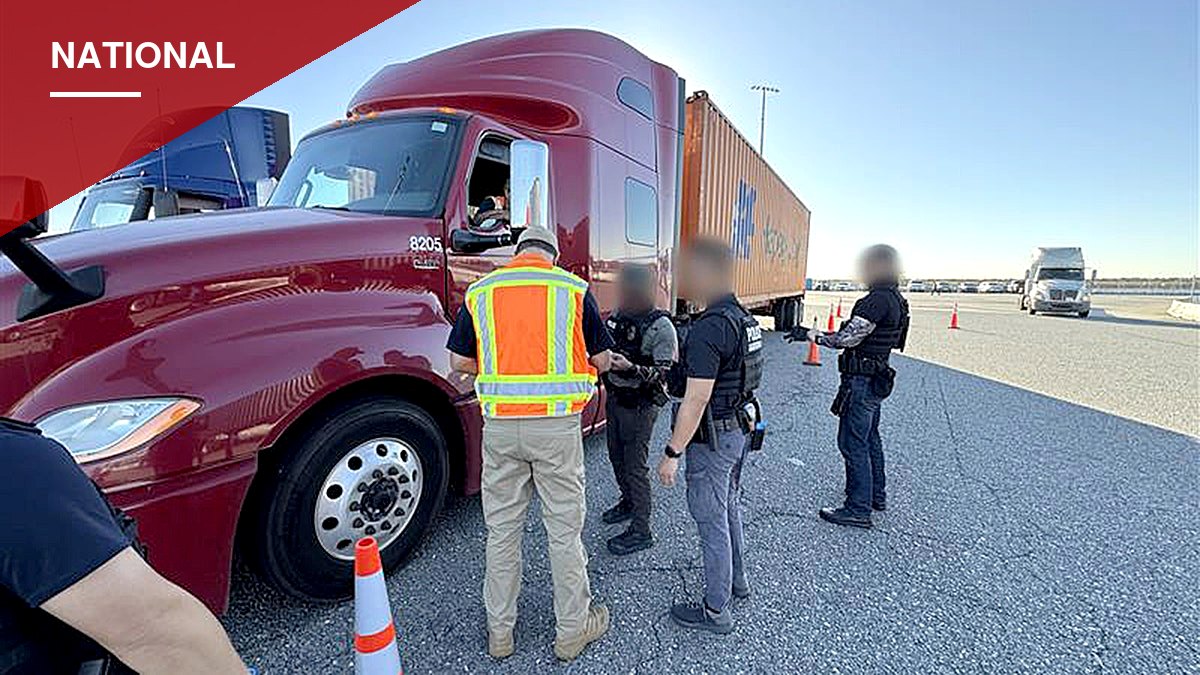

A series of fatal highway crashes involving foreign nationals driving without legitimate documentation has prompted the Trump administration to launch a nationwide investigation into how state motor vehicle agencies issue licenses, including commercial driver’s licenses, to people who are in the country illegally.
The scrutiny intensified after the October 16 death of Ryan O’Shea, a 21-year-old University of New Haven hockey captain studying criminal justice. O’Shea was killed instantly when a pickup truck traveling the wrong way on Connecticut’s Interstate 91 struck his car head-on while he was driving home from a hockey game. Police say the other driver was Guillermo Carmona-Lopez, a Mexican national whom the Department of Homeland Security says had already been removed from the United States twice before the crash.
O’Shea’s death followed other fatal crashes elsewhere in the country involving foreign drivers. In July, Uzbek national Bekhzod Asrarov, who had entered the U.S. legally and held an Ohio commercial driver’s license, allegedly struck and killed 21-year-old college soccer player Tobias “Toby” Forsythe when his tractor-trailer hit Forsythe’s car. Investigators said Asrarov could not communicate with police without using Google Translate, failed an English-proficiency test and allegedly tried to conceal evidence, including his electronic driving logs.
On September 2, Indian national Manjit Singh, whom DHS identified as in the country illegally, was involved in another fatal Ohio crash that killed 50-year-old Brenda Watson. Singh held a California commercial driver’s license and has been charged with aggravated vehicular homicide. Ohio has since moved to tighten licensing rules in response.
Federal audit finds widespread fraud
In September 2025, Transportation Secretary Sean Duffy announced emergency restrictions on commercial driver’s licenses issued to foreign nationals after a nationwide audit uncovered what officials described as widespread fraud in how states issue those licenses.
According to that audit, more than half of commercial trucking licenses issued in New York went to drivers who were in the country illegally, and those drivers then operated across the country. In one case cited by investigators, a Chinese national accused of causing a fatal highway pileup in Tennessee had been issued a New York State driver’s license unlawfully.
In California, the audit found that 25% of commercial driver’s licenses were issued unlawfully. The audit also noted that California has a stated policy of not enforcing federal English-proficiency requirements for commercial drivers.
In response, Duffy withheld $73 million in federal funding from New York State, which has refused to comply with the new federal requirements and has sued over the funding dispute. Federal officials have also stood up “Joint Task Force Crossroads of America,” a nationwide initiative targeting fraud and criminal activity connected to commercial driver’s licenses.
The task force began with more than 1,000 leads and has inspected more than 200 driving schools across 23 states, with multiple criminal investigations already opened. Carmona-Lopez, the driver accused in O’Shea’s death, did not hold a commercial driver’s license, underscoring that the scrutiny extends beyond CDLs to standard state-issued licenses as well.
A recent court ruling could expand federal reach
On November 6, Judge Lewis Kaplan issued a ruling ordering New York City to comply with an Immigration and Customs Enforcement subpoena seeking information about migrants with serious criminal histories housed at a Bronx shelter. That ruling has been cited as a potential legal basis for federal subpoenas targeting state DMV records in order to identify people with criminal histories who have obtained driver’s licenses.
At least 17 states and Washington, D.C., both permit people who are in the country illegally to obtain driver’s licenses or driving-privilege cards and operate automatic voter-registration systems tied to license holders, though the extent to which those two policies intersect in practice was not detailed in available reporting.



You must be logged in to post a comment Login