
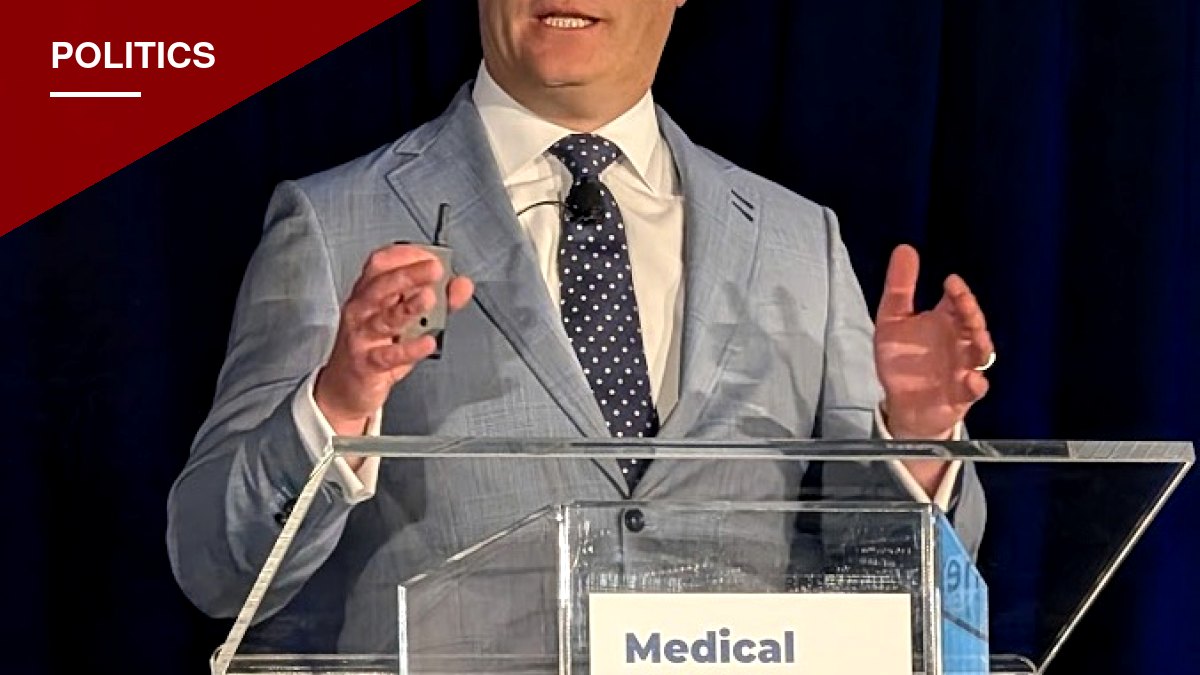

Just over a week after California voters rejected a one-time tax on billionaires, a new push to raise money from the state’s wealthiest residents is already forming — this time aimed at the income tax system rather than personal wealth.
Dustin Corcoran, CEO of the California Medical Association, is exploring a 2028 ballot initiative that would restructure how the state taxes income, according to Politico. The idea is still in its early stages, with no proposed rates or revenue projections released yet. But Corcoran’s approach differs from the failed Proposition 40 campaign in one key way: he wants to build a wider coalition and direct the money toward health care, education and workforce development rather than health care alone.
Proposition 40 would have imposed a one-time 5% tax on billionaires, with backers estimating it could generate roughly $100 billion, mostly for health care. Voters rejected it 52.8% to 47.2% when the Associated Press called the race on Nov. 9.
Corcoran argues the measure’s defeat says more about how it was built than about whether Californians want the wealthy to pay more.
“Californians’ rejection of Proposition 40 reflects the shortcomings of the measure itself, not a lack of support for addressing wealth inequality and ensuring the wealthiest Californians pay their fair share,” Corcoran told Politico.
He has been critical of the coalition that backed Prop 40 and told Politico he is now talking with potential allies in health care, education and labor about a different approach. Rather than taxing wealth directly, his plan would focus on reworking the existing income tax structure — possibly by redrawing tax brackets — though other options are still under consideration as he researches the idea and lines up partners.
Opposition did not come cheap
Prop 40 drew opposition from Gov. Gavin Newsom, who warned it could drive wealthy residents and tech founders out of the state. Deep-pocketed opponents included Google co-founder Sergey Brin, former Google CEO Eric Schmidt and Palantir co-founder Peter Thiel. A group opposing the measure told the Los Angeles Times it “risked California’s economic competitiveness and fiscal stability, as well as the revenue we rely on to fund our top priorities — from education and health care to public safety and infrastructure.”
Voters also passed Proposition 42 on the same ballot, which blocks new taxes that target assets rather than income. Corcoran told Politico that if his eventual proposal goes beyond income tax changes, it may need language specifically reversing that restriction.
Labor isn’t backing down
The union that led the Prop 40 campaign is not abandoning the fight. Dave Regan, president of Service Employees International Union-United Healthcare Workers West, has said his union will bring back another proposal if state lawmakers don’t find new revenue to cover rising costs.
“That’s not a hypothetical,” Regan told reporters. “That is our plan.”
Regan’s chief of staff, Suzanne Jimenez, pushed back on the idea that Prop 40 lacked broad support, noting endorsements from dozens of labor and community groups, including the California Nurses Association and the California Federation of Labor Unions. She also criticized opponents for not offering a credible alternative to cover roughly $100 billion in federal health care cuts.
Other groups that supported more revenue for the state are holding off on taking sides. Jodi Hicks, CEO of Planned Parenthood Affiliates of California — which opposed Prop 40 — told Politico it’s too early to back a specific 2028 plan, though she said discussions so far have included the possibility of another wealth tax.
With no finished alternative yet on the table, exactly what shape the next campaign will take remains unclear. But with multiple groups signaling they intend to try again, wealthy Californians are likely to face another ballot fight over taxes before the decade is out.





You must be logged in to post a comment Login