
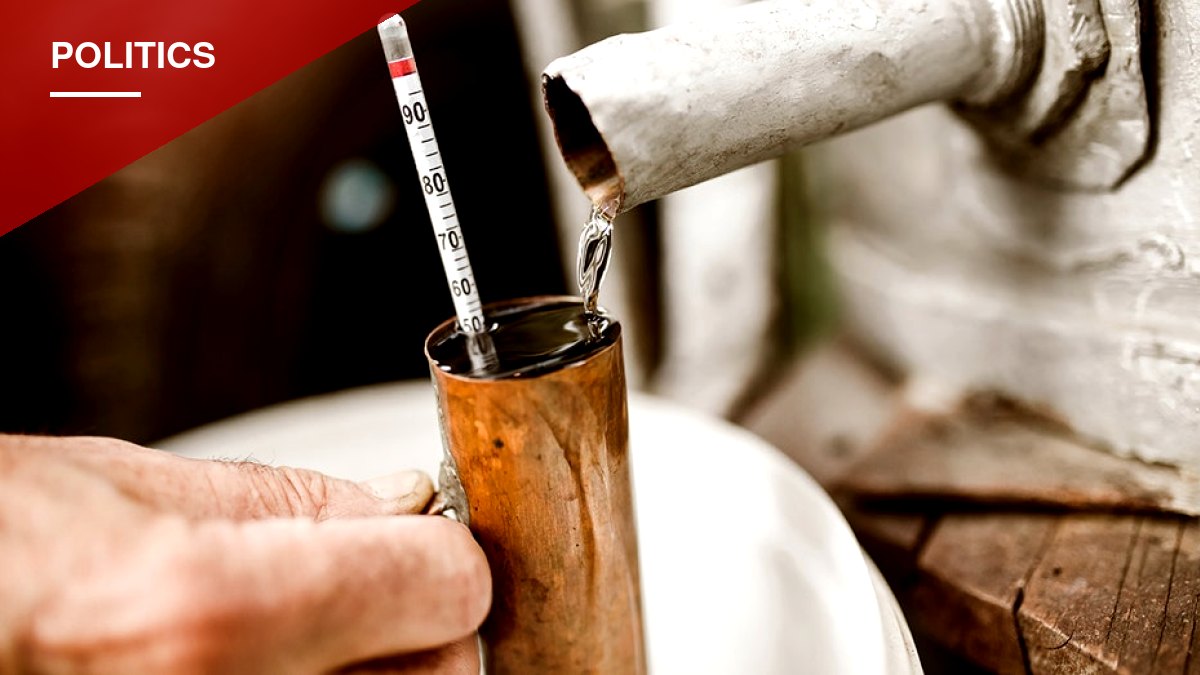

The U.S. Supreme Court agreed Monday to review a 150-year-old federal law that makes distilling whiskey or other spirits at home a federal crime, even though home brewing of beer and wine has long been legal.
The restriction dates to 1868, when it was enacted to combat liquor tax evasion. Under current federal law, producing distilled spirits at home can carry penalties of up to five years in prison, a $10,000 fine and possible property forfeiture.
Among those challenging the ban is John Ream, an Ohio brewery owner and former aerospace engineer who wants to distill small quantities of spirits at home for personal consumption. His case is being brought with help from the Buckeye Institute, an Ohio-based organization.
Robert Alt, president and CEO of the Buckeye Institute, called the court’s decision to take up the case a major moment for home-distilling supporters.
“This is a real opportunity for both whiskey and freedom,” Alt said.
What’s at stake
The case turns on whether Congress’ constitutional power to collect taxes also gives it the authority to ban an otherwise lawful activity carried out inside someone’s own home.
“What this case boils down to is what is the scope of congressional power?” Alt said.
Two federal appeals courts have already split on the question this year. The 5th Circuit struck down the restriction, ruling that Congress’ taxing power did not justify the prohibition. The 6th Circuit upheld the law, finding it a permissible way to enforce federal liquor taxes.
The Department of Justice maintains the restriction is a legitimate tool for preventing tax evasion and protecting federal revenue. The DOJ declined to comment on the case to Fox News Digital.
A fight over more than whiskey
Alt argues that letting Congress ban home distilling under its taxing power could set a troubling precedent for other everyday private activities, pointing to hobbies like gardening or working on cars as examples that could theoretically face similar restrictions under the same legal reasoning.
He also noted the activity’s long history in the United States, saying President George Washington himself took part in home distilling.
“The founders would be rolling over in their graves at the suggestion that Congress had the authority to ban and make a felony out of this very American activity,” Alt said.
Alt said his clients would be willing to pay applicable taxes on any spirits they produce at home, arguing that taxation doesn’t require an outright ban.
If the court sides with the federal government, the current restriction would remain in place, though Congress could still choose to amend the law, Alt said.
The Supreme Court has not yet scheduled oral arguments. Alt said he expects arguments in late February or early March, with a ruling possible by the end of June.



You must be logged in to post a comment Login