
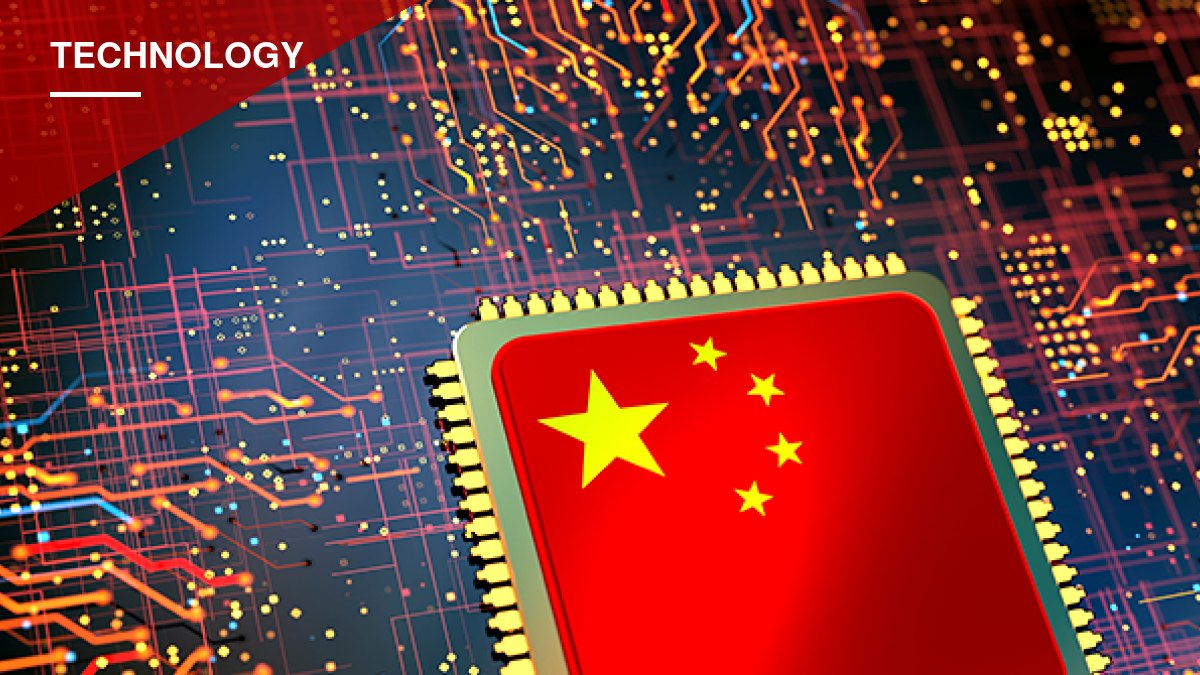

As the United States pours hundreds of billions of dollars into building data centers for artificial intelligence, a new op-ed is drawing attention to a less-discussed vulnerability: the components that link AI chips together and to the outside world, many of which are made in China.
The piece, written by Aiden Buzzetti, president of the Bull Moose Project, focuses on optical transceivers, devices that enable high-speed data transfer between servers, racks and facilities inside data centers. According to Buzzetti, nearly every major AI cluster in the country relies on these components, and China supplies the vast majority of them.
Citing Johns Hopkins Associate Professor Yury Dvorkin, Buzzetti writes that China supplies approximately two-thirds of global optical transceivers. He names Innolight and Eoptolink as leading Chinese suppliers in the market. Innolight was added to the Department of War’s Chinese Military Companies list this year, according to the op-ed.
Buzzetti argues this pattern mirrors China’s past approach in other industries. He describes a strategy of using state funding and industrial policy to develop critical technologies, undercutting foreign competitors on price, and then leveraging dominant market position once competitors have been squeezed out — a dynamic he says has already played out in solar panels and batteries.
He also points to past experience with telecommunications equipment as a cautionary tale. Rural carriers in the United States purchased inexpensive Huawei and ZTE equipment for years before Congress moved to address the national security concerns. Lawmakers ultimately allocated $5 billion in taxpayer funds to remove and replace that equipment, a process Buzzetti says still isn’t finished.
The op-ed also raises concerns about Chinese companies routing goods through third countries to avoid tariffs, a practice known as transshipment. Buzzetti cites a White House estimate that such strategies have cost the United States between $19 billion and $26 billion.
Government Response Underway
According to the op-ed, the Federal Communications Commission, under Chairman Brendan Carr, has been reported over the summer to be preparing a ban on imports of Chinese optical transceivers to protect AI infrastructure. Separately, bipartisan legislation has been introduced in the Senate aimed at keeping Chinese optical transceivers out of the federal government’s most sensitive national security systems.
Buzzetti writes that these efforts have faced pushback from industry, including from major technology companies and associations. He notes that some of the same companies that have lobbied against the proposed restrictions signed an open letter calling for a more secure digital ecosystem in the AI era — a position he argues is inconsistent with opposing restrictions on hardware suppliers.
In the piece, Buzzetti argues that the security of an AI model depends on the hardware it runs on, and that infrastructure built on components from companies bound by the Chinese government cannot be considered fully trustworthy.
He calls on the FCC to finalize its proposed ban, on Congress to pass the pending Senate legislation, and on technology companies to stop lobbying against restrictions on Chinese hardware.
“We already paid once to rip out Huawei. We shouldn’t have to again,” Buzzetti writes.






You must be logged in to post a comment Login