
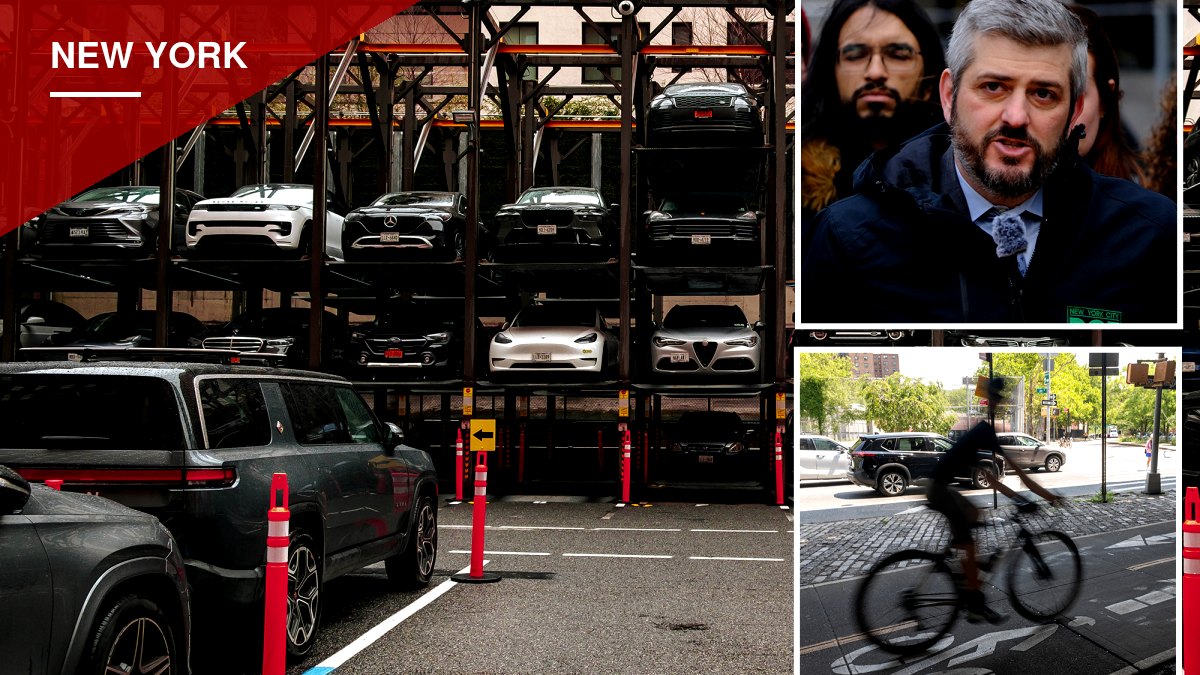

New York City’s Department of Transportation Commissioner Mike Flynn told an audience at a New York Law School breakfast on Thursday that the administration plans to make driving and parking harder in order to push residents toward walking, transit, cycling and e-bikes.
“Car owners in our city are more than twice as wealthy as non car owners,” Flynn said, describing car ownership as a “burden” for lower-income New Yorkers. He also called street parking a “giveaway.”
Flynn framed the strategy as a cost-saving measure for working New Yorkers, even as he acknowledged that some lower-income residents “have a car, need a car.” He said improving transportation options for people without vehicles would “support our transportation equity goals.”
The comments drew criticism from Brooklyn4All, a grassroots group that includes bus riders, cyclists, subway riders and drivers, which formed about five months ago because members felt the DOT wasn’t listening to residents.
“Transportation is not one-size-fits-all, and people must have the freedom to choose what works for their lives. Aren’t we a democracy?” a spokesperson for the group said.
The group said drivers in the city include seniors, people with disabilities and workers with odd hours.
“For people in our community, a car isn’t a luxury; it is a necessity to get to work, take our kids to school, and buy groceries. Can we go to Costco on a bike?” the spokesperson said.
What the research actually found
Flynn cited a 2024 Hunter College report during his remarks, but the study itself cautioned that “low income residents need cars more than middle to high income residents” and found that a car can aid someone’s “economic mobility.” The report determined that housing type and neighborhood were better predictors of car ownership than income, race or age.
According to the data, about 85% of Staten Island households have a vehicle, compared with 63% in Queens, 45% in Brooklyn, 40% in the Bronx and just 23% in Manhattan — despite Manhattan having the city’s highest median income. Roughly 87% of residents in single-family homes live in a household with a vehicle, compared with 33% of people in buildings with five or more units.
Despite flagging that lower-income residents often rely on cars, the report still recommended making ownership more expensive and parking harder to find, including paid street parking — a proposal Flynn said the administration is reviewing — along with a recurring registration charge tied to a vehicle’s value and a three-cent-per-mile driving fee. The study’s authors said their target was occasional, recreational driving rather than residents who depend on cars for work and daily errands.
“Punishing drivers by making commuting harder doesn’t force people onto bikes and public transit—it just places a heavy, unfair tax on working-class families who are already struggling to get by,” the Brooklyn4All spokesperson said.
Hunter College’s project page lists the DOT as a client on the report, which thanks the agency and “other community advocates” for participation that “helped form the contents of this report.” Ryan Russo, the faculty member who guided the research, no longer works at Hunter College and did not immediately respond to a request for comment.





You must be logged in to post a comment Login