
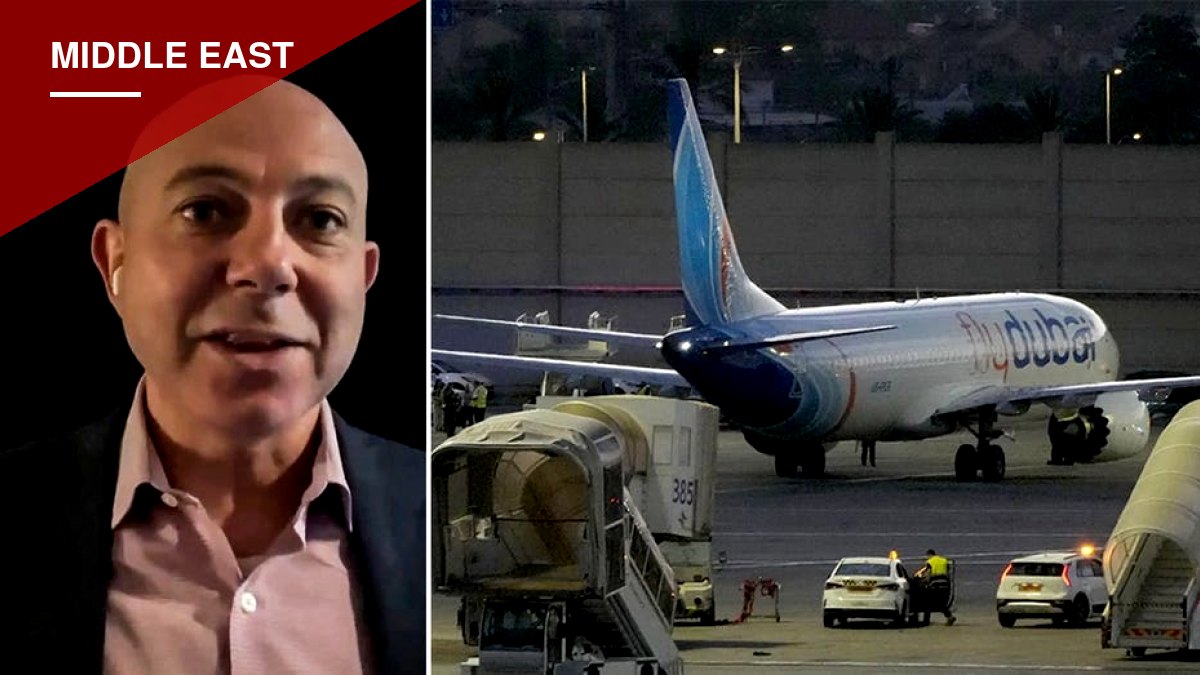

A former Israeli Air Force helicopter pilot who now runs an aviation cybersecurity firm says the survival of FlyDubai flight 1073, after its copilot allegedly stabbed the captain mid-flight, was a near-miracle that should force airlines to overhaul how they vet and monitor flight crews.
Eliran Almog told Fox News Digital that the aircraft dropped more than 14,000 feet in 30 seconds after the attack, which officials say was carried out by 29-year-old Omani national Hamam al-Hammami against Capt. Smit Machchhar.
“You can’t imagine being in that position. You see the videos, you hear the kids screaming, and people don’t necessarily understand what is happening,” Almog said.
He described the forces on the plane as extreme. “The g-force on the plane was enormous, and you basically think you are going to die,” he said, adding that “it’s crazy that the aircraft did not break up in the air, and landing it with the tail damage it sustained was remarkable.”
Despite his injuries, Machchhar managed to open the cockpit door, allowing Israeli passengers aboard to rush in and restrain al-Hammami. A second FlyDubai crew who happened to be traveling on the same flight then stabilized the aircraft and carried out an emergency landing in Saudi Arabia.
“As a pilot, if I were in this situation, I’m not sure I could have landed the aircraft. Every commercial aircraft is different, requiring different setup, landing procedures and limitations,” Almog said.
A Call for Deeper Screening
Almog, who advises airlines on cybersecurity, said the episode underscores the need for continuous psychological and political-risk screening of pilots, not just a one-time check before hiring.
“Because aviation is critical infrastructure, we must rethink how we screen pilots — not just initially, but continuously. Even for experienced pilots, we need the right tools in place to identify when someone is facing family issues, psychological distress, or developing extreme views that could impose risk. These are practices the industry needs to adopt, and I call on governments and regulators to step in.”
Israel, Saudi Arabia and other countries are investigating al-Hammami and the circumstances of the attack. Israeli Prime Minister Benjamin Netanyahu told Fox & Friends that the copilot had been exposed to “Islamist radical indoctrination.” President Donald Trump has suggested the copilot could have been trained or motivated by Iran’s Islamic Revolutionary Guard Corps.
Almog said geopolitical instability tied to conflicts across the Middle East is now the top concern airlines raise with him. “We are tracking GNSS and GPS jamming and spoofing activities, and I can show you the map and you can understand exactly where the conflicts are,” he said.
Risk Beyond the Cockpit
Almog argued that screening cannot stop with pilots. “Pilots aren’t the only ones who can crash a plane. Over 80% of cybersecurity threats come from insiders — many of whom may not even realize they are posing a risk,” he said. “It isn’t just pilots; it’s cabin crew and maintenance personnel. A plane can crash without the right fuel balance or proper maintenance parameters. Aviation relies on a complex supply chain. It would be a mistake to limit psychological screening and background monitoring to pilots alone — it needs to expand to every person who impacts flight operations.”
Almog credited both the passengers and Machchhar with averting disaster. “Ultimately, this was a chain of circumstances that prevented a total disaster,” he said. “Beyond personal resilience, it took the courage of the off-duty Indian pilot who opened the door, and the fact that FlyDubai had two other pilots on board who landed the aircraft safely.”
“As a pilot, I can tell you that isn’t easy. Landing an unfamiliar commercial aircraft type under extreme stress requires specialized training, which is why rigorous screening and continuous support for flight crews are so vital,” he added.





You must be logged in to post a comment Login