
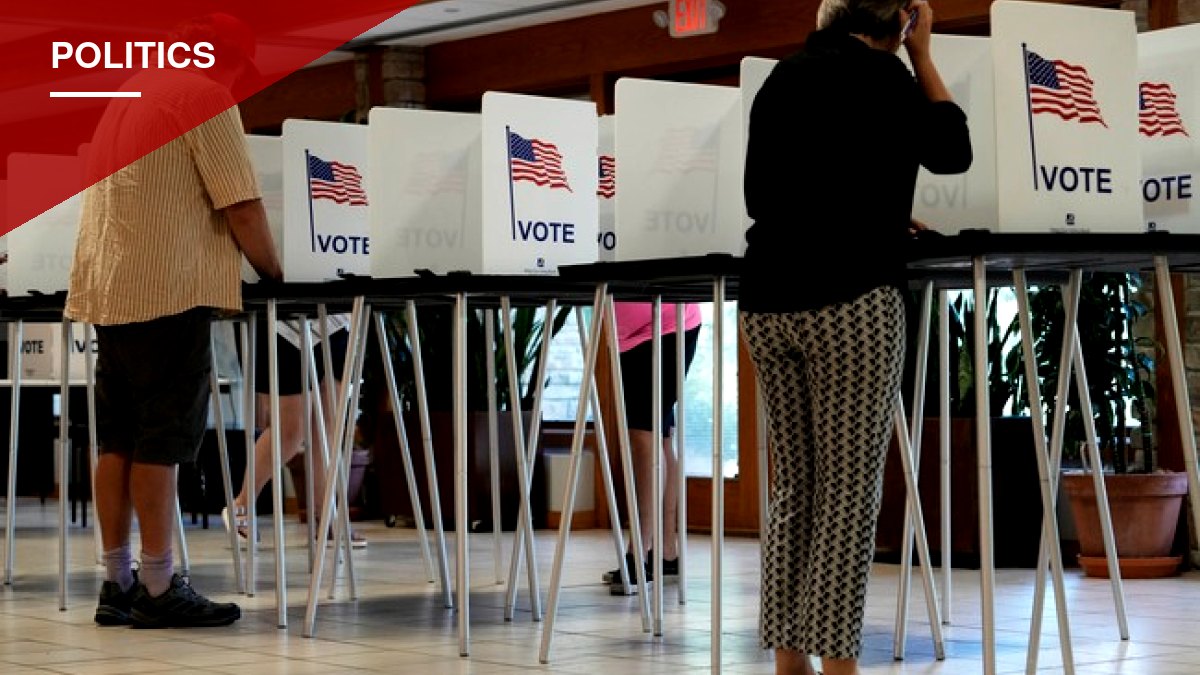

Chicago election officials print ballots in 12 languages, a practice that Illinois Republican Party Chairman Bob Grogan says is unnecessary and creates logistical headaches for election judges and poll watchers ahead of the midterm election.
The languages include Tagalog, Gujarati and Urdu, in addition to more commonly used ballot languages such as Spanish, Chinese and Hindi. Grogan argues that many immigrants who speak these languages also speak English, questioning why so many translations are necessary.
“It’s a solution in search of a problem. It’s big city virtue signaling,” Grogan said.
Federal law requires the practice in jurisdictions that meet certain population thresholds. Section 203 of the U.S. Voting Rights Act requires election boards in qualifying areas to provide voting materials and ballots in languages spoken by communities with limited English proficiency.
The Chicago Board of Elections has said it includes additional languages beyond what federal law strictly requires in order to stay consistent with the Cook County Clerk’s office, which operates under a county ordinance covering a broader set of languages. The board says the goal is to ensure voters throughout Cook County have equal access regardless of which jurisdiction they fall under.
Grogan, the former DuPage County Auditor, pointed to his experience with the Indian community in that county, which has a sizable Gujarati-speaking population, to question the need for a Gujarati ballot.
“I have a fair number of Gujarati friends … and everyone in their family speaks English,” Grogan said. “Gujarati — it’s from India, and English is an official language in India.”
Grogan also raised concerns about inconsistency in how touch-screen voting machines across the Chicago area offer different numbers of language options, which he said complicates the job of election judges and observers from both parties who are responsible for verifying that voters receive accurate ballots.
Multilingual ballot access is not unique to Chicago. Other jurisdictions around the country, including remote areas of Alaska with significant Native populations, offer language assistance materials for voters, though in Alaska’s case the official ballots themselves remain in English.





You must be logged in to post a comment Login