
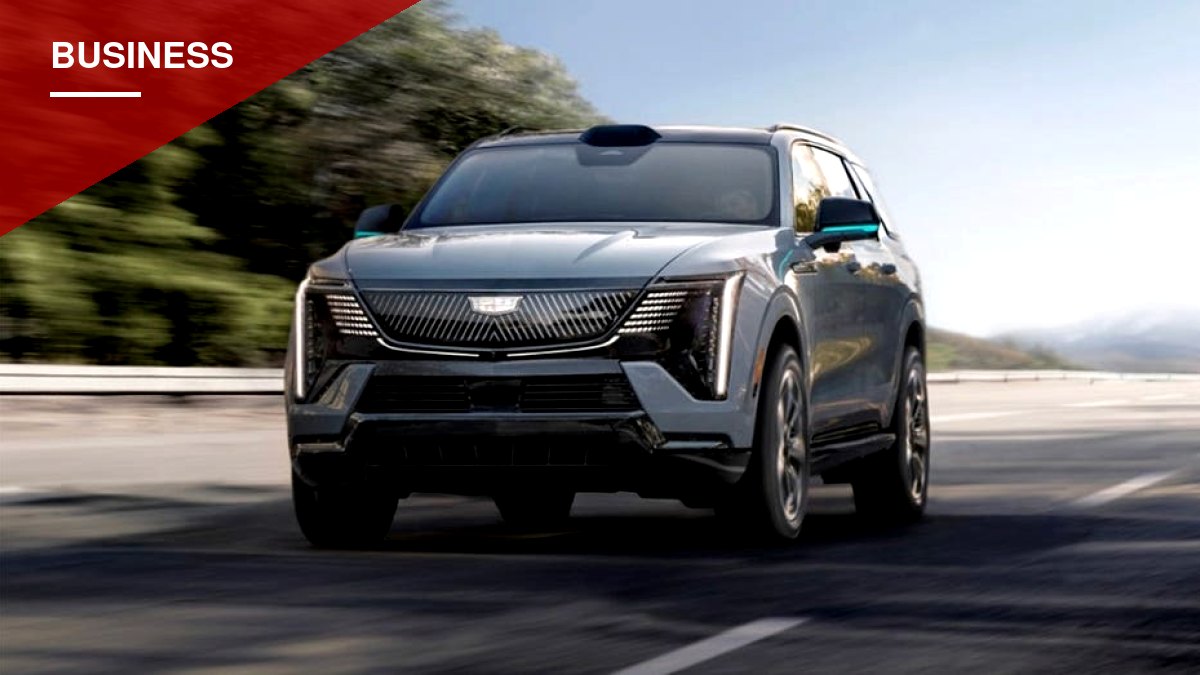

General Motors says it is developing technology that would let drivers take their hands off the wheel and their eyes off the road entirely, with a planned debut as early as 2028 in the Cadillac Escalade IQ electric SUV.
The automaker is testing the system now at its Global Technical Center in Warren, Michigan, not far from Oakland County, where hundreds of volunteers have sat in real GM vehicles, including the Cadillac Lyriq, inside an immersive simulator that recreates highway conditions, construction zones and sudden hazards. Sensors track drivers’ eye movements, heart rates and stress responses while researchers study how people react when the vehicle suddenly needs them to take back control.
GM already sells Super Cruise, a hands-free driving system available on more than 20 models across Cadillac, Chevrolet, GMC and Buick. That system manages steering, acceleration and braking on compatible roads, but drivers still have to watch the road and stay ready to take over. The next version would drop that requirement when an “eyes-off” mode is active, starting on compatible highways before GM considers expanding it further. The system would rely on lidar, radar and cameras, with turquoise lights on the dashboard and exterior mirrors signaling when the feature is available and running.
Timing depends on further development, safety testing and state laws, GM says. On Oct. 21, the company separately announced plans to bring autonomous highway driving to its full-size SUVs and light-duty pickup trucks, including gas-powered models, though it has not said when that technology will arrive in those vehicles.
Testing distraction on purpose
Some of the research in Warren involves deliberately distracting participants. GM is asking some volunteers to play Candy Crush during testing so researchers can measure how quickly they shift attention back to driving once interrupted. Maureen August, a senior manager at GM Research & Development, told The Associated Press that the game helps draw participants into an activity before researchers interrupt them.
The stakes of that delay are significant. At 70 mph, a vehicle covers roughly 103 feet per second. A five-second lag in regaining attention means the vehicle has already traveled more than 500 feet before a driver responds.
GM has not detailed every scenario the system will be built to handle, or exactly what happens if a driver fails to take over in time. Engineers are still studying how much warning drivers need and whether they understand and trust the system’s alerts.
How it compares to rivals
Other automakers offer systems that ease highway driving, but none currently promise GM’s level of hands-off, eyes-off operation. Ford’s BlueCruise allows hands-free driving but still requires drivers to watch the road. Tesla’s Full Self-Driving (Supervised) handles many tasks but requires active supervision. Mercedes-Benz had introduced a limited eyes-off system called DRIVE PILOT but has since pulled it back in the U.S. while developing its next generation of automated driving technology.
GM’s goal is to eventually offer eyes-off highway driving across a wider network of roads and expand the capability to more models beyond the Escalade IQ.
A subscription model is likely
GM has not announced pricing for the eyes-off feature, but it already charges for continued Super Cruise access. As of the company’s August 2026 update, equipped vehicles come with three years of included service, after which plans start at $39.99 per month. Industry analysts suggest drivers may be willing to pay for technology that frees up time behind the wheel, though the added subscription cost could meaningfully raise the overall price of owning the vehicle.
Until GM explicitly authorizes eyes-off operation under specific conditions, drivers using today’s hands-free systems are still required to watch the road and follow the system’s instructions.






You must be logged in to post a comment Login