
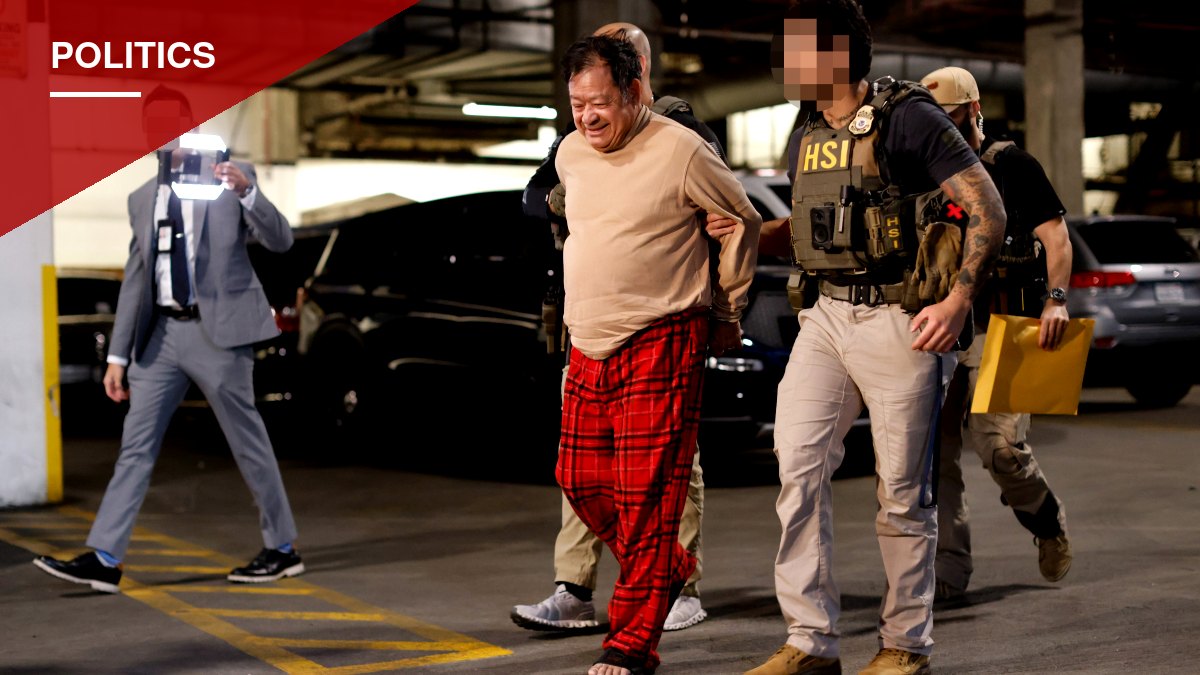

Federal authorities on Monday charged 28 foreign nationals with election-related crimes, including illegally registering to vote and, in some cases, casting ballots in past California elections. The Justice Department labeled the operation “Operation Protect the Vote” and described it as the largest voter fraud prosecution in state history.
The arrests come a week after the Trump administration claimed that at least 20,000 noncitizens may be registered to vote in California. The administration has sued the state over its refusal to segregate those voters’ ballots so their eligibility can be verified before being counted.
California Gov. Gavin Newsom’s press account on social platform X responded to the charges with a series of posts mocking the operation. California Attorney General Rob Bonta also downplayed the significance of the arrests, calling them “a drop in the bucket.”
“28 out of 23 million registered voters in California is just a drop in the bucket numerically. It’s…” Bonta wrote on X.
The dispute arrives as California voters prepare to decide Proposition 39, the Voter ID Act, on the Nov. 3 ballot. The measure would require voters to show identification when casting a ballot in person, or to write the last four digits of an identification number on the envelope when voting by mail.
Supporters of the measure argue it would tie every ballot to a verified California voter, potentially reducing the chances of noncitizens voting and making it harder for political operatives engaged in ballot harvesting to submit large numbers of ballots without individual voter verification.
Opponents, including many state Democrats, argue that identification requirements could discourage eligible voters from participating in elections.
California currently allows some voters to be automatically registered and does not require identification to vote by mail, a system critics say makes it difficult to verify who is completing and returning ballots. The state is also known for a lengthy ballot-counting process that can take weeks after Election Day to finalize results.
The outcome of Proposition 39 will determine whether California adopts new identification requirements for the first time, as the broader debate over noncitizen voting and election security continues to play out in federal court and in state politics.






You must be logged in to post a comment Login