
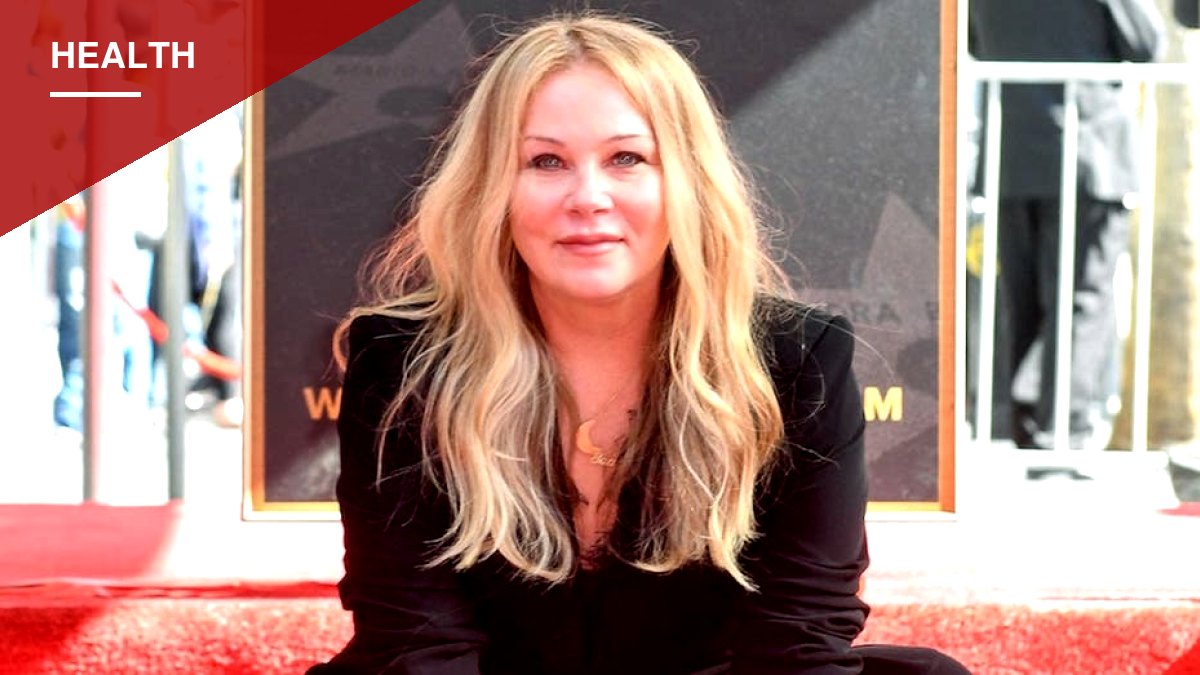

Actress Christina Applegate says doctors have told her she does not have multiple sclerosis, nearly five years after she was first diagnosed with the disease and began treatment for it.
Applegate, 54, shared the update on the Oct. 20 episode of her podcast, “MeSsy,” co-hosted with Jamie-Lynn Sigler, describing herself as in a complete “state of shock.”
She was diagnosed with MS in 2021 after experiencing severe symptoms and undergoing brain and spinal MRIs along with a spinal tap, which showed dozens of lesions on her brain. After years of infusion treatment, her doctor eventually stopped the regular infusions and began monitoring her B cells instead.
“And my B cells didn’t change. They didn’t go higher, they didn’t go lower, they didn’t change, and she had never seen that. So I guess that began kind of a study into my diagnosis,” Applegate said.
Following additional brain scans, her doctor told her: “Congratulations, you don’t have MS.” But Applegate said that was not welcome news.
“Because you don’t get misdiagnosed and then all of a sudden [you’re] better. I haven’t gotten better … If anything, I’ve gotten worse in some ways.”
Applegate said she still has “every symptom” associated with MS, and that her MRIs showed roughly 30 lesions. But she said her neurologist pointed to a specific feature — which Applegate described as a “string” — that led to the conclusion she did not actually have the disease. “So I’m back at square one [and] don’t know what’s going on with me,” she said.
A surprisingly common problem
Dr. Marwa Kaisey, an associate professor of neurology at Cedars-Sinai in Los Angeles who has not treated Applegate, said on a follow-up episode of the podcast that MS misdiagnosis is “fairly common.” In a study of patients referred to MS clinics at UCLA and Cedars-Sinai, Kaisey said she found that nearly one in five people who arrived with an MS diagnosis ultimately did not have the disease — some had carried the diagnosis for decades, and most were already on medication for it.
Kaisey said the core problem is that there is no single definitive test for MS. “It’s not like we have something like a pregnancy test that says, yes, you have it, no, you don’t,” she said. “It’s a list of criteria, some of which remain a little bit subjective.”
Most misdiagnosed patients did have white matter spots on their MRIs, Kaisey said, but the spots had a different underlying cause. Newer imaging techniques are helping doctors tell the difference. One such tool, known as the “central vein sign,” looks for small blood vessels running through the center of lesions — a pattern associated with MS — and has been incorporated into updated diagnostic criteria.
Dr. Richard Ransohoff, a Boston-based neurologist on the Board of Directors for the American Brain Foundation who has also not treated Applegate, called the central vein sign “a real step forward” in separating MS lesions from other abnormalities. “Things are getting better, and even in the time that Ms. Applegate has been having her symptoms and her evaluation, things have gotten better,” he said.
Conditions that mimic MS
Both neurologists said symptoms common to MS — tingling, numbness in the feet, fatigue and brain fog — overlap with many other conditions. Ransohoff said conditions that can mimic MS’s pattern of symptoms include certain strokes in younger people, neuromyelitis optica spectrum disease, MOG antibody disease, lupus and migraine.
Migraine is one of the most frequent alternative diagnoses, both doctors agreed. Kaisey noted migraines can also cause white spots on MRIs, though they tend to be smaller and differently shaped and located than MS lesions. “If you’re not looking closely at the MRI or you don’t know exactly what to look for, you can confuse the two,” she said.
“To distinguish MS from its mimics can be challenging, and doctors, even with the best intentions … can sometimes still get it wrong,” Kaisey said. “To diagnose MS, we need a symptom that’s kind of very specific to MS, and we also need the MRI that looks like MS.”
The toll of an “undiagnosis”
Kaisey said losing an MS diagnosis can be even harder on patients than receiving it in the first place, especially once the disease has become part of someone’s identity and community. “So to suddenly take that away, I think it’s earth-shattering. It’s life-changing in a huge way,” she said.
She encouraged patients to seek second opinions. “Don’t be afraid to do that, especially if something inside is telling you that you need to dig a little deeper,” Kaisey said.
Ransohoff agreed that misdiagnoses are common in MS cases. “It’s a tough diagnosis, and there is no single element in the diagnostic process that tells you with 100% certainty that it is MS,” he said, adding that physicians should remain open to reconsidering a diagnosis if treatment isn’t working as expected. “It requires the ultimate in humility as a physician. You simply have to say there are certain things we know and certain things we don’t know.”
In Applegate’s case, the reversed diagnosis did not come with a clear alternative explanation. “You have to have tremendous sympathy for her suffering in that context, because even when treatment is not going as well as you would like, it’s better to know what you’re dealing with,” Ransohoff said. “Facing the unknown when you feel crappy is a very tough road to go.”
To help avoid misdiagnosis, Ransohoff recommends that anyone diagnosed with MS be evaluated at a specialty MS center by a doctor experienced with the full range of more than 20 medications now available to treat the disease. He noted that outcomes for MS patients have improved dramatically over his career. “The person who’s diagnosed with MS today is totally different from 40 years ago when I got started,” he said. “If the diagnosis is correct and the treatment is correct, then they should do pretty well with their MS.”






You must be logged in to post a comment Login