
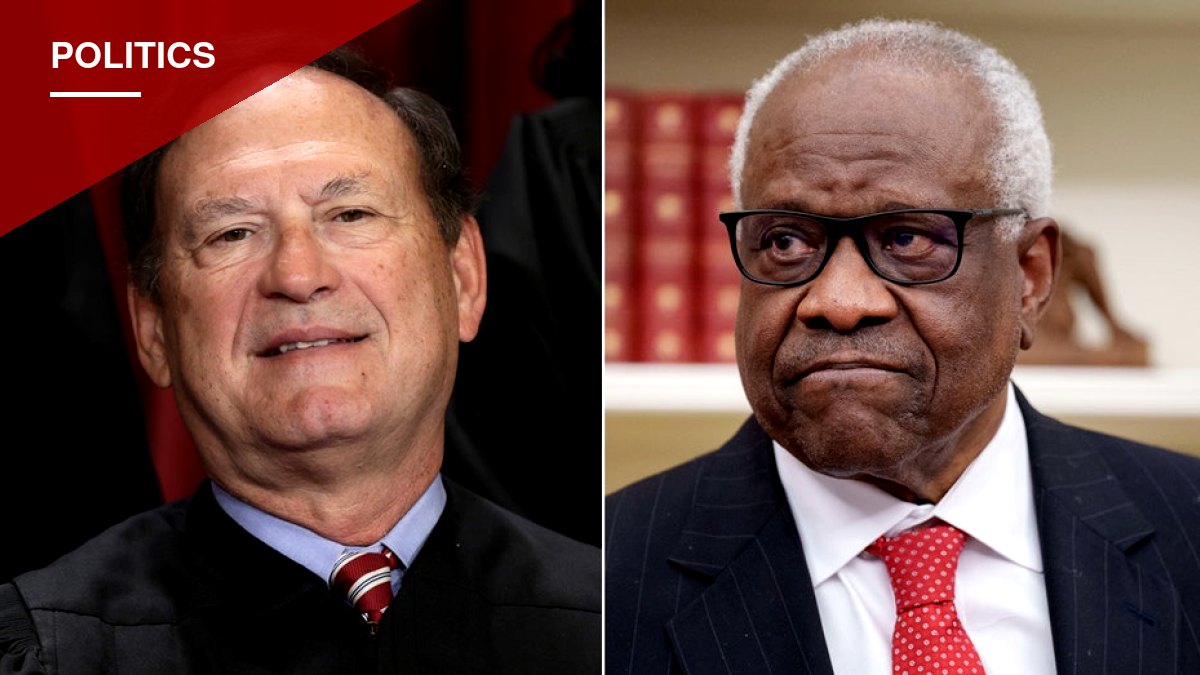

The Supreme Court on Monday denied a request from President Donald Trump’s administration to lift a nationwide injunction blocking new federal rules for mail-in election ballots, over a sharp dissent from Justices Samuel Alito and Clarence Thomas.
The unsigned order leaves in place a lower court’s block on a final rule from the U.S. Postal Service that would have required election-mail envelopes to carry a special logo, be scannable by high-speed equipment, and include a barcode unique to each voter. State and local election officials would also have had to submit their envelope designs to USPS for approval and upload voter information to an online portal. Mail that didn’t meet the standards would have been rejected and sent back for correction.
Alito, joined by Thomas, argued the administration had met the legal standard for a stay and that the challengers’ case was weak. “The Court incorrectly denies the Government’s application for a stay of a universal injunction that bars implementation of a final rule concerning election ballot mail,” Alito wrote. “Some of the plaintiffs lack standing, while the remainder are pursuing a claim that this Court has recently called a ‘Hail Mary pass’ that ‘rarely succeeds.'”
“The Government has made the showings necessary for a stay, so I respectfully dissent,” he added.
Kavanaugh Leaves Door Open
Justice Brett Kavanaugh wrote separately in concurrence, suggesting the administration could still prevail on the merits eventually but that the timing made enforcement for next year’s elections impractical. “In my view, based on the briefing the Court has received at this interim stage, there is at least a fair prospect that the final rule falls within the Postal Service’s statutory authority,” Kavanaugh wrote. “But applying the rule in the 2026 elections would be arbitrary and capricious in violation of the Administrative Procedure Act because state and local election officials do not have sufficient time to reasonably implement the rule before the elections.”
Kavanaugh’s reasoning, like Alito’s dissent, acknowledged that the Postal Service holds broad authority to regulate how mail is collected, handled, transported and delivered — but he concluded that the practical timeline before the 2026 midterms made the rule unworkable for now.
The ruling follows a federal appeals court decision that also rejected the Trump administration’s effort to enforce the mail ballot order ahead of the midterm elections.




You must be logged in to post a comment Login