
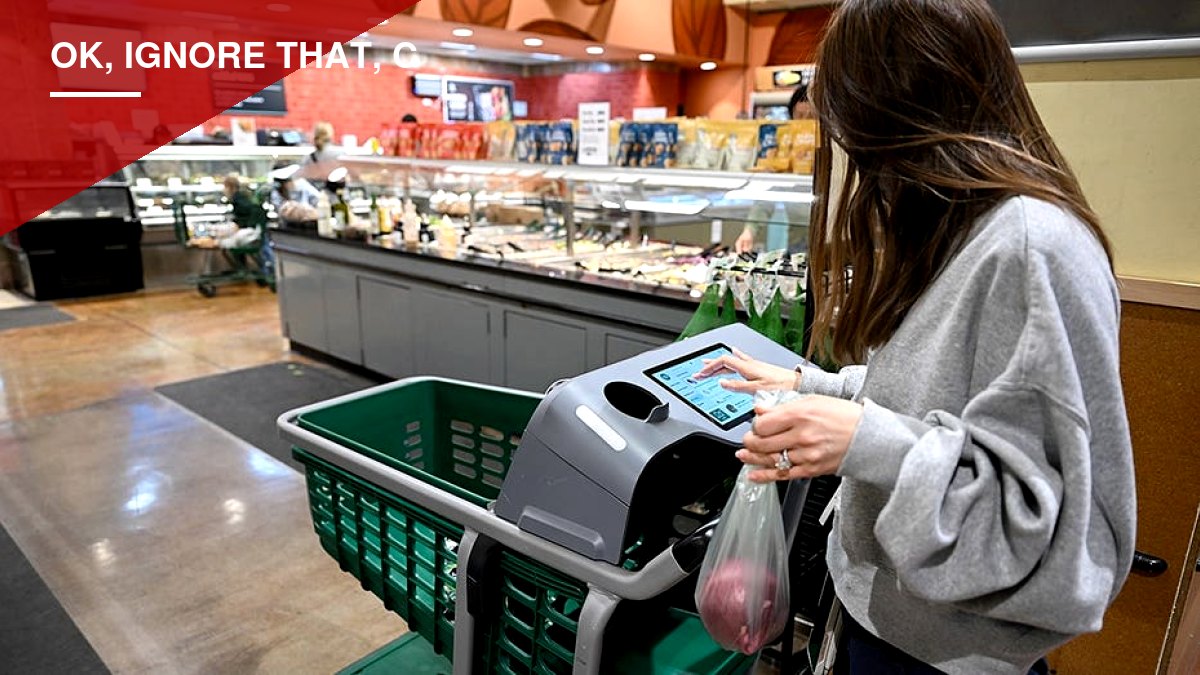

Smart shopping carts equipped with screens, cameras and sensors are becoming a common sight in grocery stores across the country, including in Maryland, and new research suggests they may be doing more than just guiding shoppers to the right aisle — they may be driving up how much people spend.
A study from Bayes Business School at City St George’s, University of London, published in the Journal of Business Research, examined shopping behavior at a German supermarket chain during March 2025. Researchers analyzed 12,418 individual shopping trips, of which 9,422 involved shoppers actively using a smart cart fitted with a tablet-style screen on the handle. The carts offered digital shopping lists, personalized product recommendations, in-store navigation and checkout-free payment.
The results showed a clear gap between smart-cart users and shoppers using traditional carts. On average, smart-cart shoppers spent 32% more, bought 25% more items, and spent 23% more time in the store. That spending gap widened during afternoons and weekends, while shoppers overall tended to linger longest in the evening.
Dr. Sabrina Gottschalk, a lecturer in marketing at Bayes Business School and the study’s lead author, said the findings point to significant potential revenue gains for retailers that adopt the technology, citing targeted offers and product recommendations delivered directly to the cart’s screen as one likely driver.
An Association, Not Proof
The researchers were careful to note that their findings show an association between smart-cart use and higher spending, not direct proof that the carts themselves cause people to spend more. Because shoppers chose whether to use a smart cart rather than being randomly assigned one, it’s possible that people planning bigger shopping trips were simply more likely to reach for the tech-enabled cart in the first place.
A closer look at the data added another layer. Shoppers who tapped the smart-cart screen more than 20 times during a single trip — described by researchers as






You must be logged in to post a comment Login