
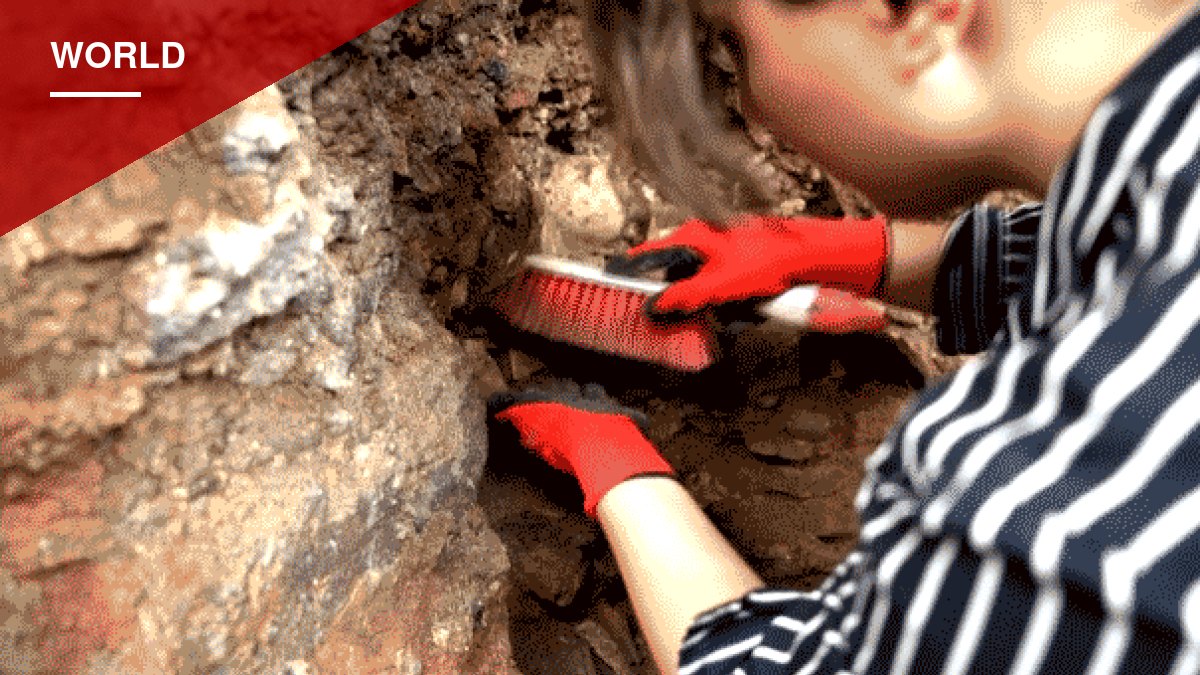

Construction crews upgrading Rustaveli Avenue, Tbilisi’s central boulevard, have uncovered a cache of pottery believed to date back roughly 1,000 years, buried about 20 feet below the road surface.
The find was made during ongoing excavation work tied to a project meant to modernize the avenue with new pedestrian crossings and signage. Archaeologists examining the site have documented decorated pottery fragments, jugs and various shards, according to Reuters.
David Lordkipanidze, director of the Georgian National Museum, said the discovery fits with what researchers already know about the Georgian capital’s layered past.
“Tbilisi is very rich with archaeological material … so it’s very logical to find workshops of different periods,” Lordkipanidze told Reuters.
He noted that Tbilisi has long served as a meeting point for different peoples and trade routes.
“Tbilisi was always multicultural,” he said. “[It’s been] a real center for the region, particularly an economic center.”
Researchers believe the pottery dates to the 10th and 11th centuries, a period when Tbilisi was under Arab rule and functioned as a key waypoint along the Silk Road. Further study, including 3D scanning, is planned to help pin down a more precise age for the artifacts.
Tbilisi was founded in the fourth century and sits in the Caucasus region alongside Armenia and Azerbaijan, between Europe and Asia. Over the centuries the area has been governed by a succession of powers, including Mongols, Persians, Russians and, during the Middle Ages, Arabs.
The find adds to a string of recent discoveries made by work crews around the world. In Italy, highway construction workers recently uncovered the remains of a fifth-century B.C. sanctuary, triggering an archaeological review. In Peru last summer, utility workers laying gas lines found two pre-Incan tombs linked to the Chancay culture, which flourished from roughly 1000 to 1470 A.D.






You must be logged in to post a comment Login