
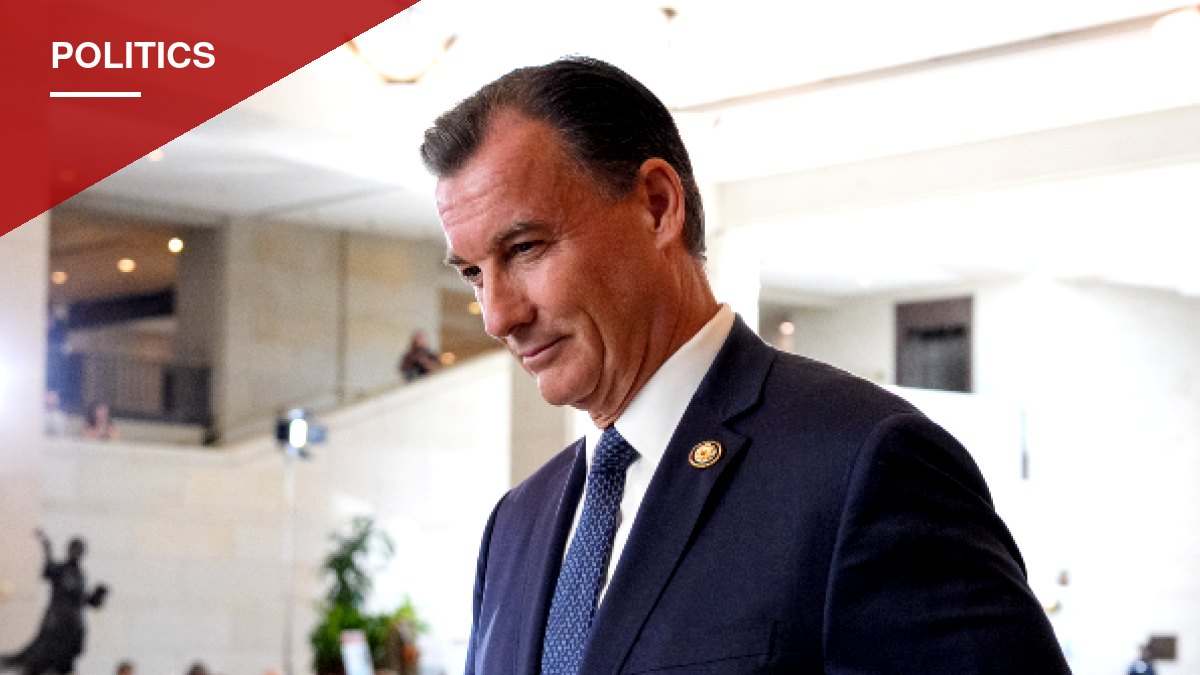

Rep. Tom Suozzi (D-NY), often characterized as a moderate Democrat, told an audience that his top political priority is granting legal status to millions of immigrants living in the country illegally.
“My biggest desire, my biggest goal of what I want to accomplish in politics right now, is I want to legalize seven or eight or nine or 10 million people in our country, so they will not be subject to deportation,” Suozzi said, in remarks that were highlighted by the Republican National Committee.
Suozzi has written previously about why the issue matters to him personally. In an August 2025 essay, he described his family’s immigrant background.
Immigration is personal for me. I look at America through the lens of the immigrant story — the story of my family, and the story of the American dream. My father came to this country as an infant. His parents — my grandparents — came from Italy with nothing. And yet, through hard work and devotion to family, they built a life here. Their son went to law school on the GI bill after serving in World War II, rising to become a mayor and a State Supreme Court justice. Their grandson is a member of the United States Congress.
Suozzi is one of nearly 40 lawmakers who have worked on the bipartisan Dignity Act, which he says would secure the border while giving a lawful path to stay for people who are already in the country, working and following the rules.
There are practical fixes right in front of Congress. I have worked closely with nearly 40 of my colleagues on the bipartisan Dignity Act, which secures the border while giving people who are already here, working and following the rules, a lawful way to stay. But such efforts struggle to gain real traction in a Congress locked into an us-versus-them posture. This does not get fixed unless the parties work together.
Rep. Marcia Salazar (R-FL), a chief advocate for the Dignity Act, has said the bill would provide a substantial inflow of labor for employers.
Wages and Workforce Debate
In January 2026, Suozzi pointed to labor shortages tied to deportations and reduced migration under the Trump administration, arguing they are pushing up wages and prices.
We have to expand the Affordability Agenda beyond just health insurance… We have to look at all the different factors, even the immigration policy, where we have a million and a half less people in the workforce right now, it’s causing more overtime and having to hire people at higher wages. These are all upward pressures on people’s prices.
He also argued that reduced immigration is straining the workforce broadly: “We are doing [deportations] at the exact moment the country can least afford to lose workers… Without immigration, our workforce shrinks, and we are pushing out the people who could help fill the gap.”
A Nebraska Republican’s Case
Sympathy for individual migrants facing deportation has also surfaced among Republicans. Retiring Rep. Don Bacon (R-NE) wrote a September 25 op-ed in the Washington Post describing his unsuccessful effort to stop the deportation of a woman he identified as Mariana.
I tried to help her. In August, I detailed Mariana’s case in the Omaha World-Herald. I personally talked with the secretary of Homeland Security about her situation, and my office exhausted every avenue available to us to prevent her departure. None of it was enough.
Comparisons to Biden-Era Policy
Despite his reputation as a moderate, Suozzi’s immigration stance has drawn comparisons to policies pursued under President Joe Biden. In September 2024, then-border chief Alejandro Mayorkas described using immigration levels to influence economic growth, citing Canada’s approach to labor-driven visas.
We look to the north, with Canada. Canada takes a look at its market needs, and it says, ‘You know what? We need 700,000 foreign workers to address our labor needs domestically.’ And, so, they build a visa system for that year to address the current market condition. And they say, ‘We’re going to bring in a million people.’ And it’s market-sensitive. We are dealing with numerical caps on labor-driven visas that were set in 1996. It’s 2024. The world has changed. It is remarkable how there can be agreement that it is broken and not have an agreement on a solution. The country is suffering as a result of it.
Under the Biden administration, roughly 10 million inadmissible migrants entered the country, according to figures cited in coverage of the administration’s border policies.






You must be logged in to post a comment Login