
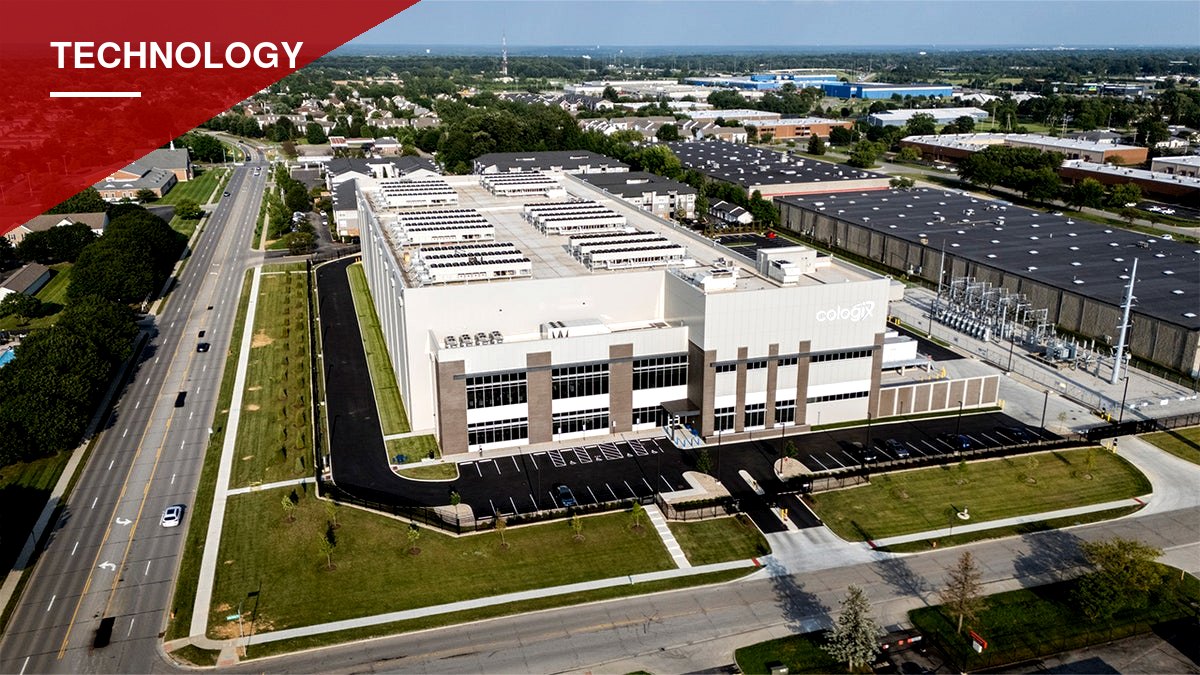

A new opinion article argues that growing public opposition to building artificial intelligence data centers in the United States risks repeating the mistakes of past offshoring decisions and could ultimately weaken American national security.
The piece contends that AI is not going away regardless of where its infrastructure is built, and that the real choice facing the country is whether the United States shapes the technology’s development or cedes that role to rivals. It points to China’s announcement of nearly $300 billion in data center investment through 2030, not counting private spending, as well as India’s 20-year tax holiday for foreign cloud operators and regulatory relief offered by South Korea, as evidence that other nations are moving aggressively to attract this infrastructure while some Americans call for moratoriums at home.
According to the article, keeping data centers on U.S. soil matters because of what is inside them: data, computing power and intellectual property. It warns that data routed through facilities overseas could be collected by adversaries for espionage or used to accelerate their own AI systems, citing China’s past use of “adversarial distillation” to advance its models. The piece also raises the possibility of adversarial attacks during model training that could secretly degrade or manipulate AI performance.
On computing power, the article notes that the United States currently hosts 75% of the world’s high-performance compute capacity, which it describes as a strategic advantage. It credits export controls on advanced chips, along with domestic semiconductor production under the CHIPS and Science Act, with reinforcing that lead. But it warns that if data centers move overseas, the chips inside them — and potentially the companies that supply them — could follow, undermining years of reindustrialization efforts.
The piece also states that China’s semiconductors currently lag a few generations behind the leading edge because of U.S. export controls, but argues that housing chips overseas, where security standards can’t be enforced, could make remote access easier and help close that gap for Beijing.
Another concern raised is compute availability during a crisis. The article argues that if data centers are located abroad, foreign governments — not the United States — would decide how to allocate computing capacity during an emergency, potentially leaving the U.S. military and American researchers, students and startups without guaranteed access, at a time when compute is already constrained.
On intellectual property, the article describes AI models and model weights as targets the Chinese Communist Party has already pursued through IP theft and adversarial distillation against proprietary American systems, and argues that moving data centers overseas would effectively hand that IP to Beijing.
The piece notes that while America currently hosts the most AI data centers globally, about 60% of announced projects for this year have not yet begun construction, meaning the lead is not guaranteed.
Three proposed steps
The article lays out three actions it says could build public confidence while protecting U.S. security interests:
- Using federal land for rapid data center construction, pointing to a July 2025 executive order signed by President Trump that opened federal land and streamlined permitting for commercial AI data centers.
- Having the Commerce Department use its AI Exports Program to help allies and partners build secure data centers using the American tech stack, arguing this would establish security standards and offer a secure alternative to China’s technology.
- Preserving space for innovation that could reduce the need for massive data centers altogether, even as global AI data center investment is projected to reach $7 trillion by 2030.
The article concludes that the United States is positioned to either lead or lose what it calls the “AI industrial revolution,” and argues the country should choose to lead by embracing data center construction domestically.






You must be logged in to post a comment Login