
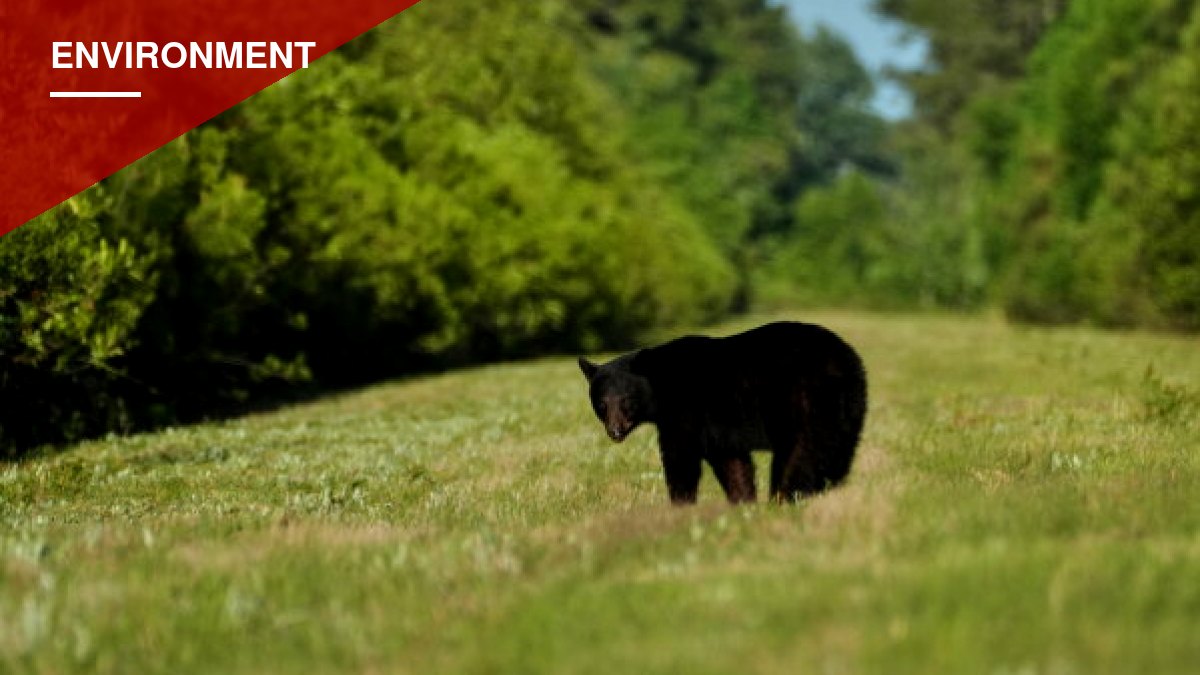

On a 23-square-mile stretch of North Carolina’s Inner Banks near Belhaven, scientists and a Colorado-based company are working to save one of the state’s most unusual natural resources: a bed of dense, spongy peat up to 15 feet deep that formed over thousands of years.
Fifty miles of ditches, dug decades ago for a farming venture that was later abandoned, drained much of the water from the site. That has left it vulnerable to drought and wildfire, disrupted its native habitats, and caused it to release an estimated 130,000 tons of carbon dioxide every year.
Pantheon Regeneration, based in Colorado, is now working to reverse that damage by blocking the old ditches to raise the water table, cutting back invasive species and replanting native grasses and other plants.
“Our goal is for perpetuity to conserve these lands so they can’t become oil and gas fields, so they’re not mined for phosphorus or turned into parking lots and shopping centers,” said Tripp Wall, CEO of Pantheon Regeneration. “They’re just these incredible systems that I feel are underappreciated here in the U.S. (that) for 10,000 to 15,000 years have been climatologically resilient until we screwed them up.”
https://interactives.ap.org/graphics-2026/peatlands-map/
A carbon vault beneath the fields
Peatlands cover only about 3% of the planet’s land surface but hold roughly a third of the Earth’s stored carbon dioxide — more than all the world’s forests combined. When drained, destroyed or burned, they reverse course and become a major source of greenhouse gas emissions, now responsible for about 6% of the global annual total.
The type of peatland found in Belhaven and along much of the Eastern Seaboard, known as Pocosin peat, formed from decaying coastal pine forests and evergreen shrubs and is considered among the most threatened peatland types in the world.
Duke University research scientist Neal Flanagan demonstrated the site’s layers by pushing a metal tube into the ground near Belhaven. Near the surface, the soil was dry and fibrous. Deeper down it turned moist and crumbly, flecked with charcoal from old fires. At the saturated bottom — roughly 50% carbon — the peat had the consistency of axle grease.
“This is the black gold,” said Duke ecologist Curtis Richardson, describing the material’s “magnitude and importance” as impossible to overstate.
Nationally, two-thirds of temperate peatlands, mostly in the U.S. and Europe, have been drained, according to a 2025 study published by The Society for Conservation Biology. In North Carolina alone, 11,000 miles of canals drain peatlands into coastal estuaries, Richardson said. Only about 17% of peatlands worldwide have formal protection.
The threat of underground fire
Near the Belhaven site, blackened tree trunks still stand above a marshy area where a fire four years ago burned nearly 2,000 acres and lowered the ground by a foot and a half in places. Firefighters from the North Carolina Forest Service and other agencies extinguished that blaze in about three weeks, pumping water from nearby lakes to keep it from spreading into the adjacent Pocosin Lakes National Wildlife Refuge.
A worse fire in 2008 began during a drought, burned above ground for three months and smoldered underground for four more, damaging more than a quarter of the refuge, according to refuge manager Sarah Toner. Ground level dropped by several feet in some spots, though areas where water levels had already been restored burned less severely.
When peatlands stay saturated, fire typically consumes only surface vegetation and a few inches of peat, a process that can actually regenerate seed banks. But dry peat can smolder underground for weeks or months, destroying layers built up over thousands of years.
“We’ll lose 5, 6 feet of peat in a matter of weeks, which equates to millions of tons of carbon loss — ancient carbon loss that we simply can’t ever get back in human lifetimes,” Richardson said.
That risk is why Pantheon is prioritizing already-drained land over intact peatland for now, Wall said. “There’s this urgency to start with what’s degraded now,” he said, “before it goes away.”
https://interactives.ap.org/graphics-2026/peatlands/
Wildlife returning to the site
Plant and animal ecologist Steve Apfelbaum has been surveying birds at the Belhaven property, and recently counted hundreds of prairie warblers, a species in decline. He also hears Nashville warblers, which nest in cavities within the peat itself.
“What that tells me is that this ecosystem is really important” for bird migration, Apfelbaum said, adding that native reptiles, fish and insects are also expected to return as restoration continues. Pantheon operations director Vladimir Roosevelt said the company released a pair of red wolves at the site a couple of years ago, and the pair has since had pups.
Carbon credits fund the work
Pantheon plans to pay for the restoration, and for buying up to a million acres of peatland from Virginia to northern Florida over the next decade, by selling carbon credits to companies looking to offset their own emissions. Investors including Microsoft are providing initial capital for land purchases, Wall said.
Carbon credit programs have drawn criticism in the past after some were found to overstate their carbon capture or turned out to be fraudulent. Pantheon says its credits will be based on Richardson’s decades of data on carbon loss at the site, ongoing groundwater monitoring, a tower measuring gas absorption and release, and computer modeling and core sampling — all verified by an outside third party.
Apfelbaum said restoring peat deserves more attention than it typically gets compared with efforts like reforestation.
“We’ve all been bear-hugged and distracted by trees,” he said, “when it’s really soil and peat that hold the most carbon.”






You must be logged in to post a comment Login