
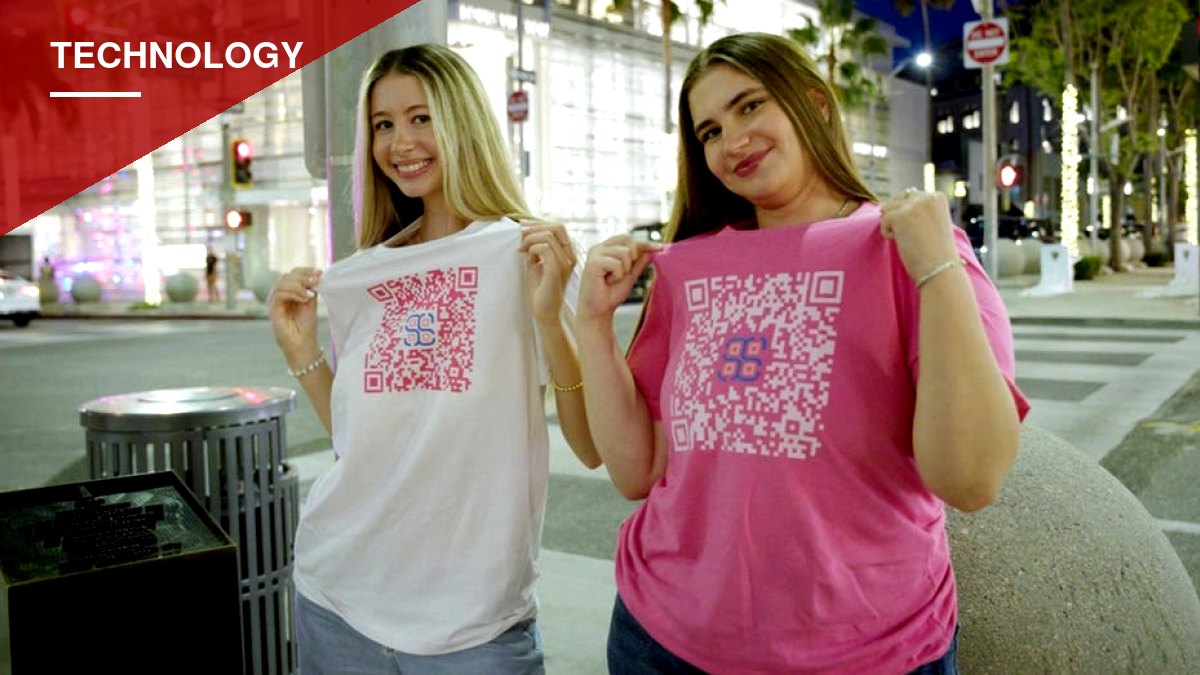

A new startup called ShareAScan is putting QR codes on T-shirts, hoodies, hats and mugs that link to digital content the owner can change at any time, turning ordinary clothing into a kind of updatable business card or portfolio.
The system works without any batteries, Bluetooth connections or hidden electronics. Instead, a printed QR code on the item connects to a web platform where the owner controls what appears when someone scans it with a smartphone camera — no special app required. The code itself stays fixed, but the content behind it can be swapped out, so a shirt worn to share a portfolio at a conference could later be updated to promote a different project or event.
ShareAScan describes the technology as a patent-pending platform connecting physical products to “dynamic, user-controlled digital identities.” In a September announcement, the company said a single product could serve as a changing introduction, portfolio, personal message or business card.
The company was founded by sisters Shara and Kailey Zuckerman. Shara is a college student studying business, finance and artificial intelligence; Kailey is still in high school. ShareAScan drew notable attention this month when its merchandise appeared in gift bags given to nominees, presenters and performers at the 78th Emmy Awards.
How it works, and what it costs
ShareAScan products start at $19, and the company says current customers won’t be charged an ongoing subscription fee — even if pricing changes for future buyers under a different model.
The company says scans are anonymous: it collects no information about who scans a code unless the owner has set access restrictions that require checking whether that person is authorized to view the content. If someone isn’t permitted access, they simply don’t get it. ShareAScan also says it does not currently provide owners with analytics on who has scanned their code, and that owners can delete their accounts and associated data at any time.
Privacy still depends on what you share
Even with those controls, the company acknowledges a limit it can’t engineer around: whatever information an owner chooses to make public — full name, workplace, photos, social media accounts — can be seen by any stranger who scans the code. That has led CyberGuy, which reported on the technology, to suggest people think through what a stranger could learn before wearing the item in public.
ShareAScan told CyberGuy that its QR codes cannot link directly to an outside website; scanning first opens an experience hosted on its own platform, though that experience can itself contain links. The company says it screens uploaded content for malicious links, phishing attempts, pornography and other inappropriate material, and that people review flagged content — while acknowledging its screening can’t catch everything.
That distinguishes the setup from a random QR sticker that sends a browser straight to an unknown site. Still, the Federal Trade Commission continues to warn that criminals use QR codes to direct people to fake websites built to steal passwords and financial information. In a warning issued Sept. 3, the agency again urged people to check a QR code’s destination before entering any sensitive information.
ShareAScan requires account holders to be at least 18, though the company acknowledges that requirement can’t fully prevent someone younger from creating an account regardless.
Durability and longevity
The company says its printed QR codes have been tested through repeated washing and continue to scan normally afterward, though heavy damage or fading could eventually make a code unreadable. Because the feature depends on ShareAScan’s online platform rather than the shirt itself, the company says it intends to keep that platform running long-term and has purchased insurance intended to support continued operation.
QR codes already appear on tickets, restaurant tables, payment screens and packaging. ShareAScan’s approach extends that familiar technology to clothing, with the added twist that the content behind a single code can change indefinitely. Anyone considering the product, however, is advised to weigh how much personal information they’re comfortable putting within a stranger’s scan.






You must be logged in to post a comment Login