
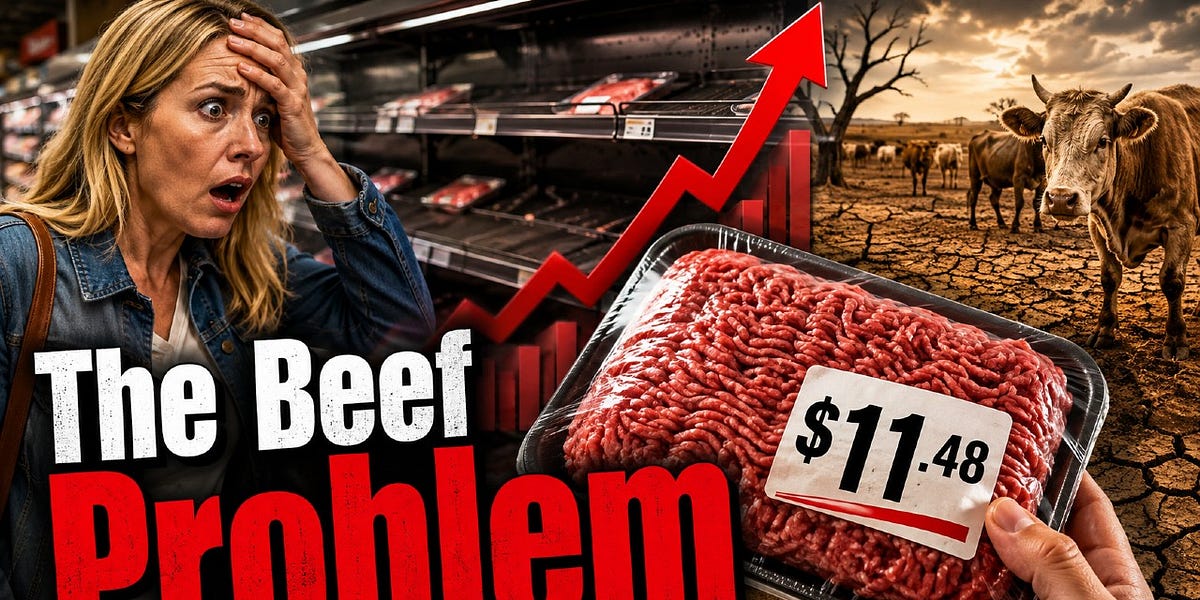

This article breaks down why American beef prices are at historic highs, what drove the shock, how long the shortage will likely last, and practical steps households can take now to blunt the impact. It lays out the key numbers, the biological limits behind cattle production, the additional pressures squeezing supply, and a realistic set of preparedness moves from low-cost to higher-commitment. Read on for a clear picture of the situation and sensible actions you can take in the window before new supply returns.
The snapshot is stark: ground beef reached $6.89 per pound earlier this year and the USDA expects beef prices to climb another 10 percent through the rest of 2026. Ground beef is roughly 72 percent higher than it was in January 2020 when it averaged about $3.88 per pound, and the U.S. cattle herd sits at 86.2 million head, a 75-year low. Beef and veal prices jumped about 15 percent year over year in January while chicken barely moved and milk stayed flat.
That gap between beef and other protein costs tells you something important: this isn’t a short-term market wobble. Grocery receipts are reflecting a structural squeeze that policy headlines aren’t treating with the urgency many consumers deserve. When biology and weather drive supply, typical economic fixes are limited in their speed and scope.
The central driver is drought-induced shrinkage of the breeding herd. Years of persistent drought across the Great Plains and Southwest destroyed grazing capacity and forced ranchers to liquidate breeding stock rather than carry expensive feed bills on land that could no longer support them. Those sales temporarily boosted beef availability, but they also removed the animals that produce the next generation of cattle.
Cheap beef a few years back was the warning sign in plain sight. That temporary flood of supply was literally the industry consuming its own future production, and bargain prices masked the long-term damage. Once breeding stock is gone, replenishing it is constrained by simple biology, not bank balances.
Biology doesn’t respond to monetary policy. You can print money but you cannot print cattle, and a heifer kept for breeding today represents several years before contributing to retail beef. Even if every rancher decided to rebuild the herd this week, meaningful increases in supply are unlikely to hit grocery shelves before 2028 at the earliest, given the natural production lag.
Despite record prices that should, in theory, incentivize expansion, livestock economists report that herd rebuilding is not yet happening at the scale needed. Geopolitical shocks such as conflicts involving Iran and Ukraine add longer-term volatility to feed, fuel, and transport costs that feed into the meat supply chain. Those outside pressures make a recovery more fragile and unpredictable.
Pressure is stacking up from multiple directions: roughly 75 percent of the U.S. beef cow herd is currently affected by drought, and the New World screwworm outbreak disrupted live-cattle imports from Mexico. Industry concentration remains high, with a handful of meatpackers controlling a dominant share of the fed-cattle market and several packing plants already closed or operating reduced hours. Meanwhile, America has been losing family ranching operations for decades, shrinking the base of beef production capacity.
If you’re late to this reality, there’s still time to act between now and the slower supply turnaround. Practical steps range from cheap and immediate to more deliberate investments that pay off in future resilience. Here are measures worth considering, ordered roughly from lowest to highest commitment.
First, a small chest freezer is a cheap and immediate hedge. A compact chest freezer typically runs a few hundred dollars and can be stocked during sale cycles when grocery stores still run loss-leading promotions. Buying in bulk when prices dip turns a temporary bargain into long-term supply security for your household.
Second, consider buying a half-cow or quarter-cow direct from a rancher if you have storage and the ability to coordinate processing. Bulk purchases from local producers often beat retail per-pound pricing and give you better cuts and traceability. Splitting a share with neighbors or family is a practical way to access the savings without shouldering a full load alone.
Third, learn pressure canning to diversify how you store protein beyond refrigeration. Pressure-canned beef is shelf-stable for years and eliminates reliance on electricity to preserve cooked meats. A canner is a one-time investment that turns seasonal or bulk purchases into ready-to-eat meals you can pull from the pantry.
Fourth, freeze drying offers very long-term storage if you can absorb the upfront cost. Properly prepared freeze-dried beef can last decades, making it a fit for deep long-term stockpiles, though equipment remains pricey for most households. Prepackaged options exist, but producing your own pays off over time if you plan to store a lot.
Finally, build a substitution strategy into weekly meals so you’re not single-threaded on beef. Stretch ground beef into chili, casseroles, and soups to multiply portions, and rotate chicken, pork, eggs, and dried beans into menus while habits are still easy to change. Making those swaps now reduces sticker shock later and keeps your household food budget more resilient.
Start with small, practical steps that match your storage, budget, and cooking habits so you can absorb price shocks without major lifestyle disruption. The supply picture is driven by durable factors that take time to change, so planning now buys you options and peace of mind before the next leg up in prices arrives.






You must be logged in to post a comment Login