
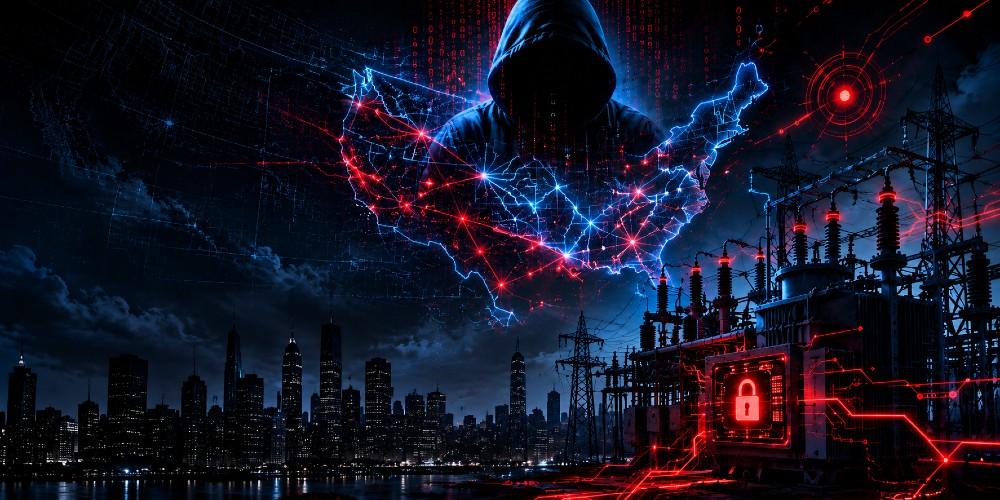

The lights going out in Caracas and the quiet new posture from Washington should wake every sensible person up. A targeted manipulation of industrial control systems plunged a capital into darkness, and federal guidance now tells utilities to plan like the attacker is already inside. That admission changes the risk calculus for whole communities and demands a practical, no-nonsense response from families and local leaders. This article walks through what happened, what the government is saying, and what households should do next.
In early January a blackout in Caracas was not caused by cut wires or bombs but by someone issuing the right commands inside operational systems. A capital of millions lost power because controllers were manipulated, and that scenario was not theoretical. The event reads like a demonstration tape for how a modern attack can work: code and commands substituted for physical sabotage.
By May the federal government moved from modeling to mandate, telling every energy, water, and pipeline operator to treat isolation and compromise as baseline conditions. The program called CI Fortify reframes catastrophic cyberattacks from a remote tail risk into an assumption for planning. The message is blunt: plan to run cut off from outside help and assume bad actors may already have footholds inside your networks.
Acting CISA Director Nick Andersen said utilities must be able to “isolate vital systems from harm, continue operating in that isolated state” and recover whatever an adversary manages to compromise. That sentence is the important admission. An agency that once talked in hypotheticals is now running pilot assessments on infrastructure that serves military bases, which means policymakers believe the threat is real and urgent.
The shift did not come from nowhere. In recent months attackers across different continents used different methods against the same target, critical infrastructure. Iranian-affiliated hackers interfered with programmable logic controllers in U.S. sectors and caused real operational disruption. Operators are being told to assume such intrusions can and will happen during kinetic conflicts.
Other episodes underline the point. Russian-linked actors damaged operational technology in Poland by exploiting internet-facing edge devices and deploying destructive malware, nearly crippling parts of the grid during bitter cold. In Germany, an arson attack on a single cable bridge left tens of thousands without power for days. Different actors, different tools, identical objective: take down power.
The cyber variant is uniquely dangerous because attackers can hide while they strike. Researchers have shown malware that intercepts genuine operator commands and substitutes malicious ones, spinning breakers and overheating transformers while feeding fake sensor data back to control rooms. When hardware is destroyed rather than merely turned off, replacement takes months and the old two-week recovery playbook is useless.
Nevertheless we made our prayer unto our God, and set a watch against them day and night, because of them. (Nehemiah 4:9)
There is a political lesson here for conservatives: the federal admission vindicates a posture of preparedness and skepticism about overreliance on distant authorities. For years those who stored water, fueled generators, and pushed for resilient local plans were mocked. Now the government has adopted the same logic for institutions while many citizens remain unprepared.
Every family should treat the CISA question as personal: how long can you operate if connections fail and suppliers are compromised? Practical measures are straightforward and affordable. Planning is not a partisan hobby; it is a sober, conservative habit of self-reliance that complements public efforts to harden national infrastructure.
- Water. Municipal pressure relies on electric pumps; store water and have a way to purify more with a bare minimum of one gallon per person per day.
- Refrigerated medications. Insulin and similar supplies need contingency plans; talk to your pharmacist about buffers and passive cooling options now.
- Communications. Cell service fails fast after a grid loss; keep a battery or hand-crank radio and agree on a meetup plan if phones are useless.
- Heat and cooling. Match emergency heating or cooling to your climate and season, because attacks are often timed to maximize harm.
- Cash. Expect card readers and ATMs to be offline; small bills on hand buy what plastic cannot.
- Duration. Move beyond a 72-hour mindset; aim for thirty days minimum and build toward ninety, budget permitting.
None of this requires panic or a second mortgage, just the humility to accept what Washington has quietly admitted and the discipline to prepare. If the federal government tells utilities to act like the enemy is inside, citizens should do the same at home. The watchman who fills water barrels is not crazy; he is paying attention and practicing the conservative virtue of responsibility.





You must be logged in to post a comment Login