
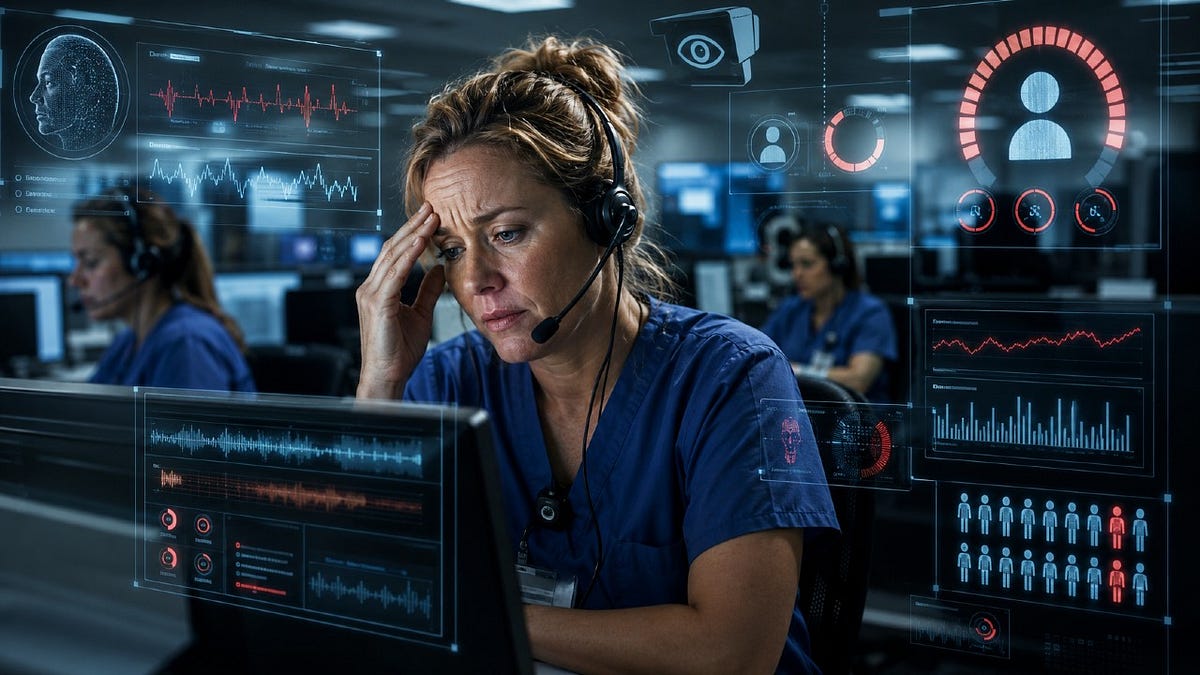

Kaiser Permanente advice nurses are sounding the alarm over rushed AI and surveillance tools that critics say squeeze the humanity out of care, turning experienced nurses into timed data points and threatening patient safety and trust.
On the phone with patients, nurses say constant monitoring and AI evaluations push them to hurry, to stick to scripts, and to prioritize metrics over real judgment. Those tools claim to measure empathy, tone, and efficiency, but nurses report the result is less listening and more checkbox medicine. That shift matters because advice calls often stop problems from getting worse.
At scale, this is not a small policy tweak; it changes how care is delivered across an enormous nonprofit system. When frontline professionals are watched as if they are assembly-line workers, the ability to exercise clinical judgment shrinks. Nurses who once paused to ask the right follow-up question now feel pressured to keep calls short and “on metric.”
These concerns are echoed by nurses beyond Kaiser, where pilots of voice analysis and other surveillance tools began appearing in 2024. Administrators talk about reducing burnout and improving outcomes, but the people handling patients report increased stress and a sense of being micromanaged. That mismatch between corporate messaging and clinical reality should make any conservative pause and ask who benefits.
Technology can help with record keeping and flagging urgent cases, but surveillance that grades empathy and times conversations is different. It treats human interactions as if they can be fully captured by scorecards. That risks reducing the patient to a set of signals instead of a person needing careful attention.
Conservatives have good reasons to be skeptical when powerful institutions adopt unproven systems without clear guardrails. When the goal shifts toward throughput and cost control, professional autonomy gets sidelined. Nurses become data producers instead of trusted professionals, and families lose access to the full care judgment those nurses were trained to provide.
There is also a moral dimension here rooted in community and responsibility. Good healthcare depends on relationships and on the freedom of clinicians to act on what they see and hear. Systems that incentivize speed over wisdom erode that foundation and hollow out the vocation of nursing.
The script-driven environment critics describe risks missing subtle cues that predict deterioration, especially for vulnerable or elderly patients. A calm voice or a seemingly trivial complaint can be the tip of a serious problem, and algorithms built on averages may miss that. In short, automation should not replace curiosity and care.
From a policy perspective, transparent oversight and clear limits are necessary before rolling out surveillance tools across large health systems. Nurses and clinicians need a seat at the table to evaluate safety, accuracy, and the ethical use of data. Without that, institutions will drift toward efficiency measures that serve balance sheets more than people.
Faith and conservative values add another layer to the argument, insisting that technology serve human dignity rather than undermine it. “And Jesus went forth, and saw a great multitude, and was moved with compassion toward them, and he healed their sick.” (Matthew 14:14) That example points to a health system built on compassion and presence, not on timed interactions judged by unseen algorithms.
Policymakers, hospital leaders, and conservative voices should press for principled restraint: require pilots to be transparent, subject to independent review, and driven by clinicians’ input. Patient safety and professional judgment must be the priority, not the ease of surveillance. If healthcare loses its human center in the name of efficiency, real harm will follow and public trust will suffer.






You must be logged in to post a comment Login