
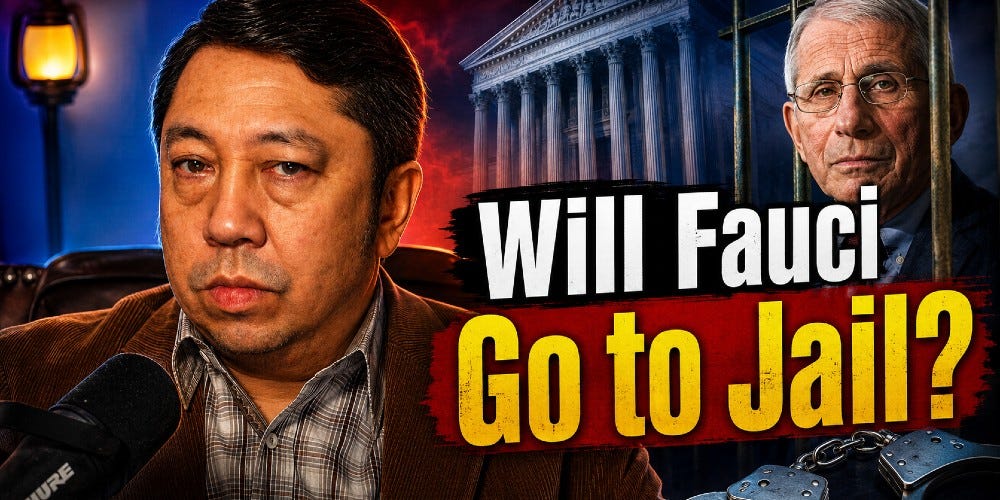

The Senate hearing with Dr. Anthony Fauci turned into a dramatic refusal to answer questions, and this piece breaks down the legal and political fallout from a Republican perspective, covering the pardon issue, Fifth Amendment arguments, contempt mechanics, criminal versus civil paths, and the likely road ahead for accountability.
Wednesday’s hearing was unusual by any standard: a subpoenaed witness invoked the Fifth more than a hundred times and declined to answer even basic queries. Chairman Rand Paul moved assertively, and the posture in the room made clear this was about more than protocol; it was a test of whether public officials answer to Congress. The spectacle will linger in voters’ minds regardless of legal technicalities.
At the heart of the Republican case is a straightforward principle: a pardon that wipes out federal exposure also strips away the shield of self-incrimination for the covered conduct. The argument points to longstanding Supreme Court language suggesting that immunity and a pardon perform similar functions when they eliminate federal jeopardy. From this view, Biden’s blanket pardon for an eleven-year window removes the legal danger Fauci claims exists.
Fauci’s counsel leaned on the perjury-trap rationale, but courts have been blunt that the Fifth does not protect a witness who wants to lie to avoid future perjury charges. If the fear is that truthful answers would contradict prior sworn testimony, the pardon reaches back to that testimony and, on the Republican reading, renders the fear moot. That logic makes his blanket silence hard to square with accepted law.
Then there is Burdick, the idea that accepting a pardon carries an implication of guilt and a related obligation to answer. Republicans frame the pardon as immunity in all but name, and they argue that immunity should not be used as a shield to stonewall congressional oversight. When a witness accepts protection from prosecution and still refuses to answer, contempt should follow without delay.
The stakes are concrete: refusing to answer after a clear directive can trigger criminal contempt under federal statute, a misdemeanor that has sent other political figures to jail for months. This time the institutional incentives look different, with executive alignment favoring enforcement rather than cover. That changes the calculation from a sleepy referral to a path that could realistically lead to prosecution.
But honest assessment requires noting the real hurdles to a lasting conviction. A presidential pardon only covers federal crimes and does not extinguish state exposure, and the Fifth Amendment can protect against state jeopardy in some circumstances. That mismatch gives defense lawyers a powerful opening to argue the privilege still applies despite the pardon.
Legal precedent also favors cautious courts when the privilege claim is plausible. Decisions have long directed judges to resolve doubt in the witness’s favor, and convictions for good-faith invocations are rare. To imprison someone after they relied on unsettled legal advice would require judges to announce a novel rule and apply it retroactively, a step courts are loath to take.
The most practical route for those pressing accountability is civil enforcement. If a federal court orders Fauci to answer and he still refuses, the good-faith shield shrinks and contempt becomes far easier to sustain. That process takes time, but it converts a political standoff into a judicial command that is much harder to shrug off.
Expect the committee to vote contempt, a full Senate vote to follow, and litigation to be the deciding arena. Republicans will press the argument that the pardon cannot be used as a blanket shield against congressional scrutiny, and they will push for judicial clarity. Whether that yields a final criminal conviction is uncertain, but the pressure will build through legal means.
What happened in public matters politically: a public health official who once demanded trust chose to refuse to answer the people’s representatives. That image will resonate with voters who want transparency and accountability from institutions and officials. The legal machinery will take its course, but the political judgment has already been rendered in many minds.
“For there is nothing hidden that will not be disclosed, and nothing concealed that will not be known or brought out into the open.” (Luke 8:17) Whether through testimony, records, or the refusal to speak, more of those years will be exposed as the process unfolds, and every refusal becomes part of the public record.



You must be logged in to post a comment Login