
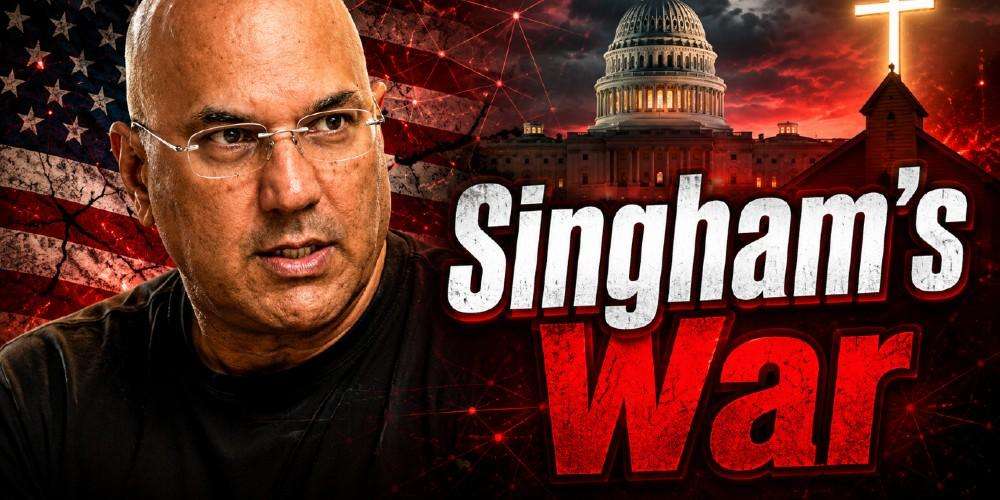

Federal investigators have shifted gears: what many called spontaneous street unrest now looks like a coordinated influence operation funded from abroad, and multiple cabinet-level agencies are treating it as a national security problem. This piece follows the money, the organizations, the tactics on the ground, and the legal and moral questions raised when foreign cash powers domestic agitation. It argues that accountability, transparency, and law enforcement must catch up to a new form of hostile-state pressure using American legal cover.
Washington has moved from curiosity to action. The Department of Homeland Security and the Department of War have been added to an expanding interagency probe that already includes Treasury, State, and Justice. Officials are focused on a network of nonprofits whose funding and digital playbook suggest systematic external direction rather than spontaneous activism.
At the center of the story is a Shanghai-based tech entrepreneur whose financial footprint into American civic institutions is large and opaque. Estimates place hundreds of millions of dollars flowing into a constellation of groups that repeatedly surface at high-profile protests and anti-enforcement campaigns. That money has enabled organizations to buy offices, build media platforms, and underwrite rapid-response street operations.
The pattern is consistent enough to attract congressional attention and aggressive executive coordination. Members of Congress have questioned whether some of these flows meet the threshold for foreign agent disclosure under longstanding law. The investigative posture now resembles the response usually reserved for hostile intelligence activity rather than simple tax or campaign irregularities.
The Money Has Always Been the Story
This is not the work of usual charitable donors. The finance trail points to a former tech executive who relocated to Shanghai, sold his firm, and from that base financed a network of U.S. nonprofits. Recipients repeatedly named in reporting include community centers, activist coalitions, Marxist-leaning parties, and independent media projects that amplify the same narratives during protests.
Congressional leaders have been blunt about the risks. Those critics argue the money has been channeled through donor-advised funds and opaque vehicles that shield the source while enabling political and media influence at scale. Whether the dollars originate in private wealth or are seeded by hostile-state interests, the outcome is the same: outside-directed pressure that corrodes civic trust.
The Streets Are the Product
The end game is visible on city sidewalks and at enforcement actions where organized groups mobilize quickly, often using encrypted messaging to coordinate. Officials cite examples where activists converged on ICE operations, staging blockades and confrontations while synchronized media and social channels amplified the events. The result is a feedback loop that turns isolated enforcement moments into national controversies in hours.
Multiple organizations have shown up with remarkably uniform messaging and timing, suggesting more than coincidental alignment. The rhythm of protests, the rapid mobilization, and the media push that follows look like a manufactured campaign rather than a grassroots uprising. Recorded trends include sharp spikes in assaults on federal officers and an escalation in hostile interactions tied to these organized networks.
“You go all the way back to Stalin, who basically was appropriating this, so he’s going to destroy America from within,” Mullin told Fox News Digital. “You stir that up by causing distrust in your government, discontent on the streets, distrust between law enforcement and the public, breaking up the family units and going after the Christian mindset. This was all part of their plan to begin with.”
The Stalin reference is historically rooted. Cold War intelligence lessons called such actions “active measures” — techniques meant to erode belief in institutions rather than to convert populations to an ideology. In the digital age those tactics can be amplified cheaply and anonymously, with legal shields that make attribution and accountability difficult.
The Shanghai Shield
Part of the problem is structural. Living outside U.S. jurisdiction, the principal financier cannot be compelled to testify before Congress, and the funds move through legal instruments designed for privacy. Nonprofits enjoying tax-exempt status benefit from American protections even while they carry out political and media campaigns that critics say advance foreign narratives.
That opacity frustrates investigators and undermines public trust. Lawmakers are asking whether donor-advised funds and shell entities are being used to mask the true provenance of politically consequential money. The legal remedies exist but are often slow and difficult to enforce, especially when the trail crosses borders and corporate facades.
Christian Mindset in the Crosshairs
One striking element of the allegation is the claim that faith communities and family structures are explicit targets of destabilization efforts. Historical adversaries of liberty have long viewed organized religion as an obstacle to total control, and modern influence operations appear to exploit that dynamic by eroding trust in moral institutions. The result is not only political polarization but a cultural assault on sources of resilience that have long anchored American life.
“For we wrestle not against flesh and blood, but against principalities, against powers, against the rulers of the darkness of this world, against spiritual wickedness in high places.”
What Comes Next
The current investigation now spans a broad set of federal tools and authorities, aiming to trace funding, expose influence channels, and apply existing statutes where appropriate. Legal obstacles remain, especially in proving foreign direction and meeting the burdens required for FARA prosecutions. Still, public exposure and coordinated enforcement can blunt the operational advantage these networks have relied upon.
This is a political and civic contest as much as it is a legal one. When voters can see who funds agitation and why, the manufactured momentum often collapses. Policymakers and law enforcement are moving to close gaps so that foreign-directed influence cannot use our laws as cover while it weakens our institutions.




You must be logged in to post a comment Login