
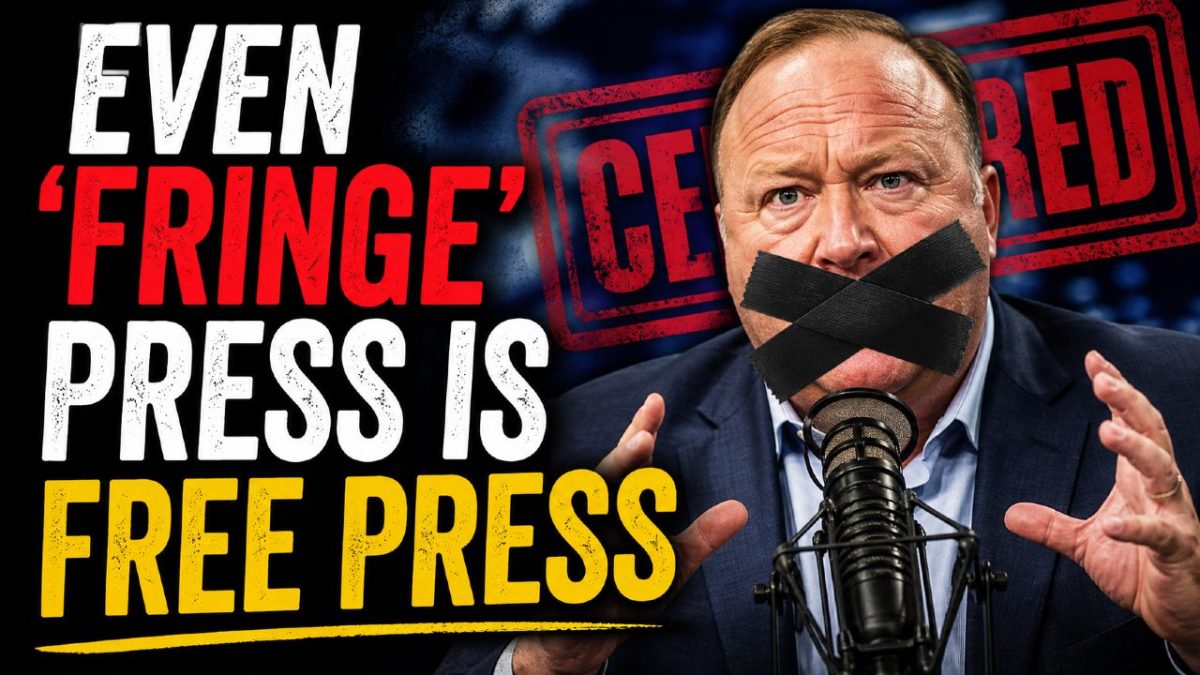

This piece looks at the sudden shutdown of Infowars, the rapid return of Alex Jones to broadcasting, the legal machinery behind the closure, the broader free press implications, and the practical lesson that speech can be disrupted but not permanently silenced. It traces how a court receiver, planned licensing to a satirical buyer, and massive defamation judgments intersected to create an unusual test of First Amendment boundaries. It also highlights the partisan concern about precedent and the pragmatic reality that audiences and platforms adapt fast. The article keeps to the facts while arguing from a perspective that values press liberty and limited government over easy censorship.
The lights at Infowars went out at midnight, and by the next midday Alex Jones was back on the air under a new name and a new domain, continuing to speak to his followers. The studio had been padlocked, the official site showed an off-air blank, and the brand was placed in receivership after decades of broadcasting. That speed matters, and the legal mechanism behind the blackout matters even more to those who care about press freedom.
A court-appointed receiver stopped paying bills for rent, power, and services as part of a handover plan that would have licensed the Infowars name to Global Tetrahedron, the parent company of The Onion, which agreed to operate the brand as a satirical parody. A Texas appeals court briefly paused that transfer after an emergency motion from Jones’s lawyers, but much of the financial life support was already cut and staff were ordered out by midnight. The practical result was a bruising, public shutdown staged by an administrator rather than a criminal conviction or a standard bankruptcy process.
The legal backdrop is the roughly $1.4 billion in defamation judgments against Jones related to the Sandy Hook claims. These are jury verdicts, they are real, and the families have every legal right to try to collect. Still, there is a constitutional intuition at stake about what remedies are appropriate in civil litigation and how far courts should go in dismantling a media operation to satisfy monetary awards.
Jones was never charged with a crime. He was sued, he lost, and he owes substantial sums. That distinction matters because civil damages compensate while criminal penalties exist to punish. Garnishing wages and seizing assets are recognized tools for satisfying judgments, but turning a masthead over to adversaries or silencing a publisher through receivership raises a different set of questions about viewpoint neutrality and the role of courts in shaping public discourse.
We should be candid about Jones the person and the damage of his false claims. Defending the principle here is not a defense of the content. The larger risk is precedent: if an outlet can be taken off the air via civil remedies and then handed to a rival as a trophy, who is safe next? Powerful interests with deep pockets and friendly judges could weaponize the same legal toolbox against reporters, bloggers, or small publishers whose views they dislike.
The American answer to offensive or harmful speech has always been more speech, not receivership. The courtroom produced a verdict, and the marketplace of ideas chipped away at Infowars’s audience and credibility long before the receiver moved in. People were free to reject Jones’s claims, and millions did, which is exactly how a free society is supposed to operate when speech goes off the rails.
The practical silver lining is blunt and almost ugly in its simplicity: Jones was off air for roughly twelve hours and then he was broadcasting again from another site and under a new banner. You cannot actually shut down speech in America. You can only inconvenience it, and that reality should reassure conservatives worried about broad new precedents as well as remind everyone that censorship tools can be repurposed in ways they do not like.
Ben Collins’s farewell on Bluesky put it bluntly: “Goodbye, get lost, and we’ll see you soon.” That tone and that plan may be theatrics, but the incident forces a sober conversation about limits. Courts and litigants must balance the legitimate need to compensate victims with the constitutional risk of extinguishing a media voice, even one most people dislike. The debate over how to strike that balance is not academic – it is a decision about how free the press will remain when the stakes get personal and the law becomes a blunt instrument.




You must be logged in to post a comment Login