
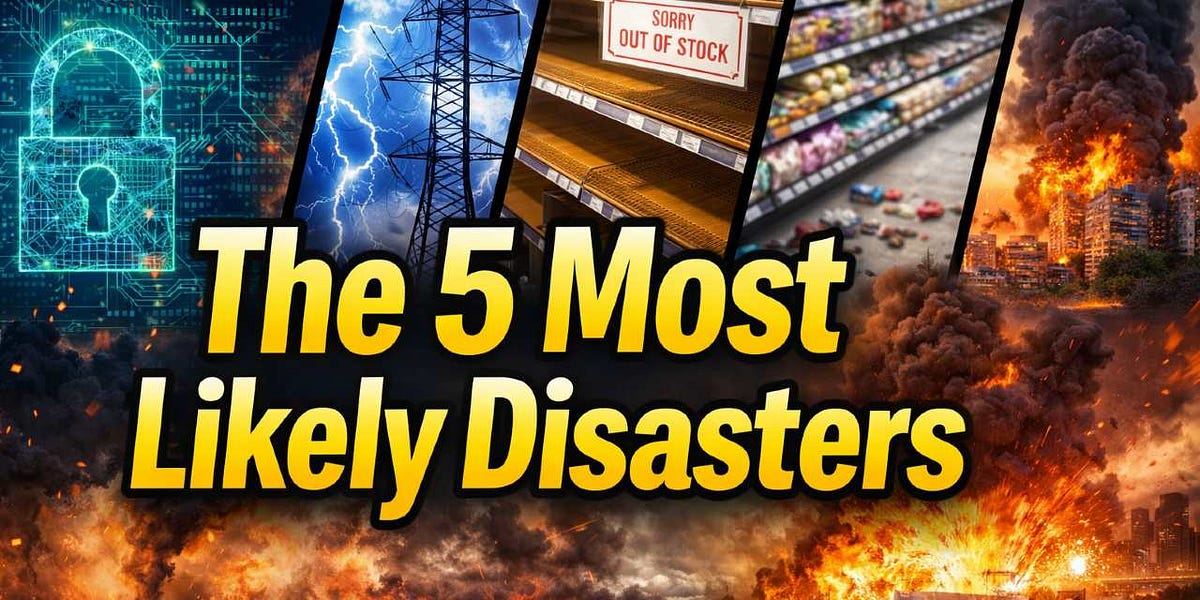

The Disasters Most Americans Ignore Until It’s Too Late outlines the kinds of breakdowns that actually disrupt lives: failing power grids, brittle supply chains, invisible cyber attacks, routine extreme weather, and fragile financial access. This piece walks through why those threats matter, how they cascade into bigger problems, and what simple steps make a real difference for households facing short-term shocks that can become long-term headaches.
Most people picture disasters as big, movie-style events, but reality is quieter and more practical. The shocks that hurt the most are the ones we lean on every day without thinking about them. That gap between expectation and reality is where complacency lives, and it’s dangerous because small failures stack fast.
Electricity is the backbone most of us never notice until it’s gone. A prolonged grid failure doesn’t just mean no lights; it halts water treatment, freezes grocery distribution, shuts down gas pumps, and cripples hospitals and communications. When those systems stop, basic needs become immediate problems and the fallout spreads from neighborhoods to entire regions.
The modern supply chain is another fragile wonder, tuned for efficiency rather than redundancy. Stores rely on “just-in-time” deliveries that keep shelves lean and profits high, but that also means there’s little buffer when trucks stall or ports back up. In a matter of days households can find empty shelves, and restocking often takes far longer than people expect.
Cyberattacks add a stealthy, fast-moving danger to that mix. Critical services from fuel distribution to payment networks are controlled or coordinated by software that can be targeted remotely. An attack that disrupts those systems can leave people unable to get gas, access cash, or even call for help, and the diagnosis and repair of such damage often takes time that families don’t have.
Severe weather is familiar but still underrated because it happens so often people grow numb to the risk. Hurricanes, winter storms, wildfires, and heatwaves regularly interrupt power and transportation and sometimes isolate entire communities. The real problem is frequency: repeated storms erode resilience and make recovery slower and costlier each time.
Access to money and functioning banks is an assumption worth questioning before it’s tested. Banking systems depend on power, internet, and staff, so disruptions can delay withdrawals, freeze digital transfers, or constrain ATM availability. Having cash on hand and a plan for limited banking access reduces one of the most immediate pressures families face when other systems falter.
What makes these risks especially dangerous is how they feed into each other. A power outage limits pumps and logistics, a cyber event can stop payments and fuel flows, and a storm can sever roads that deliveries depend on. That first 72-hour window is when shortages become panic and simple problems spiral into systemic trouble because no backup steps were in place.
Preparing for these realistic scenarios is straightforward and surprisingly affordable. Keep several days of nonperishable food and water, maintain a modest cash reserve, charge devices and have backup power options, and plan where your household will gather and communicate if phones or networks are spotty. A handful of sensible choices reduces stress and buys time when the systems you rely on hiccup.
Getting prepared is less about predicting the exact crisis and more about building a practical buffer against the ordinary failures that are far likelier than rare catastrophes. Treat preparedness like routine maintenance: a small, regular investment that prevents big, sudden headaches when the everyday systems wobble. That way, when disruption arrives, families have options and the space to act instead of just reacting.





You must be logged in to post a comment Login