
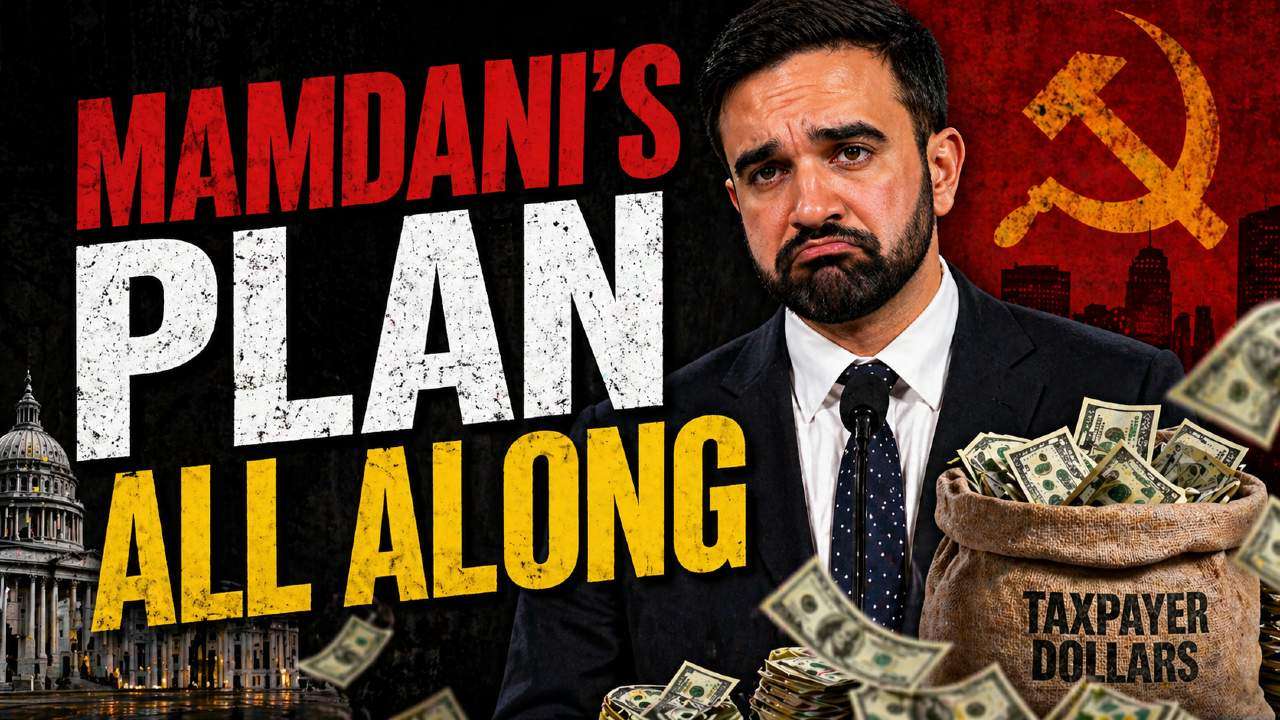

Zohran Mamdani stood at City Hall and laid out a choice: raise other people’s taxes or start shrinking the city’s promises. He called it a “budget crisis of historic magnitude,” and then asked Albany to rewrite the check. This piece looks at the numbers, the pitch, and what a Republican observer hears when a mayor elected on expansion suddenly discovers arithmetic.
Mamdani’s posture was familiar: the planners run out of money, so the producers must pay more. That is the gist of the socialist economic model in a single scene, and it explains why the mayor’s face changed before his talking points did. When the math hits the manifesto, you get a plea for outside revenue instead of cuts to new spending.
The city now faces a roughly $5.4 billion shortfall on an operating plan that has swelled to about $127 billion. He inherited $8 billion in reserves, a cushion many cities would envy, yet his team labels the books “poisoned” and calls the gap “structural.” The message ultimately was the same: the city needs someone else to write the check.
The administration’s marquee ask is to pare back the Pass-Through Entity Tax credit rebate from 100 percent to 75 percent, a move officials say would bring in nearly $1 billion. Mamdani pitched it as making “the wealthiest pay their fair share,” a line meant to land politically. Governor Kathy Hochul responded flatly, “It’s not happening,” she said, and refused to alter PTET.
Even political insiders pushed back. Former Governor Andrew Cuomo dismissed the idea as a “budget gimmick” that would make the state “less competitive, less affordable, and less attractive to the people and businesses who pay the bills.” When Cuomo and Hochul are sounding like the grownups in the room, you can judge how far left the rhetoric has wandered. Politics matters because policy consequences do too.
Hear the vocabulary closely. Mamdani keeps using phrases like “structural deficit,” “structural reset,” and “structural solution.” Those are not casual turns of phrase. They telegraph an intent to permanently expand the city’s claim on outside revenue rather than to trim commitments that keep growing the budget.
The proposed savings are mostly accounting moves that delay costs instead of cutting them. A pension payment reshuffle pushes obligations into the future and a class-size mandate tweak merely postpones a bill. Meanwhile, the administration plans to keep funding popular new programs while asking for more from Albany or raiding reserves.
Albany has already funneled more than $4 billion to the city this cycle, including $1.5 billion in direct assistance and $1.2 billion in child-care funds. Governor Hochul pointed to line items growing “not 4% a year, but 4% a month” and asked why costs were ballooning. That kind of question from your most important political patron is not an easy one to answer.
There is also a reserves trap waiting in the wings: rating agencies have warned that draining the rainy-day fund to plug the gap risks a downgrade. A downgrade increases borrowing costs, which widens deficits and feeds the same cycle that produced the shortfall. That is a fiscal feedback loop that rewards more demands for outside money rather than restraint.
Politics and math collide because promises create constituencies that demand funding. Every new entitlement breeds another permanent line item and another pressure point on the budget. When the producers push back or leave, the city’s revenue base shrinks while demands keep growing.
“The rich ruleth over the poor, and the borrower is servant to the lender.”
That old line fits the story: borrowing against tomorrow to pay for today creates a dependence on continual infusions from higher levels of government. Eric Adams put it plainly: “Free is a lie.” Programs that sound free are not costless, and at some point the bill forces an exit of taxpayers or businesses unwilling to underwrite perpetual expansion.
Hochul’s blunt refusal on Tuesday shows political checks still exist, and her 2026 calendar matters to how far Albany will go. The DSA will keep trying different framings, because they rarely abandon the underlying agenda after a single rejection. New Yorkers should watch the mid-May negotiations closely to see whether a so-called compromise keeps the city on a path to fiscal responsibility or locks it into permanent dependence on outside checks.




You must be logged in to post a comment Login