
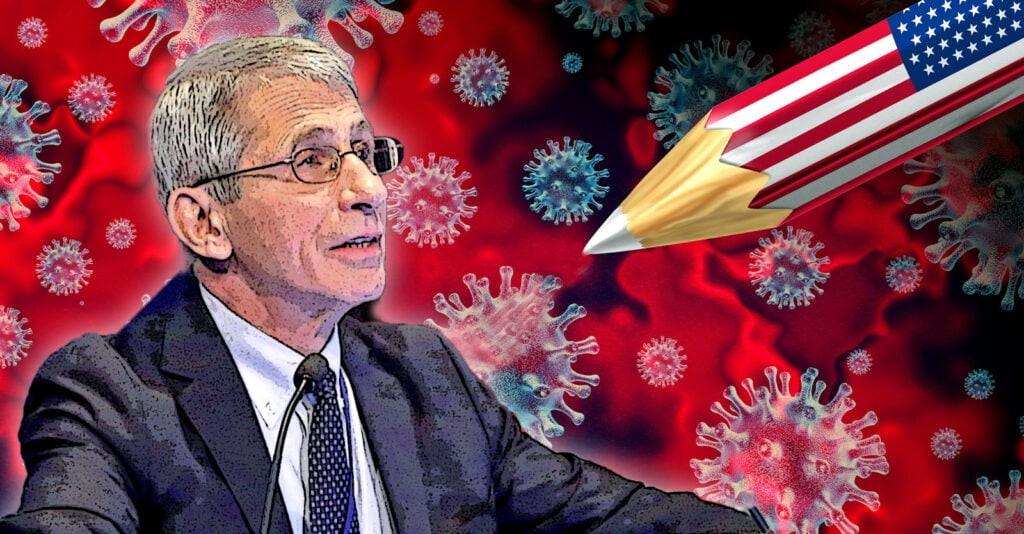

A virologist’s blunt critique of past NIH leadership has stirred fresh calls from Republican lawmakers for transparency about COVID-19 origins and risky research. The allegations target former NIH leaders Dr. Anthony Fauci and Dr. Francis Collins, accusing them of serious professional failures and possible concealment around gain-of-function work. Lawmakers are pressing for review, scientists are fighting over the record, and the debate is shaping up as a straightforward demand: answer the hard questions and restore trust. This article lays out the accusations, the political reaction, the technical issue of gain-of-function research, and where key figures stand now.
At a private meeting with NIH staff, virologist Simon Wain-Hobson delivered sharp criticism of leadership choices made before and during the pandemic. He accused former agency heads of failing to protect public safety and of sanitizing debate about risky experiments. His remarks have landed on Capitol Hill and drawn conservative lawmakers into renewed scrutiny of what happened at the agency.
Sen. Ron Johnson, R-Wis., weighed in with an uncompromising take on the matter. “Anthony Fauci and Francis Collins are guilty of offenses far worse than ‘professional failure,’” he declared, connecting those failures to a broader pattern of secrecy. “They were clearly involved in a purposeful cover-up of their support for and funding of dangerous gain-of-function research that more than likely produced the coronavirus and allowed them to unleash their mRNA injection on an unsuspecting global population,” Johnson added.
The term at the center of this fight is gain-of-function, a type of research that can boost a pathogen’s transmissibility or severity to study potential responses. Federal officials including Fauci and Collins have denied that U.S. research of this kind caused the pandemic or that they conducted such experiments in a way that led to COVID-19. Republicans say denials are not enough and that transparency about methods, approvals, and funding is required to settle the matter.
Independent reporting first flagged the virologist’s private remarks and spread the conversation beyond the meeting room. Paul D. Thacker brought the comments into public view, prompting lawmakers and other scientists to demand an explanation. The discussion went viral and became a focal point for hearings and inquiries that conservative members of Congress say must continue.
Rep. Rich McCormick, R-Ga., a physician and former member of a congressional COVID subcommittee, argued the allegations deserve a full, transparent review. “I’ve continually said that questions regarding the origins of COVID-19 and gain-of-function research should always be addressed with transparency and seriousness,” he said, insisting that past choices at NIH have long-term consequences. McCormick and other Republicans emphasize that accountability is the only route to rebuild public trust in federal medical institutions.
McCormick also highlighted how early messaging shaped public debate and science policy. “Early publications associated with NIH leadership, including Dr. Fauci, shaped the initial narrative and may have limited broader scientific debate,” McCormick continued. “Transparency and accountability at the NIH are essential for public trust. The whole point of science is to have robust debate, and the minute you sterilize that debate, it is no longer science.”
1) EXCLUSIVE: Virologist Simon Wain-Hobson spoke w/ over 100 NIH officials in a private talk, berating former NIH officials for obfuscating about dangerous gain-of-function studies.
"Scientists have to be educated because they are totally out of touch.”
Fauci regime is erased. pic.twitter.com/7HzeqqxfjS
— Paul D. Thacker (@thackerpd) April 9, 2026
Wain-Hobson cited a 2011 commentary by Fauci and Collins defending certain controversial lines of research as a formative moment. He argued that those early defenses set a tone that discouraged rigorous scrutiny later on. For critics on the right, that moment looks like proof the agency’s culture tilted toward protecting programs rather than exposing risk.
During his remarks Wain-Hobson did not hold back on the ethical dimension of the debate. “We can’t have the safety of society being dictated without discussion,” he said. “I think that was a professional failure.” Those words strike a chord with lawmakers who view opaque decision-making as a bipartisan threat to public safety and democratic oversight.
Wain-Hobson also accused professional organizations of blurring the real dangers of risky experiments, a charge that adds pressure on scientific societies to clarify their positions. The American Society for Microbiology has been mentioned by critics as part of an institutional ecosystem that, in their view, failed to forcefully spotlight hazards. That critique feeds into broader calls for reform of how risky research is reviewed and approved.
Both Fauci and Collins moved into academic and speaking roles after their government service, and their public profiles remain high. Republicans pressing for answers want records, memos, and oversight testimony to be made available so the American people can judge for themselves. The current push is less about individual reputations and more about ensuring that future public health decisions are made in the open and grounded in real accountability.





You must be logged in to post a comment Login