
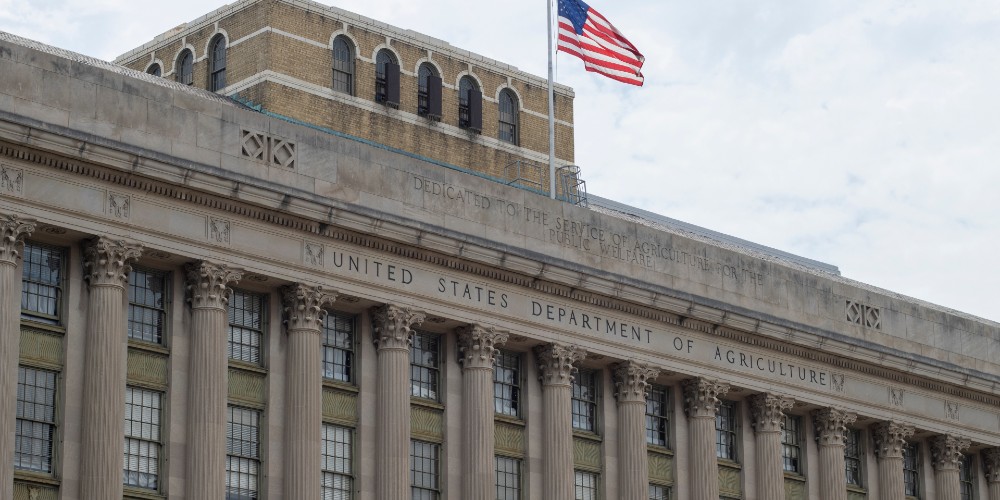

Even after President Donald Trump’s directive brought federal workers back to their desks, the Department of Agriculture continues to leave massive swaths of prime Washington office space sitting idle at taxpayer expense.
A new inspector general memo released February 25, 2026, documents the stubborn reality: across 15 selected USDA facilities, average daily utilization climbed from a dismal 15 percent before the February 28, 2025, return-to-office deadline to just 36 percent afterward. At the agency’s Washington headquarters, the figure stands at only one-third of design capacity. Daily headcount more than doubled—from 1,537 to 3,745—but the buildings remain cavernously empty.
The numbers tell a story of bureaucratic inertia that Biden-era telework policies entrenched and Trump’s order only partially corrected. Pre-RTO, some facilities operated at single-digit utilization. Post-RTO gains proved uneven, with certain buildings barely budging. Headquarters occupancy rose from 920 to 1,927 on an average day, yet two-thirds of the space still goes unused.
That same day, Secretary Brooke L. Rollins, Deputy Secretary Stephen A. Vaden, and General Services Administrator Edward C. Forst stood in front of the South Building to declare enough is enough. They announced the imminent return of the South Building and Braddock Place to GSA for disposal and eventual sale. More than 85 percent of the South Building sits unoccupied, saddled with a staggering $1.6 billion backlog in deferred maintenance.
“This is a long overdue move to protect American taxpayer dollars from being wasted on expensive real estate inside the Washington, D.C. area when our government should be closer to the farmers and ranchers we serve,” Rollins stated. “It is simply unacceptable to put these costs on the taxpayer.”
The announcement marks the formal launch of USDA’s broader reorganization plan. The goal is explicit: shrink the agency’s footprint in the capital region, relocate personnel to regional hubs where they can actually serve the agricultural heartland, and stop pouring money into half-empty monuments to inefficiency.
Iowa Senator Joni Ernst, who has long spotlighted these ghost-town offices, welcomed the development while pressing for more. “Even after President Trump and USDA doubled the number of employees in the office, nearly two thirds of the space is still unused,” she said. “It’s time to put this abandoned building on the chopping block to save millions for taxpayers and keep draining the swamp by moving federal workers closer to the people they serve.”
The inspector general memo underscores deeper problems beyond mere wasted rent. Underutilized buildings drive indefensible per-person carbon emissions from heating and cooling empty floors. Stagnant plumbing in low-occupancy structures has already triggered Legionella outbreaks elsewhere in the federal portfolio. Taxpayers have shouldered both the direct costs and the hidden health and environmental burdens.
This episode fits a larger pattern. Under the previous administration, telework reached extremes—some agencies approaching 90 percent remote—with buildings effectively mothballed. Trump’s January 2025 memorandum demanded a full return to in-person work, producing measurable improvement yet exposing how deeply entrenched the remote-work culture had become. Utilization doubled, but design capacity still sits largely vacant.
Reorganization will not happen overnight. Each phase must respect civil-service protections, congressional oversight, and employee transitions. Yet the direction is unmistakable: federal real estate must serve the mission, not perpetuate a permanent Washington class detached from the country it governs.
Americans have watched for years as their money maintained office space that no one occupied. The February 25 report and simultaneous disposal announcement signal a welcome shift. Empty desks and crumbling buildings no longer represent acceptable overhead. They represent a failure of stewardship that this administration is finally correcting.





You must be logged in to post a comment Login