
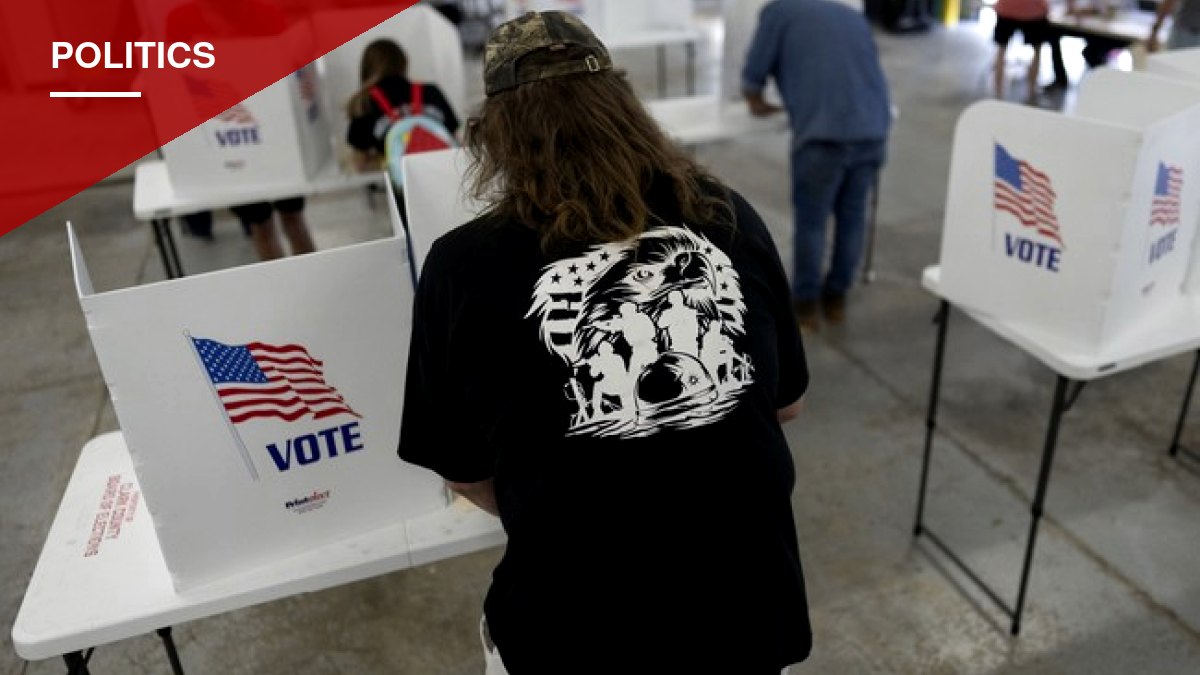

Connecticut’s State Elections Enforcement Commission (SEEC) has opened four separate investigations into allegations that voters cast ballots twice or attempted to, part of a broader batch of 30 investigations the commission authorized last week, according to NBC Connecticut.
One of the cases involves Terri LaChance, a 65-year-old registered Democrat, who says she deliberately returned to her polling place after already voting on November 1 to test the state’s safeguards. “I was trying to test, like, the system; if there’s things in place. Because everybody keeps saying there’s glitches in the system,” she said on an NBC Connecticut podcast.
According to an earlier report from Connecticut Public, LaChance’s driver’s license was scanned at the polling place and a sticker was printed before an election worker asked her to sign. She says she stopped the process at that point, telling the worker she had already voted, and maintains she never intended to cast a second ballot.
A separate case involved a woman believed to have short-term memory problems who returned to vote two days after casting an early ballot. Government records show an election worker did not catch that the state’s electronic voter registration system had already flagged her as having been issued a ballot, and a second ballot was fed into the tabulator. Officials discovered the discrepancy at the end of the day while reconciling ballot totals and referred the matter to state regulators.
Connecticut classifies fraudulent voting as a Class D felony, punishable by up to five years in prison and a $5,000 fine.
State Rep. Matt Blumenthal, a Democrat representing Stamford, said the referrals show the state’s election security measures are functioning as intended, and called for the investigations to move quickly with penalties imposed where warranted.
Republican state Rep. Gale Mastrofrancesco has called for lawmakers to consider stricter penalties, a photo identification requirement for voters, and greater oversight of local election workers. “Elections are won and lost by, sometimes, a very, very small margin,” she said.
Connecticut currently does not require photo identification from most voters, instead allowing alternative forms of identification and, in many cases, a signed declaration of identity.





You must be logged in to post a comment Login