
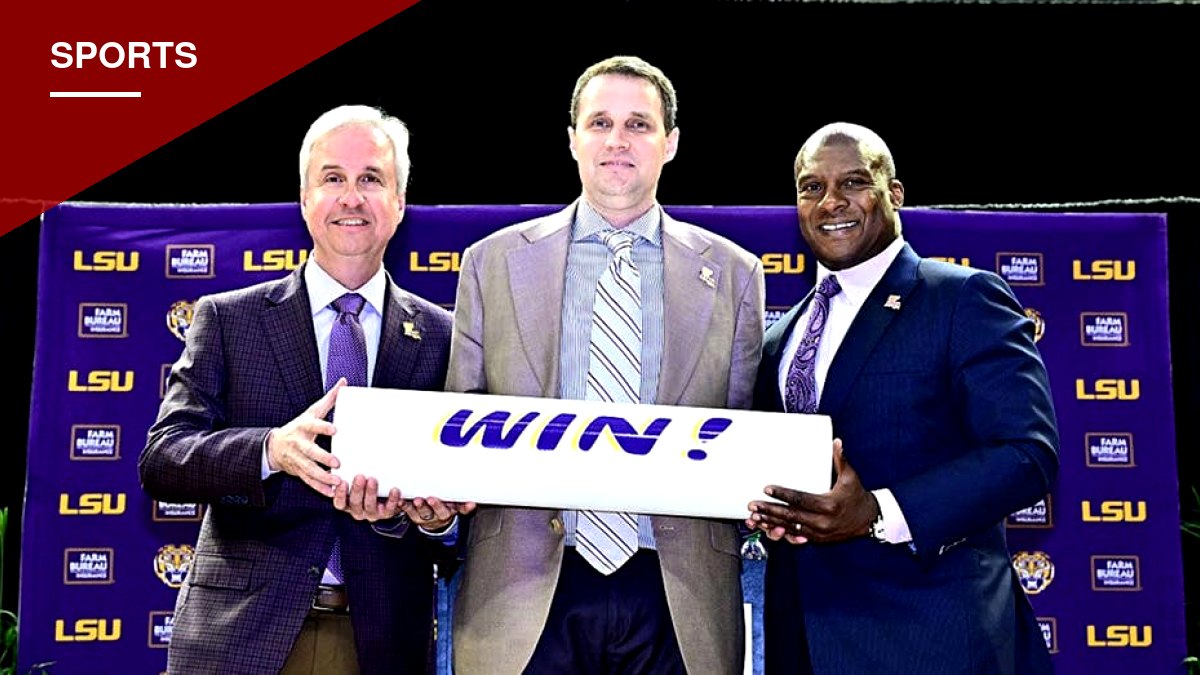

The Southeastern Conference says it will hold a special meeting on Dec. 3 to consider terminating LSU’s membership, according to a federal court filing made Monday. The move marks the most serious escalation yet in a monthslong dispute between the conference and the Baton Rouge school over athlete eligibility.
The filing comes after LSU basketball coach Will Wade played guard RJ Luis in a game against Louisiana-Monroe last week, six days after a Baton Rouge judge issued an injunction allowing the former professional player to compete. That decision reignited a fight that began earlier this year when LSU’s football program, under coach Lane Kiffin, considered adding two players with NFL experience, Dae’Quan Wright and Zxavian Harris, to its roster despite the SEC’s objections.
LSU ultimately left Wright and Harris off its roster before the season opener against Clemson. But by then the dispute had already reached federal court. SEC Commissioner Greg Sankey testified in a related eligibility lawsuit the players had filed against the conference and the NCAA, and the SEC filed its own federal lawsuit against LSU President Wade Rousse and other university officials, including Kiffin, arguing that using court orders to override its eligibility rules infringed on the conference’s First Amendment right to govern its own membership. LSU has asked a judge to dismiss that lawsuit, and a ruling is still pending.
Assurances, then a reversal
Sankey said in a declaration filed Monday that LSU officials had repeatedly assured him Luis would not play for the Tigers. He cited a Sept. 5 text message from LSU athletic director Verge Ausberry and an Oct. 14 phone call with Wade in which he said he was told Luis would not take the court.
“Before Defendants rostered Mr. Luis on Nov. 17, 2026, as discussed below, LSU officials indicated to me on multiple occasions—including a text message from Defendant Ausberry to me on September 5, 2026 and a phone call between Defendant Wade and me on October 14, 2026 — that Mr. Luis would not play for LSU’s basketball team,” Sankey said.
Wade played Luis anyway. The next day, according to multiple sources, Rousse spoke by phone with Sankey, who told him SEC presidents were preparing to discuss possible penalties against LSU during a teleconference that afternoon. Rousse later issued a statement saying he had instructed Wade to stop playing Luis, but that did little to ease tensions among conference leaders.
One of Luis’s attorneys, Tony Clayton, filed a motion the same day seeking to hold Sankey in contempt of court.
A high bar for expulsion
Removing LSU from the SEC would require a two-thirds vote, or 11 of the conference’s member schools. Scheduling the December meeting does not mean that support currently exists, and sources caution the outcome is far from certain.
A source familiar with the discussions told OutKick that LSU’s playing of Luis was “the final straw for SEC leaders.”
“You can only poke the bear so many times before they decide to pounce, and they (SEC Presidents and Chancellors) had seen enough nonsense from LSU,” the source said. “Who knows if they would have actually boycotted games, or even tried. But lawyers from schools within the conference were going through their options. This whole thing is just annoying. Like, get your s— together, and I mean everyone involved.”
LSU’s repeated pushback against the conference has come with backing from Rousse and Louisiana Gov. Jeff Landry. The school has shown it is willing to test how far SEC authority extends when a court has already cleared an athlete to play.
The dispute, now playing out partly in an Alabama federal courtroom, could also lead to damages claims from the athletes involved against the conference, though that remains uncertain. For now, the question is whether the SEC will follow through on its threat to expel one of its own members, or whether the Dec. 3 meeting is meant mainly to send a warning.




You must be logged in to post a comment Login