
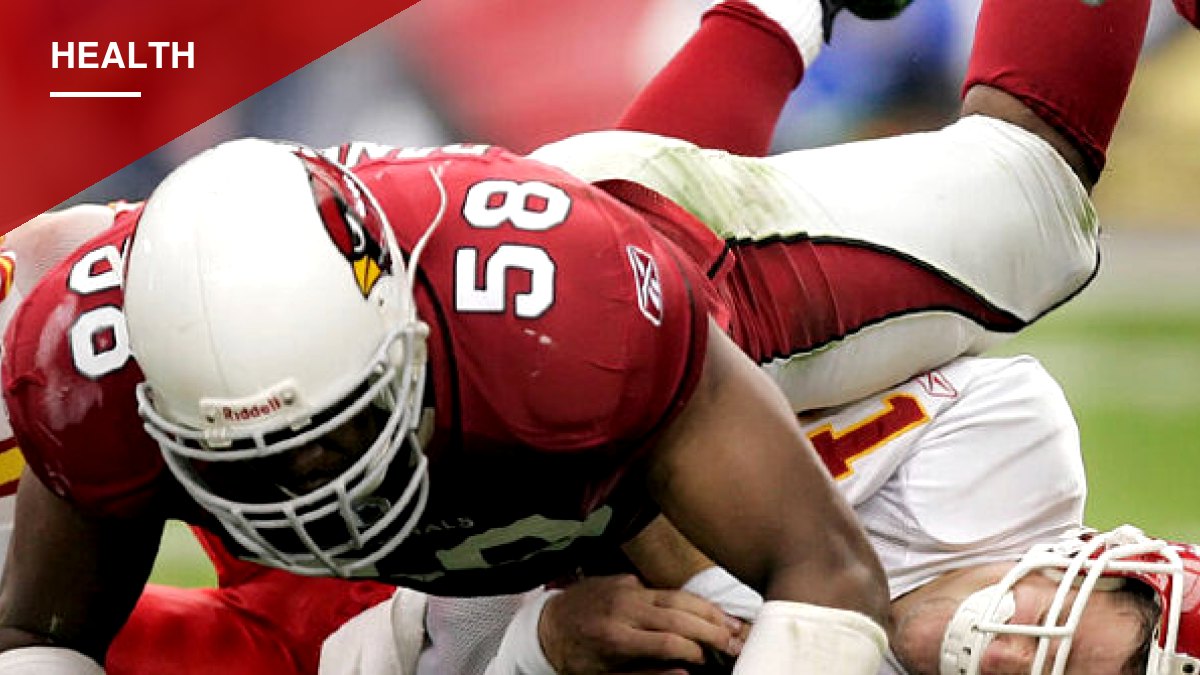

Researchers at Boston University and Banner Health have identified a blood marker that detected advanced chronic traumatic encephalopathy, or CTE, in former football players while they were still alive, according to a study published Thursday in the Journal of the American Medical Association.
The marker, a protein called endogenously cleaved microtubule-binding region tau, or eMTBR-tau, reflects the tau tangles that build up inside brain cells in people with CTE. Researchers measured the protein in blood drawn from 21 former American football players, then compared those readings against autopsy results after the players died and their brains were examined through donation.
Of the 21 players, autopsies found CTE in 18, and 16 of those cases were classified as high stage. The disease was most common among those who played professionally: 11 of 12 former pro players had advanced CTE, along with four of seven former college players and one of two who played only through high school.
The blood test identified only the most advanced cases. Earlier-stage CTE, which often produces no symptoms, was not detected.
Michael Alosco, co-director of clinical research at Boston University’s CTE Center and co-senior author of the study, said the finding opens a path toward diagnosing the disease in living patients, something currently impossible since CTE can only be confirmed after death.
“We are still in the discovery phase, and it’s a small sample size,” Alosco said, adding that larger validation studies are needed.
A second research team, at Washington University School of Medicine in St. Louis, reported a related marker called eMTBR-tau243 the previous Friday. That group measured the protein in 11 autopsy-confirmed CTE cases within a larger cohort of 229 participants and likewise said bigger studies would be required before the marker could be used as a diagnostic tool.
The Food and Drug Administration has not approved any diagnostic test or treatment specifically for CTE.
Players Split on Whether They’d Want to Know
The prospect of a usable blood test has divided current NFL players. Washington Commanders quarterback Marcus Mariota told ESPN he would take the test if one were available.
“I think because, at the end of the day, it gives insight to the rest of the NFL, to college kids, to high school kids of what we’re getting ourselves into,” Mariota said.
Minnesota Vikings safety Joshua Metellus said he would prefer not to know while his playing career is still active.
“I probably wouldn’t want [the test] while I’m in the league, because I think it’ll change the way I play,” Metellus said. “But I know there’s a lot of guys who are very curious and would like to know.”
The new findings follow an October study estimating that roughly 75 percent of NFL players who died between 2008 and 2023 had CTE.
The NFL has said it “continuously strives to make the game of football safer,” pointing to its efforts to reduce concussions and other head impacts.






You must be logged in to post a comment Login