
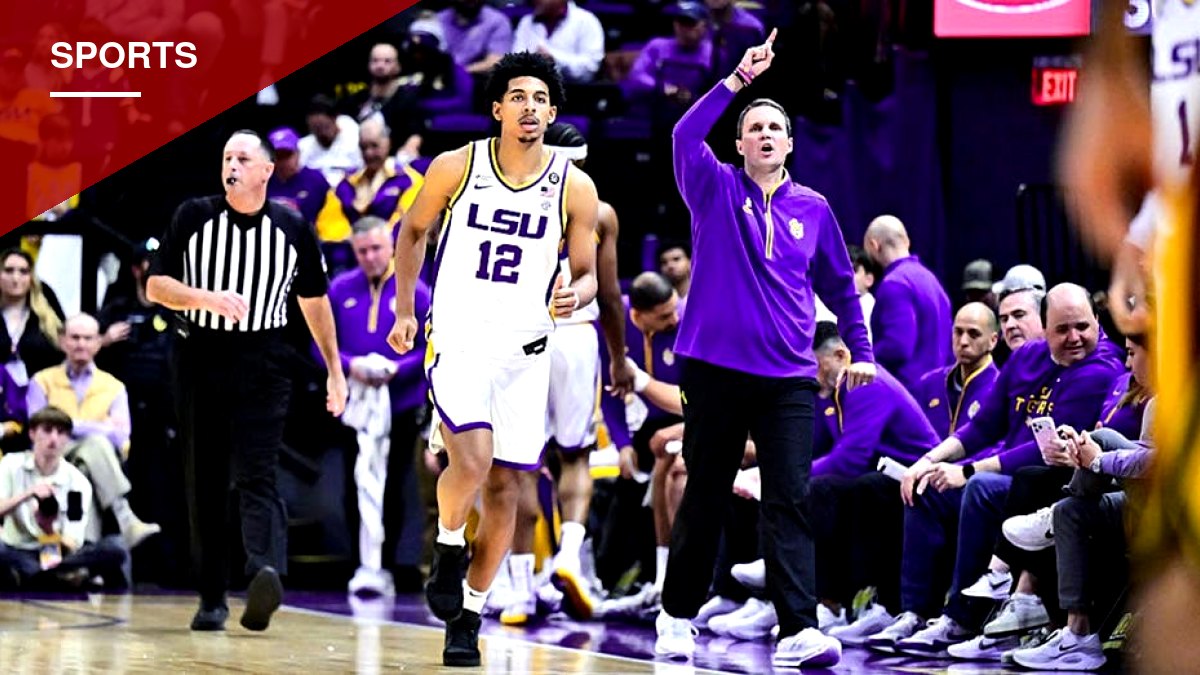

LSU President Wade Rousse announced late Thursday afternoon that men’s basketball coach Will Wade had been instructed not to play RJ Luis, reversing course just one day after the player scored 11 points in a win over Louisiana-Monroe.
“In my role as president of the LSU System, after further review, I have instructed LSU men’s basketball coach Will Wade not to play RJ Luis,” Rousse said.
The turnaround came less than 24 hours after Wade defended putting Luis on the court Wednesday night. “He was eligible, and he played,” Wade said at the time.
The decision followed a scheduled Thursday afternoon call among SEC presidents, during which, according to multiple sources familiar with the discussions, options including other SEC schools boycotting games against LSU and renewed talk of expelling the Tigers from the conference were on the table.
“That was the final straw for SEC leaders, they were ready to penalize them (LSU) in some form or fashion,” one source told OutKick. “You can only poke the bear so many times before they decide to pounce, and they (SEC Presidents and Chancellors) had seen enough nonsense from LSU. Who knows if they would have actually boycotted games, or even tried. But, lawyers from schools within the conference were going through their options. This whole thing is just annoying. Like, get your sh-t together, and I mean everyone involved.”
Sources also said SEC Commissioner Greg Sankey spoke by phone with Rousse on Thursday afternoon before the full presidents’ call, delivering a blunt assessment of what could happen if LSU kept playing Luis. Rousse did not join that larger call. Less than two hours after speaking with Sankey and consulting LSU’s own general counsel, the school announced Luis would be benched.
A Legal Fight Far From Over
LSU’s reversal does not settle the underlying dispute. One of Luis’s attorneys, Elliot Abrams, criticized the SEC’s posture in a statement: “The SEC’s decision to threaten a member with expulsion if it plays an eligible student-athlete is reprehensible and seriously harms a young person who was caught in the middle of a power struggle having nothing to do with him.”
The confrontation traces back to last Friday, when a Baton Rouge judge granted Luis a preliminary injunction. The SEC said Monday it would abide by the order and not punish LSU for keeping Luis on the roster, but the conference objected to actually playing him. On Tuesday, the SEC stated: “LSU’s decision today to rely on its own interpretation of the Court’s order to justify its actions is inconsistent with the expectations and responsibilities of [SEC membership]. This is a deeply concerning and disappointing development.”
LSU tested that warning by playing Luis Wednesday night. By Thursday afternoon, the school had backed down.
Part of a Broader Conflict
The basketball dispute is the latest episode in a wider legal battle between LSU and the SEC. Three months ago, the conference sued LSU in federal court, with Sankey testifying in a Baton Rouge courtroom in a separate case brought by former players Dae’Quan Wright and Zxavian Harris, who sought to play football for coach Lane Kiffin’s Tigers.
That federal case has produced its own disputes. On Wednesday, the SEC asked a judge to strike language from LSU’s motion to dismiss accusing the conference of making “hallucinated” claims against a defendant. A judge ordered LSU’s lawyers to issue a public apology through a press release, but Louisiana Attorney General Liz Murrill pushed back in a court filing, saying that would not happen.
On the same day, attorney Tony Clayton, representing Luis, filed a motion seeking to hold the SEC in contempt over its Tuesday statement.
With multiple lawsuits, threats of expulsion and courtroom disputes still active, a resolution between LSU and the SEC does not appear imminent.




You must be logged in to post a comment Login