
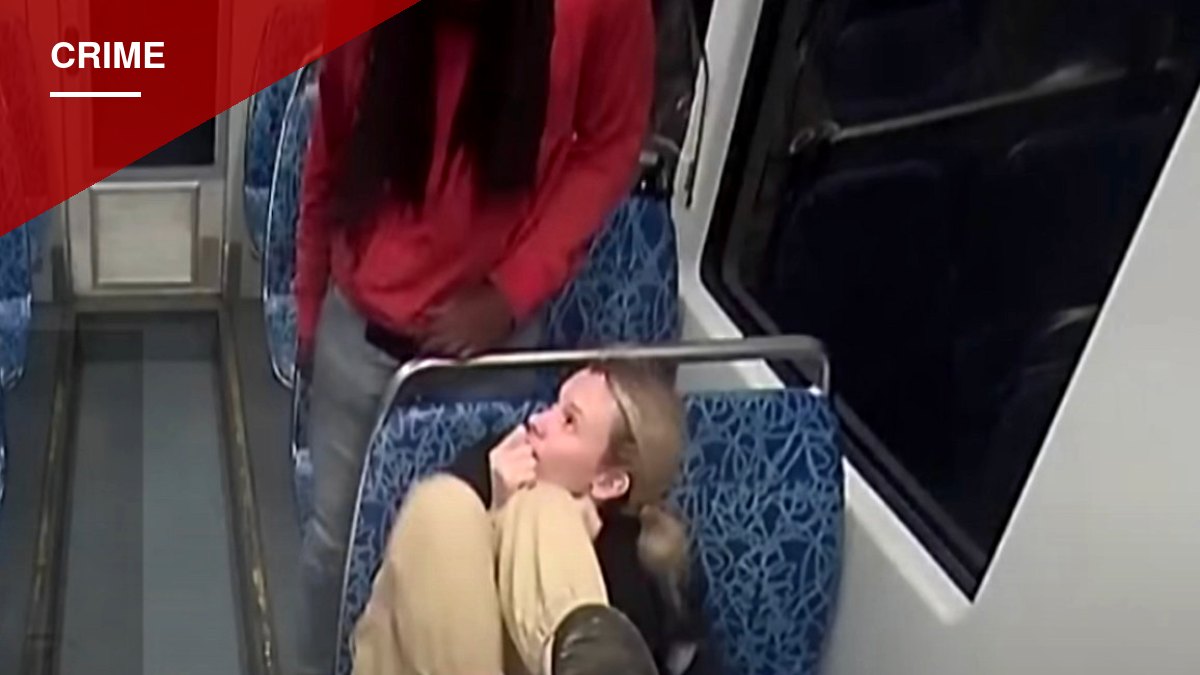

The City of Charlotte is asking a Mecklenburg County Superior Court judge to dismiss a wrongful-death lawsuit filed by the family of Iryna Zarutska, arguing that decisions about transit security and policing are government functions protected from liability under North Carolina law.
Zarutska, a 23-year-old Ukrainian refugee, was fatally stabbed in the neck aboard a Lynx Blue Line train about four minutes after boarding, according to surveillance video that drew national attention. She had just left work at a local pizzeria. Decarlos Brown Jr., who had been seated behind her, is accused in the killing.
Zarutska’s family sued Charlotte and its private transit security contractor, Professional Police Services, in August, alleging that security failures on the city’s light-rail system left riders exposed to violent crime.
In a 34-page filing submitted Monday, Charlotte asked the court to throw out the claims against the city, arguing the lawsuit challenges “law-enforcement deployment, transit policing, crime prevention, security-contractor oversight, and public-safety administration” — all of which the city contends are shielded by governmental immunity.
The family’s lawsuit had anticipated that argument, contending that Charlotte waived immunity and that running a light-rail system that charges fares is a proprietary function rather than a governmental one.
What the family alleges
The family’s complaint argues that stronger fare enforcement, physical barriers and adequate security could have stopped Brown from boarding the train or carrying out the attack. It cites findings from the North Carolina state auditor showing that Charlotte and the Charlotte Area Transit System had planned to spend about $2.23 million on safety and security equipment in 2025 but spent only about $470,000, leaving roughly $1.76 million unspent and some planned security work unfinished.
Charlotte’s new filing confirms several details underlying that claim: there was no private security guard inside Zarutska’s train car at the time of the attack, Brown apparently boarded without presenting a ticket or pass, and the light-rail system has no turnstiles or fare gates.
The city’s defense
Charlotte denies that it ignored passenger safety, stating that the Charlotte Area Transit System maintained contracted armed and unarmed security, coordinated with law enforcement and pursued other public-safety initiatives before Zarutska was killed.
The city also argues that Brown’s failure to pay a fare did not signal he would commit a violent attack, and that decisions about where security guards were stationed, surveillance coverage and fare enforcement did not cause Zarutska’s death. Charlotte contends that responsibility for the killing rests solely with Brown.
If the judge allows any of the family’s claims against the city to proceed, Charlotte argues it should not be required to pay Zarutska’s estate more than $1 million.
The city is asking the court to dismiss all claims against it and to bar the family from refiling them. The judge has not yet ruled on the motion.






You must be logged in to post a comment Login