

A timeline pieced together by federal investigators shows the tanker that slammed into a docked cruise ship in New Orleans on Friday lost control of its steering just minutes before impact, and records show the vessel had a history of mechanical and safety problems dating back more than a year.
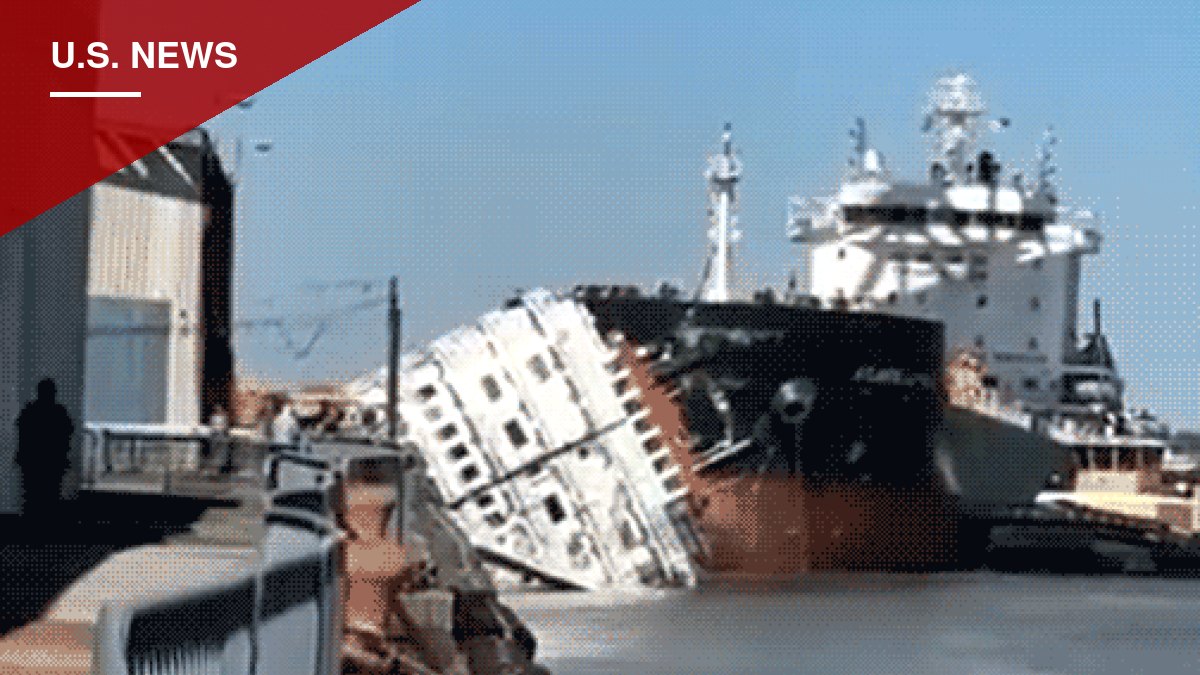
The American Cruise Lines vessel American Heritage had just finished a multi-day Mississippi River cruise and was docked near the Port of New Orleans, roughly two hours into letting its approximately 200 passengers disembark, when the tanker Atlantic Asphalt struck it.
The tanker, carrying 19 crew members and a local river pilot, had left Lower 9 Mile Anchorage near Mississippi River mile marker 83 and was headed to an oil facility in Reserve, Louisiana, according to officials.
The National Transportation Safety Board said the Atlantic Asphalt suffered a steering casualty that left its rudder fixed in the starboard position, forcing the vessel into an unintended turn toward the river’s east bank. Investigators have not yet determined what caused the malfunction.
In the minutes before the collision, crew aboard the tanker scrambled to avert disaster, according to the NTSB. They sounded a whistle, called for assistance, ordered the anchors deployed, issued emergency commands and sent radio warnings — but the vessel struck the American Heritage anyway.
The cruise ship began taking on water almost immediately and started tilting toward the middle of the river as passengers and crew moved to evacuate. A large-scale rescue effort followed, drawing Coast Guard personnel, police, firefighters and nearby tugboats and commercial vessels.
Twenty-two minutes after being struck, the American Heritage rolled onto its side and capsized, becoming partially submerged.
Officials said everyone aboard was eventually accounted for. Thirty-two people were taken to local hospitals with non-critical injuries, and no deaths were reported — a result officials have described as a “Miracle on the Mississippi.”
A Troubled Record
Friday’s crash was not the first time the Atlantic Asphalt had drawn scrutiny over safety. Records obtained by NOLA.com show the tanker was cited in June for faulty electrical wiring in its pump room.
In 2024, inspectors who boarded the vessel found its rescue boats were not prepared to launch effectively in an emergency. That same year, inspectors also logged two separate breakdowns in the ship’s navigation systems.
In September 2024, the tanker “experienced loss of communication between the bridge and main engine,” according to Coast Guard officials in Wilmington, Delaware. Two months before that, its automatic pilot system malfunctioned as the vessel approached Baltimore.
The NTSB continues to investigate what caused the steering failure that led to Friday’s collision.






You must be logged in to post a comment Login