

In four Republican-leaning states up for U.S. Senate elections this cycle — Idaho, Montana, Nebraska and South Dakota — independent candidates with past or current ties to the Democratic Party are challenging Republican incumbents or nominees, according to a review of polling and spending data.
Republicans currently hold a 53-47 majority in the Senate, with 35 seats on the ballot. Democrats would need a net gain of four seats to take control. Most of the competitive terrain lies elsewhere; the four races below are in states that Donald Trump carried by double digits.
Idaho
Three-term Republican Sen. Jim Risch faces independent Theodore “Todd” Achilles, a former Democratic state representative who switched his registration to run. Idaho Democrats had pressured their official nominee to withdraw before Achilles entered the race. The Poll Max average shows Risch leading 46.2 percent to 32.9 percent. Achilles’ campaign has spent more than $1.7 million, compared with over $4.7 million spent by Risch’s campaign.
Montana
Republican Sen. Steve Daines announced his retirement on the last day of candidate filing, a move that helped position U.S. Attorney Kurt Alme as the GOP nominee. Alme faces independent Seth Bodnar, a former Green Beret and president of the University of Montana, who has the backing of former Democratic Sens. Jon Tester and Max Baucus. The Democratic nominee, Alani Bankhead, a self-described progressive, has remained in the race despite pressure from party figures to withdraw. The Poll Max average has Alme leading with 40.9 percent to Bodnar’s 28.4 percent, with Bankhead trailing both, even though Bodnar has outspent Alme.
Nebraska
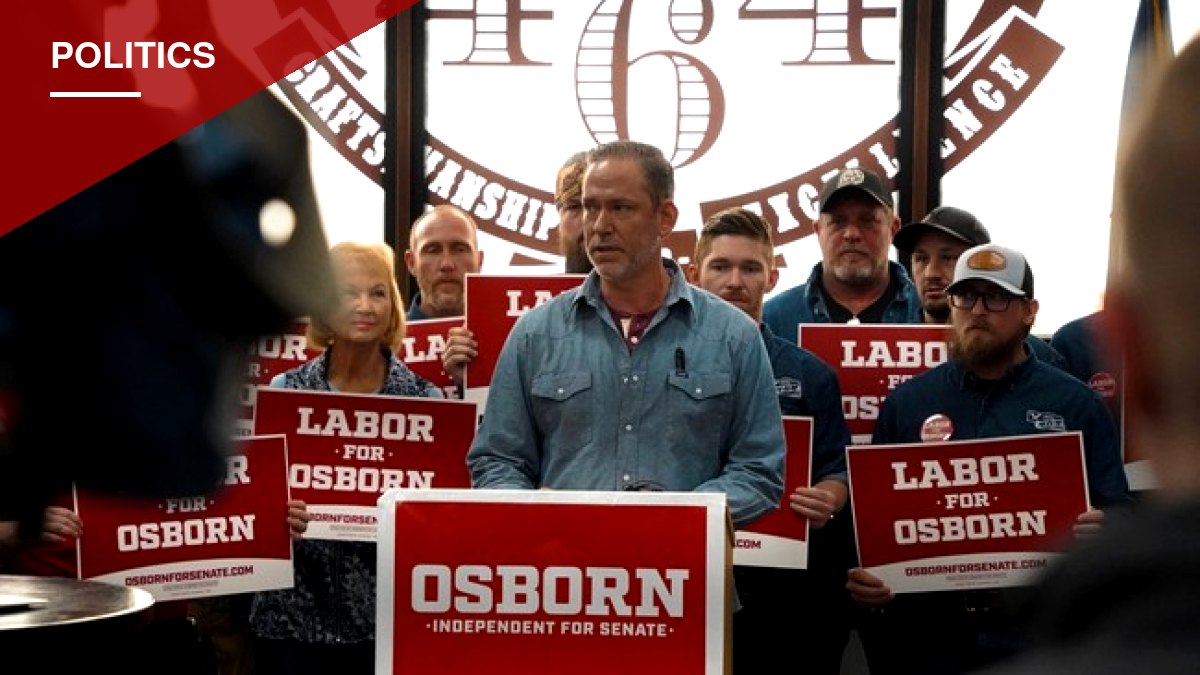
Independent Dan Osborn, who ran against Sen. Deb Fischer in 2024, is now challenging incumbent Republican Sen. Pete Ricketts, a former governor who was appointed to the Senate and later won a special election. Nebraska’s Democratic nominee withdrew after being selected, consistent with the pattern in other states. Osborn’s campaign has spent roughly $9 million to Ricketts’ $13 million; outside groups have spent about $24 million against Osborn and $10 million in his support, compared with $18 million against Ricketts and $1 million supporting him. The RCP polling average shows Ricketts leading Osborn, 46.5 percent to 45 percent.
South Dakota
Sen. Mike Rounds, also a former governor, faces independent Brian Bengs, an enlisted U.S. Navy veteran and retired Air Force officer who previously taught at the U.S. Air Force Academy and ran as the Democratic Senate nominee in 2022. South Dakota Democrats pressured their official 2026 nominee to step aside. The Poll Max average shows Rounds leading 48.2 percent to 43.4 percent, not accounting for two independent polls that place Rounds at 50 percent or higher. Combined spending in the race exceeds $9 million, with roughly 60 percent of outlays supporting Rounds.
Separately, Alaska’s Senate race has drawn national attention over an unrelated controversy involving a last-minute development described by commentators as an “October surprise.”
National polling, including the RealClearPolitics generic congressional ballot showing an 8.4-point Democratic edge, suggests favorable conditions for Democrats this cycle, though both parties’ internal polling methods have drawn scrutiny for potential sampling bias.






You must be logged in to post a comment Login