
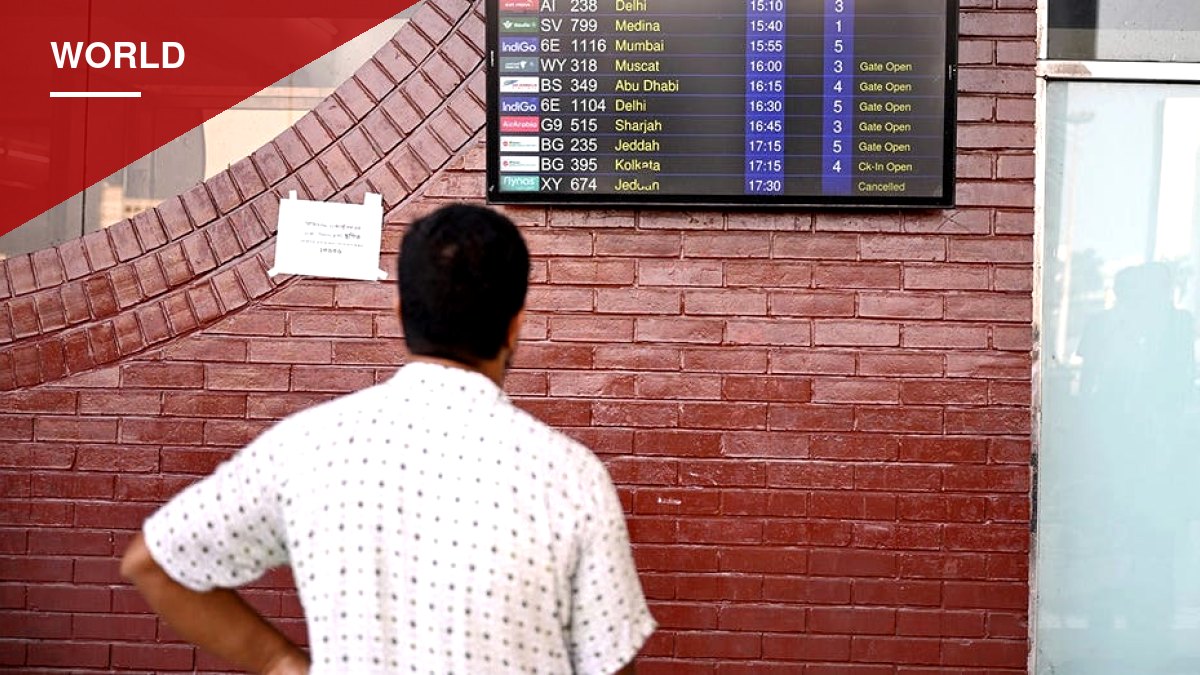

The U.S. State Department updated travel advisories on Friday for 13 Middle Eastern countries, citing the risk of armed attacks by Iranian-backed Houthi forces and other threats to Americans in the region.
Five countries — Iran, Iraq, Lebanon, Syria and Yemen — remain at Level 4, the State Department’s highest advisory level, which tells Americans not to travel there at all.
Eight other countries, including Israel, Qatar and the United Arab Emirates, are rated Level 3, meaning travelers should reconsider visiting.
Although the advisory levels themselves largely stayed the same, the department refreshed the language in all 13 advisories. Officials pointed to recent Houthi strikes, including attacks on the airport in Riyadh, Saudi Arabia, and on other critical infrastructure, which have killed civilians and disrupted travel across the region. The department warned that the fighting “have the potential to escalate rapidly beyond that immediate area.”
Beyond the threat of attacks, the advisories flag additional dangers specific to certain countries. Health risks were cited for Iraq and Yemen. Kidnapping and hostage-taking were listed as concerns in Iran, Iraq, Lebanon, Syria and Yemen. Civil unrest was named as a risk in Iran, Iraq, Israel, Lebanon, Syria and Yemen.
The State Department is urging Americans who travel to the region to enroll in its Smart Traveler Enrollment Program, which provides security alerts and updates from U.S. embassies. Travelers are also being told to keep up with local news, prepare for the possibility of sheltering in place if conditions deteriorate, and have an emergency departure plan that doesn’t depend on help from the U.S. government.
The Middle East advisories follow a string of other recent warnings from the State Department. Last week, the agency raised its advisory for Kenya from Level 2 to Level 3, citing health risks, crime, civil unrest, kidnapping and terrorism. Around the same time, officials warned Americans traveling to China about the risk of wrongful detention, electronic surveillance and exit restrictions that could prevent them from leaving the country.






You must be logged in to post a comment Login