
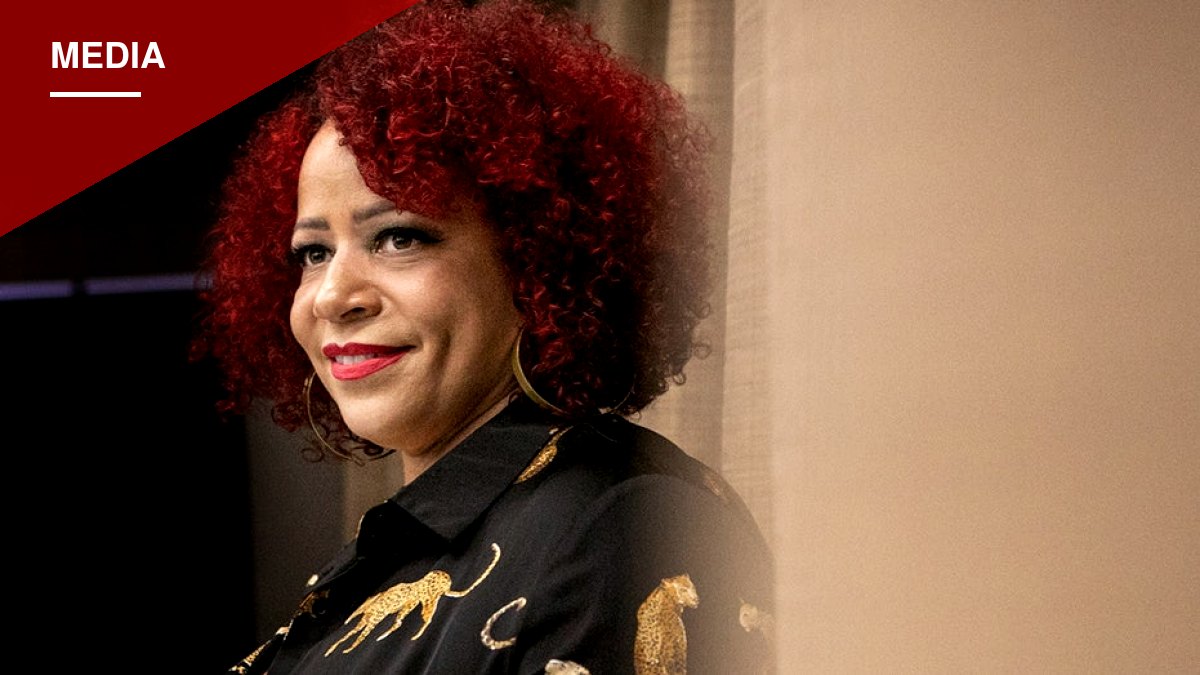

New York Times journalist Nikole Hannah-Jones said this week that the reaction to her viral essay about sending her daughter to predominantly Black public schools in New York City turned unusually harsh, describing it as “pretty brutal.”
Hannah-Jones, founder of the 1619 Project, wrote in a New York Times Magazine essay last month that she had come to regret parts of her decision to enroll her now-16-year-old daughter, Najya, in these schools as a way of pushing back against school segregation. She said her daughter later told her she had not gotten the education she wanted.
“Now I felt overcome with regret. Najya deserved better,” Hannah-Jones wrote. “They all did. But she was mine. This girl, my only child, looked to me to protect her, to give her what she needed to thrive. And I had not chosen her.”
That admission drew sharp criticism from people who argued Hannah-Jones had put her progressive beliefs ahead of her daughter’s schooling. The response was intense enough that Hannah-Jones said she briefly wondered whether she should have written the essay at all.
“I know it would sound crazy if I say none of the critique was valid, but I’m like, what is the critique?” Hannah-Jones said in an interview with The New York Times on Wednesday. “There was some online discourse that was pretty brutal. And, you know, I have experienced some brutal discourse through the years, but usually not about, like, me as a parent. That was hard. And for a minute I’m like, ‘Man, should I have written this?’ And I’ve actually never, ever, as a journalist, questioned, ‘Should I have written something?’ And there was a moment where I was just like, ‘I did not have to subject myself to this. Should I have done this?'”
Despite the backlash, Hannah-Jones said she does not regret publishing the piece.
“You know, in the end, I’m fine. I will be fine. My feelings got a little hurt because I’m a human being. But, in the end, like, people are talking about these kids who don’t have a platform, who don’t have a choice. The mayor of New York has been forced to respond. He’s now promised to release a plan to address it. That doesn’t happen without me writing a piece like this,” she said.
She added that she has to remind herself her own hurt feelings are “meaningless” compared to what she described as the responsibility of using her platform to spotlight the issue.
Fox News Digital reported that it reached out to Hannah-Jones for comment but had not heard back by the time of publication.
Corey DeAngelis, a research fellow at The Heritage Foundation and a school choice advocate, was critical of how Hannah-Jones characterized the reaction.
“Calling the backlash ‘brutal discourse’ misses the point. People reacted because she publicly used her child as a prop for a political experiment, and the results were horrible,” DeAngelis said.
He argued that school choice policies allow families to leave schools that aren’t working for their children rather than staying in place and hoping conditions improve. “School choice exists so parents can leave schools that don’t work. You don’t fix these schools by trapping more kids inside them and hoping your presence changes the system. Hannah-Jones tried that. It didn’t work. Her daughter knows it. Parents across the country already knew it. Give families the money and the freedom to leave,” DeAngelis said.





You must be logged in to post a comment Login