

The U.S. State Department has ordered some diplomatic staff and their family members out of American missions in Saudi Arabia, citing escalating attacks by Iran-backed Houthi fighters from Yemen.
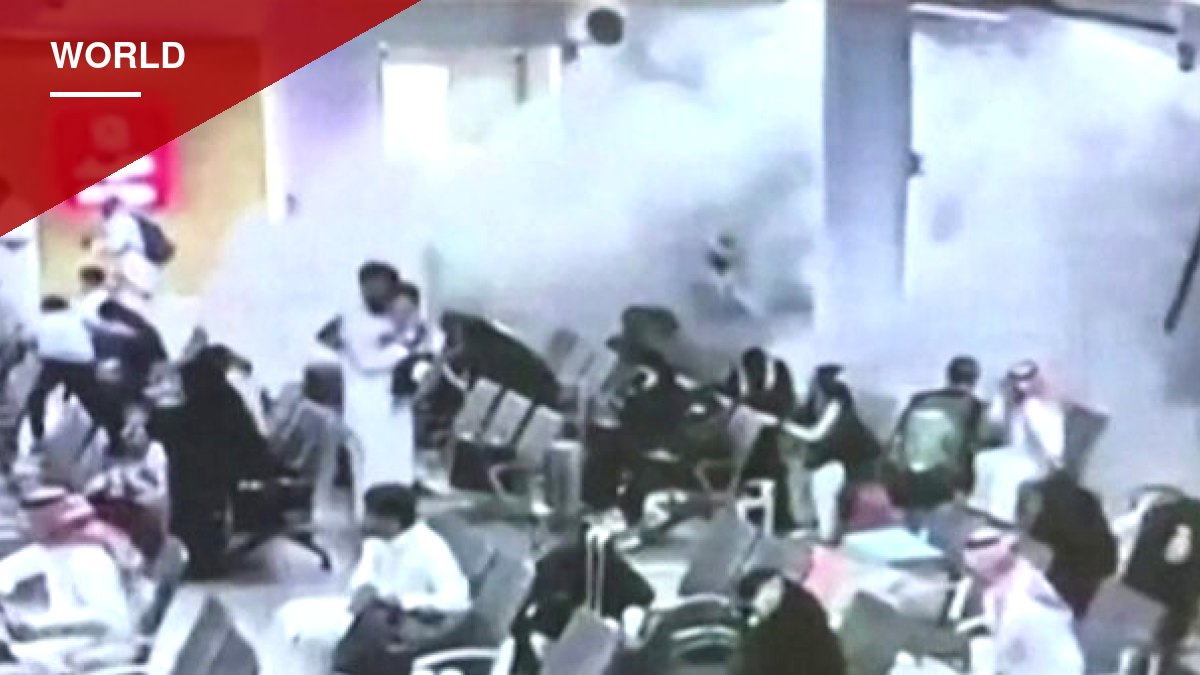
The order came as the Houthis struck King Fahd International Airport in Dammam on Wednesday night, killing two people and injuring eight others. It was the latest in a string of Houthi drone and missile strikes on Saudi civilian airports.
Saudi Arabia’s national oil company, Aramco, also evacuated staff from its headquarters in Dhahran, about ten miles from Dammam. A missile attack last week had already damaged the Aramco building, though it stayed operational, with only “nonessential” employees sent home at the time.
On Thursday, Aramco sources told Agence France-Presse that all remaining employees at the Dhahran headquarters had now been told to work from home until further notice. “There was an evacuation order issued for these staff; no specific reason was given,” one of the sources said. AFP reported that residential areas within the sprawling Aramco complex have not been evacuated or closed.
The same day, Saudi military officials said they intercepted four Houthi drones near the Muslim holy cities of Mecca and Medina. The Houthis drew widespread condemnation from the Muslim world after threatening Mecca with a drone in September, though no concrete action followed.
State Department Response
State Department spokesman Tommy Pigott confirmed Wednesday that a mandatory departure order had been issued for “non-emergency U.S. government employees and their family members” in Saudi Arabia. He denied reports that staff in other Middle Eastern countries had received similar evacuation orders ahead of potential broader conflict.
“Iranian-supported Houthis have increasingly engaged in hostilities against Saudi Arabia, including attacks on civilian airports and other critical infrastructure resulting in civilian casualties and severe travel disruptions,” Pigott said.
Farea al-Muslimi, a research fellow at Chatham House, told Fox News Digital that Saudi Arabia faces a structural disadvantage in defending against the attacks given the size of its territory and the number of vulnerable civilian sites.
“Saudi Arabia is a huge geography to protect, and this speaks to a larger threat we’re facing globally: a relatively small nonstate actor can pose a serious challenge to even a sophisticated and extremely expensive military. The Houthis can impose enormous costs without having to spend very much themselves,” he said.
Markets React
The attacks have rattled regional markets. Aramco stock slid 0.7 percent on Thursday, the Saudi National Bank lost 5.1 percent, and the Saudi benchmark index fell 2.3 percent — its biggest one-day loss in more than two years and part of the eighth-largest weekly decline in the market’s history.
Markets in the United Arab Emirates also felt the strain, with the main indexes in both Dubai and Abu Dhabi down 0.7 percent each.





You must be logged in to post a comment Login