
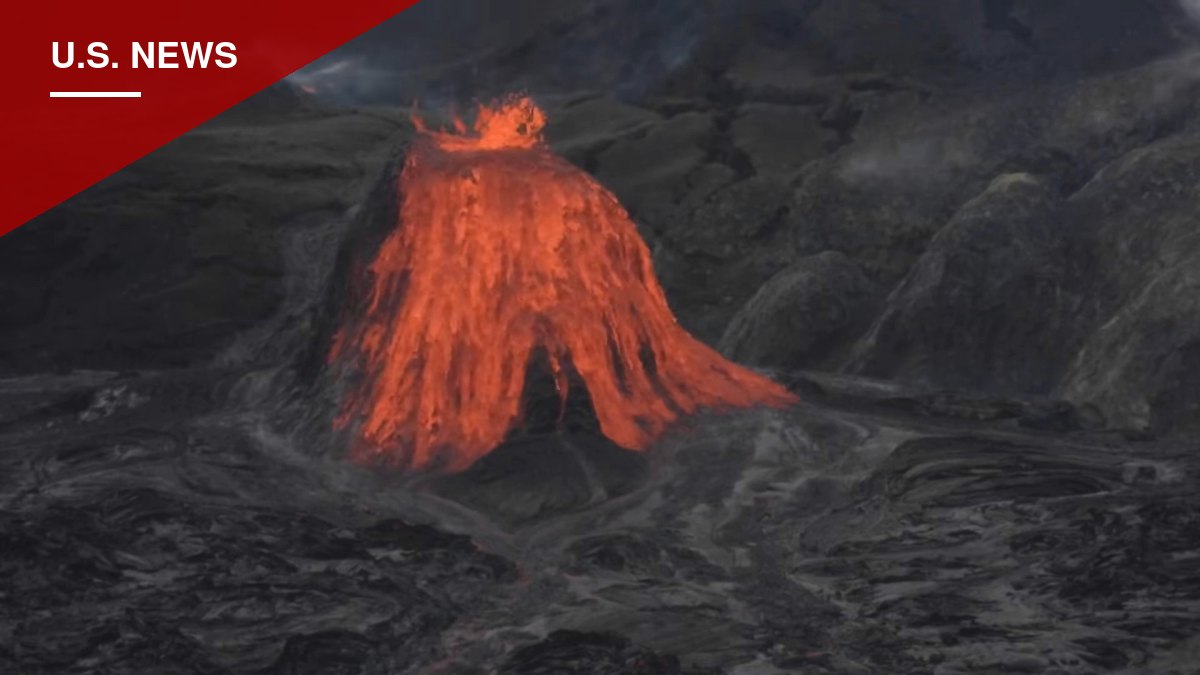

Hawaii Volcanoes National Park has closed the Halema’uma’u Trail and part of the Byron Ledge Trail after a swarm of earthquakes and rockfall risk at Kilauea’s summit, the National Park Service announced Wednesday.
The closures cover a combined 1.3 miles of trail. The National Park Service, citing the Hawaiian Volcano Observatory, says more than 200 shallow earthquakes have struck beneath Kilauea’s summit in the past week.
A magnitude-3.4 earthquake on Sept. 30 triggered small rockfalls along the caldera’s north wall, according to park officials.
The US Geological Survey issued a volcanic activity notice earlier this week reporting renewed spattering at two vents following activity beneath the summit. As of Thursday, Kilauea remained at an ORANGE aviation color code, the second-highest tier on the USGS’s four-level scale, signaling heightened volcanic activity and the possibility of an eruption.
Scientists believe an intrusion that occurred Sept. 30 to Oct. 1 produced new cracks along the caldera floor. They say they cannot predict when, or whether, the volcano’s 55th episode of lava fountaining will occur.
“Forecast windows for episode 55 fountaining can no longer be modeled due to changes in conditions,” the USGS advisory said.
Officials are also warning of other hazards tied to the recent activity, including gas emissions and small glassy volcanic fragments that can irritate skin and eyes.
“Small glassy volcanic fragments may be remobilized during windy conditions following recent eruptive episodes,” the National Park Service said. “Residents and visitors should minimize exposure to these fragments, which can cause skin and eye irritation.”
The Park Service is urging visitors to stay out of closed areas and away from cliff edges, which officials say can collapse without warning.
A volcano with a long history of activity
Kilauea is one of the world’s most active volcanoes and has erupted dozens of times since 1952, according to the USGS. Eruptive activity ran nearly continuously along its East Rift Zone from 1983 to 2018, a 35-year stretch that ended with major eruptive activity and a collapse at the summit.
Since December 2024, eruptions have intermittently continued within Halema’uma’u crater at the summit. The park has said visitor numbers tend to climb during these eruptive episodes, as tourists seek a glimpse of the activity. Hawaii Volcanoes National Park logged more than 1.8 million recreational visits in 2025, according to National Park Service data.






You must be logged in to post a comment Login