

Three years after October 7, the massacre and the immediate public reaction still matter because that reaction revealed who was willing to celebrate slaughter and who was not. This piece traces the day of the attack, the cheering that followed, the campuses and streets that kept the party going, and the political and cultural fractures those moments exposed. Read on for a clear-eyed account of what changed and why the aftermath still shapes our politics and moral choices.
On October 7 extremists from Gaza unleashed a brutal assault that murdered civilians, raped and burned families, and took hostages into tunnels. By the next day, parts of the West treated that atrocity as a cause for celebration, turning horror into a rallying cry. Those cheers mattered; they were not an accident or a misunderstanding.
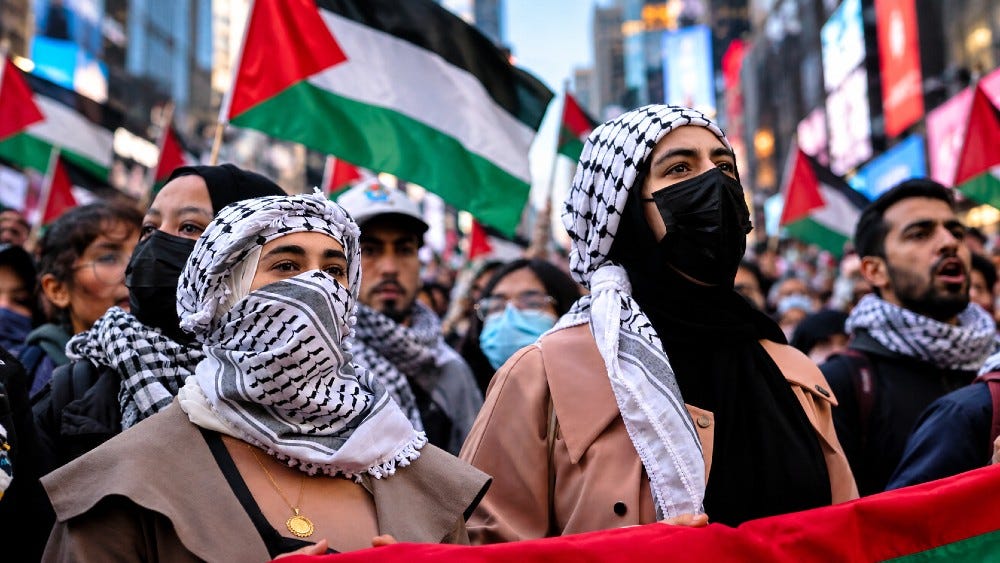
In New York City, a crowd gathered in Times Square under organized banners and cheered the violence. Speakers praised the invasion and the crowd answered with loud chants, including “Resistance is justified when people are occupied.” The performance was not a private opinion; it was a public declaration of whose side those protesters chose.
The same tone echoed overseas in places like Sydney, where fireworks marked the attacks and a speaker declared, “It’s a day of courage, it’s a day of pride, it’s a day of victory.” Large marches and symbolic gestures followed as public spaces were used to amplify approval. These events made sympathy for the attackers visible and normalized rhetoric that should have been rejected outright.
College campuses were caught up in the moment. Student groups circulated celebratory images tied to the festival massacre, and some classroom walkouts and rallies featured chants like “We are Hamas” and “From water to water, Palestine will be Arab.” Faculty statements that blamed Israel entirely for the unfolding violence added an institutional dimension to the outrage. When careers and internships were threatened, many quietly distanced themselves, but the original exhilaration had been on full display.
The claim that this is merely anti-Zionism rather than antisemitism wears thin when the rhetoric demands the end of a nation. Chants about borders and demographic changes are not policy debates; they are calls for erasure. That reality surfaces painfully when rhetoric travels from slogans into real-world harassment and violence.
Data showed the consequences. Antisemitic incidents spiked wildly in the years after the attack, with campus cases and assaults increasing. For many activists, the moment became less about human rights and more about picking an existential side. The coalition on display combined Islamists, radical left groups, and opportunistic corners of the online right into a single antagonistic force.
Religious language and old hatreds framed modern actions. Extremist groups made clear their aim was not negotiation but elimination, and the Western cheering section supplied cover and vocabulary. The result was a dangerous merger of ideology and appetite for violence that treated innocent civilians as acceptable collateral.
Politically, the reaction has widened fissures across parties and generations. Older conservatives remain strongly pro-Israel, while many younger voters and activists lean the other way. That split has become a new purity test where allegiance to Israel determines political belonging, shifting debates about borders, crime, and culture into a single litmus test.
The left also changed. What was once an argument about policy turned into a campaign of isolation for anyone who resisted the chant. Local races and party primaries began to reflect that division, and mainstream Democrats found themselves pushed aside in places where hardline anti-Israel positions gained traction. The result is a party reordering driven by a single foreign-policy question.
Allies abroad feel the strain too; diplomatic ties and old security arrangements are fraying because a vocal crowd in the street can shape national posture. When public sentiment treats a small ally as a global pariah, policy and partnership follow. The international cost of public enthusiasm for violence is immediate and real.
Faith communities are not exempt from the challenge. Scriptural warnings have been invoked to name the moral failure of celebrating murder: Woe unto them that call evil good, and good evil; that put darkness for light, and light for darkness; that put bitter for sweet, and sweet for bitter! Christians who read their Bibles have a clear choice about whether to stand with a persecuted people or to join the mob.
Violence will always tempt crowds to pick a side, and the choices made in those moments reveal deeper allegiances. The morning after the slaughter was the test, and the public cheers were the answer. For anyone who values civilization and decency, the imperative is simple: refuse to normalize the celebration of murder and defend the right of a small nation to exist free from calls for its erasure.




You must be logged in to post a comment Login