
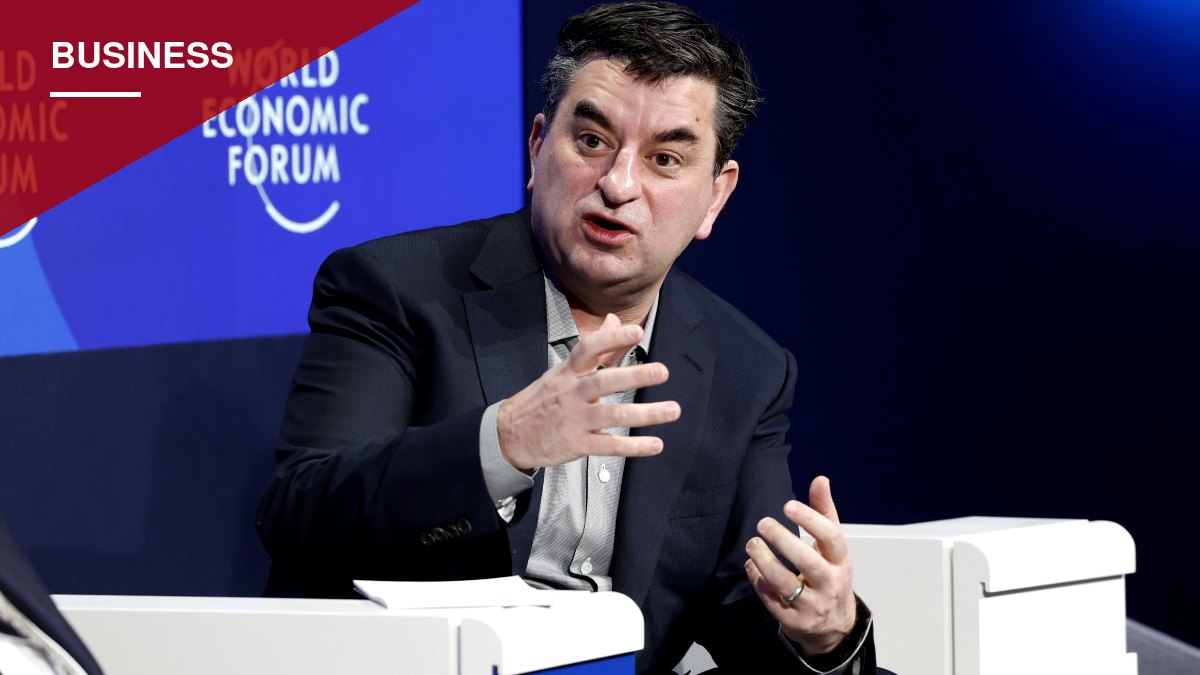

Bridgewater Associates, the Westport, Connecticut-based hedge fund founded by billionaire Ray Dalio, has been talking with policymakers in Washington from both parties about a plan to tax artificial intelligence companies and funnel the proceeds back to ordinary Americans, according to a source familiar with the discussions.
Last month, Bridgewater’s chief investment officer Greg Jensen, CEO Nir Bar Dea and other executives published an essay calling for “immediate policy action” to realize the “full potential of artificial intelligence by mitigating the risks of widespread societal disruption and catastrophic safety accidents.” The proposals have drawn attention from lawmakers on Capitol Hill, who have held informal talks with the firm about building what Bridgewater calls “citizen equity” into the AI boom.
The centerpiece of the plan is a “token tax” on AI usage. Bridgewater estimates a 35% tax could generate up to $600 billion by 2030, with the revenue used to buy shares of AI companies and distribute them to the public.
An Alternative to Universal Basic Income
The approach is pitched as a contrast to the universal basic income proposals favored by tech figures including OpenAI CEO Sam Altman and SpaceX CEO Elon Musk, under which the government would send recurring payments to every citizen. Jensen argued UBI leaves people dependent on government decisions about size and timing of payments.
“You’re still dependent on a bureaucrat deciding how much and when you get your check,” Jensen said. “If we actually distribute the equity to all citizens it once again takes the power away from the politicians to use that in ways that you might not want and it gets power directly to the citizens.”
Jensen and Bar Dea wrote that the proposals are urgent because the window to ensure everyday Americans share in AI’s gains is closing. “Absent intervention today, mitigation of that danger will become nearly impossible as diffusion of the technology accelerates and models themselves become capable of improving and acting autonomously,” they wrote.
Outside Reaction
Jeremy Bearer-Friend, an associate law professor at George Washington University, praised the idea, saying a public equity stake in AI firms could give ordinary citizens a voice in corporate decisions about safety. “Public equity could give public voice within traditional corporate governance structures on top of the needed regulation of the sector,” Bearer-Friend said. “An AI equity tax could give the public a role in boardroom decisions about public safety.” He also cautioned against any plan that would have the government buy more AI company shares with public funds.
Bridgewater argues that AI-generated work is increasingly substituting for human labor even though workers and employers still pay payroll taxes. The firm says token tax revenue could help cut taxes on human workers and support people displaced by AI, and that an Internal Revenue Service division should be created to enforce the new tax.
“I think it just is common sense that we don’t want to incentivize machine labor over human labor,” Jensen said.
Calls for Oversight of Computing Power
In separate remarks to the news site The Information, Jensen said AI companies controlling more than roughly 5% of U.S. or global computing power should face heightened regulatory scrutiny, comparable to how large banks are overseen because of their systemic importance.
“In two years, OpenAI and Anthropic are going to control 35% to 50% of the world’s compute. That’s a crazy outcome for a society to allow on something as powerful as compute,” Jensen said. “Would we let one entity control that much of some other form of energy or commodity?”
“I’m no big fan of government regulation, but if the problem’s big enough and society bears the risk, you need government regulation,” he added.
Bridgewater has acknowledged in its own writing that it would be “disproportionately subject to the taxes and regulations we recommend,” but says it is pushing the policies so that AI’s benefits can be realized over the long run. The firm has also called for regulators to conduct sworn interviews, subject to perjury penalties, of AI lab staff about safety risks in new models and the steps being taken to address them.
Cyril Gorlla, founder and CEO of the AI advisory firm CTGT, said the proposal to spread AI wealth and bolster safety oversight could help build public confidence in the technology, which in turn could fuel its growth. But he said putting a token tax into practice would be difficult. “Jensen mentions that they basically have to build a way to collect those taxes which I think is fundamentally correct,” Gorlla said, “but there is no universal metering standard with AI like you have with utilities where you can walk out and you have a meter box.”






You must be logged in to post a comment Login