
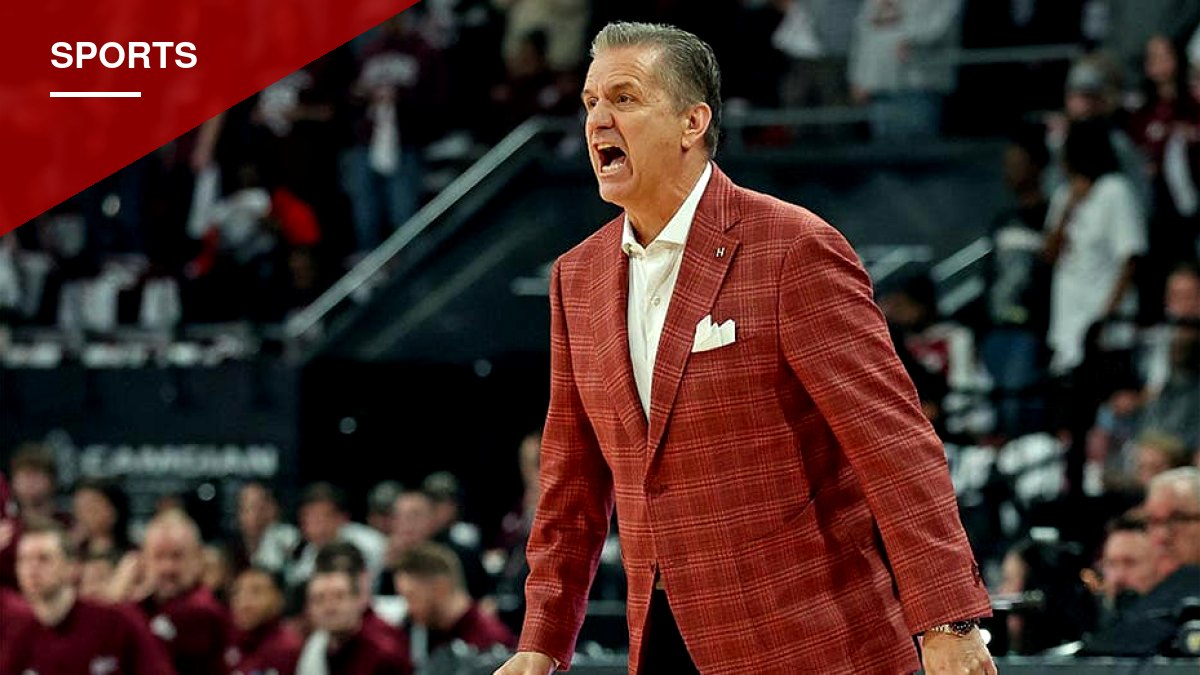

Arkansas basketball coach John Calipari said this week that nine of his players earn more money than his assistant coaches, a disclosure he made while discussing the need for new rules governing athlete pay in college sports.
“I’m gonna say this; I probably shouldn’t. Nine of my players make more than my assistants,” Calipari said Wednesday. “The other three make more than all my staff, and we are not one of the highest payers.”
Calipari, who earns roughly $8 million a season, added that coaches across the Fayetteville campus in every sport are being outpaced by the money flowing to athletes. “All the coaches on this campus in every sport make less than the rev share, which is $22 million, and it’s much less. So the players are getting more than the coaches; I just don’t understand who could be against it,” he said.
Calipari made the comments while voicing support for guardrails on how college athletes are compensated, as debate continues nationally over the structure of name, image and likeness deals, the transfer portal, and athlete eligibility.
A Senate bill aimed at the chaos
The remarks come as the Protect College Sports Act, which recently passed in the Senate, moves through the process of potentially establishing a uniform framework for NIL payments, athlete compensation, eligibility rules and the transfer portal. Supporters of the bill argue that college athletics currently operates without consistent rules, leaving schools, coaches and athletes navigating a patchwork system that varies dramatically from program to program.
Even those who agree that some kind of national standard is overdue remain divided on what athlete compensation should actually look like once that framework takes shape, a divide that spans government officials, athletic directors, coaches and the players themselves.
Reaction to Calipari’s framing
Calipari’s disclosure that nine of his specific players earn more than his assistant coaches has drawn criticism for how it frames the broader compensation debate. Critics note that fans attend games to watch the athletes compete, not to watch the coaching staff, pointing out that it is the players drawing crowds and television audiences rather than the people calling plays from the sideline.
Calipari has not publicly argued that college athletes should be paid less, a position that would put him at odds with his own roster. But his unprompted sharing of exact figures about how many players out-earn his staff has been read by some as an attempt to shift sympathy toward coaches in a compensation debate that is, at its core, about the athletes themselves.




You must be logged in to post a comment Login