
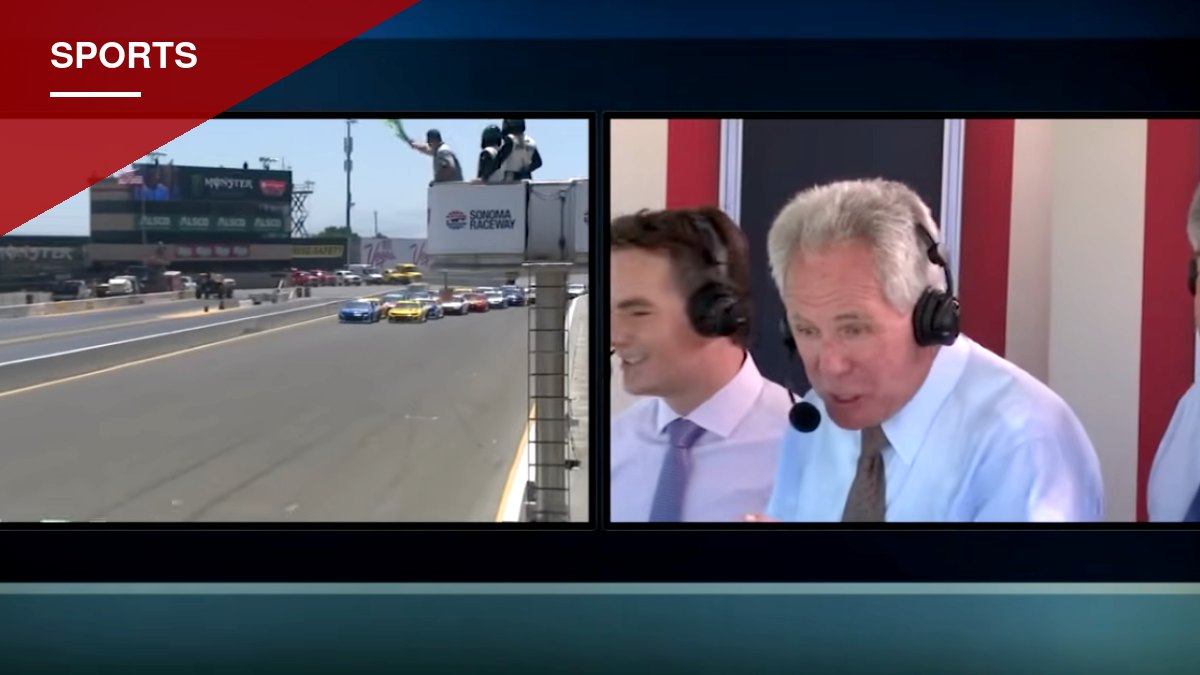

NASCAR Hall of Famer Darrell Waltrip, 79, is stepping further away from public life after his family announced he has been diagnosed with frontotemporal degeneration (FTD) complicated by possible Chronic Traumatic Encephalopathy (CTE), which the family said was likely caused by injuries from his racing career. A formal CTE diagnosis can only be confirmed through an autopsy after death.
In a statement released last week, Waltrip’s family said his disease “is currently limited to some minor noticeable symptoms,” but that he would be withdrawing further from public appearances.
Waltrip won three championships in NASCAR’s premier Cup series and 84 Cup races, ranking fifth all-time in wins. He was inducted into the NASCAR Hall of Fame in 2012 and spent nearly two decades afterward as a broadcaster for Fox Sports before retiring from that role seven years ago.
A Texas Connection to Driver Safety Concerns
Waltrip’s diagnosis lands amid a broader reckoning inside NASCAR over brain injuries and concussions, one with a direct tie to Texas. In 2022, Hendrick Motorsports driver Alex Bowman missed five races after suffering concussion-like symptoms following a crash at Texas Motor Speedway. Bowman later called it the “hardest” crash of his career.
In-car camera footage from that crash showed Bowman visibly disoriented, yet he continued racing even after telling his team over the radio, “I can’t drive the rest of the day.” The incident, which occurred during the first year of NASCAR’s redesigned Next Gen car, drew criticism over the vehicle’s stiffer frame and its role in a series of hard hits that season, including a concussion suffered by driver Kurt Busch in a July 2022 qualifying session that ultimately ended his NASCAR career.
This July, Bowman announced he will step away from racing after the 2027 season, when he will be 34. He said in his announcement that “the sport asks a lot of you, and I’ve learned it’s important to listen to your body and make the right choices for yourself.” Bowman has also dealt with a broken vertebra suffered in a 2023 sprint car race and vertigo that sidelined him for four races earlier this year.
NASCAR’s Response
Following the wave of 2022 concussion incidents, NASCAR has continued adjusting the Next Gen car. This summer, the sanctioning body announced it would weaken the front bumper used at short tracks, aiming to discourage hard contact between cars and reduce the energy transferred to drivers during collisions.
By many measures, NASCAR racing is safer today than it was when Waltrip retired as a driver after the 2000 season. Since Dale Earnhardt Sr.’s death on the final lap of the 2001 Daytona 500, no driver has died in any of NASCAR’s three national series over the past quarter-century, a stretch credited in part to head-and-neck restraints, softer walls and improved cushioning inside the cars.
Still, Waltrip’s health update serves as a fresh reminder that a safer sport is not the same as a safe one, and that the risks facing drivers, including at tracks like the one in Fort Worth, remain part of the conversation around the sport’s future.






You must be logged in to post a comment Login