
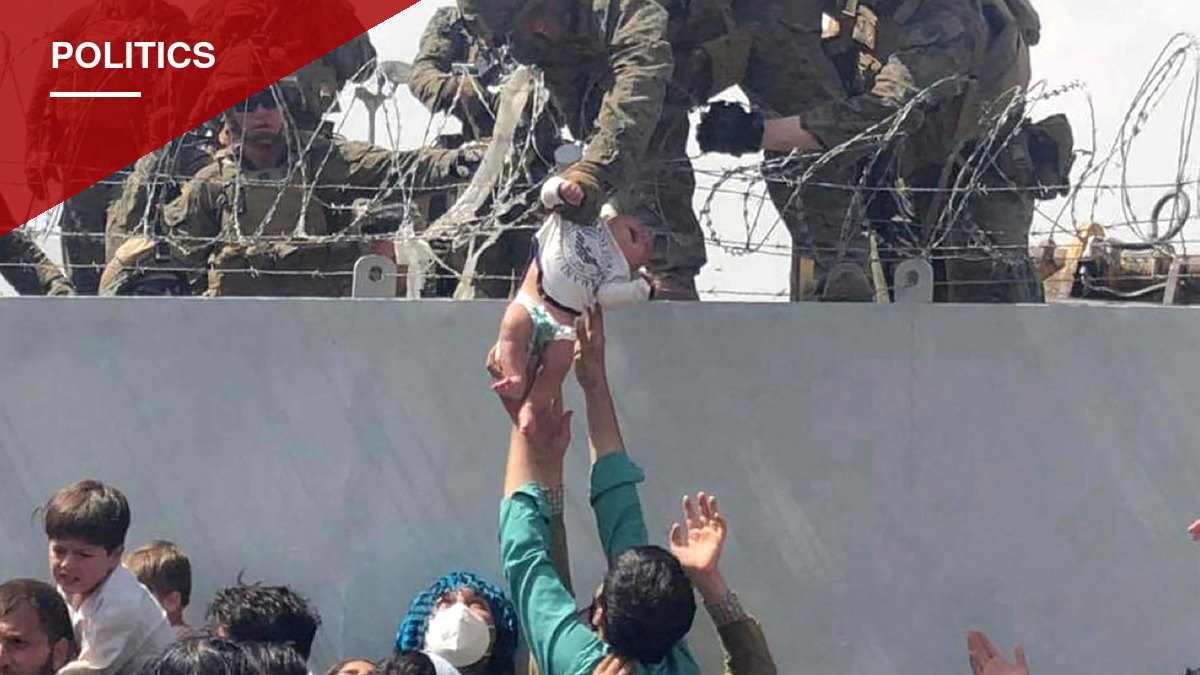

A Department of Homeland Security inspector general report released Monday found vetting errors in 40% of a sample of asylum applications filed by Afghan migrants who came to the United States after the 2021 withdrawal from Afghanistan.
Investigators reviewed 678 asylum applications submitted under Operation Allies Welcome, the program that brought more than 70,000 Afghans to the U.S. following the withdrawal. Among the files examined, the watchdog identified 303 missing aliases, 23 missing security checks, and more than 150 other documentation problems.
The report warned that these gaps could have allowed important information to slip through the cracks. “The prevalence and type of errors suggest US Citizenship and Immigration Services (USCIS) may have missed opportunities to potentially link names provided by applicants to derogatory information,” the report stated, “which in turn would compromise the integrity of alien registration file (A-File) contents that future users rely upon for immigration administration and enforcement activities.”
In two cases, missing aliases and incomplete records involved applicants who may have been inadmissible to the U.S. on terrorism-related grounds. In one, required paperwork for a potentially inadmissible applicant was missing, so a required second-level review never signed off on the case. In the other, the paperwork was present and signed by senior officials, but a checkbox indicating whether they approved or disapproved the analysis was left blank.
The inspector general noted the errors carried a wide range of consequences—from minor, since some information could be found elsewhere in the file, to potentially serious if a case was never reviewed by a USCIS supervisor.
Why the review happened
The inspector general launched the investigation after USCIS employees raised concerns that a 2023 settlement in Ahmed v. DHS required staff to process asylum claims faster than the time needed to vet them properly. The report found no clear link between that settlement and the error rate, stating: “We did not observe a statistically significant increase in error rate after the September 2023 DHS settlement agreement.”
Political backdrop
Republicans have criticized Operation Allies Welcome since its inception. The New York Post reported last November that more than 5,000 Afghans admitted through the program had been flagged for national security concerns. That same month, Rahmanullah Lakanwal, an Afghan national resettled in the U.S. under the program, allegedly shot two National Guard soldiers near the White House, killing one and severely wounding the other.
USCIS response
USCIS Director Joseph Edlow agreed with all five recommendations in the inspector general’s report but argued it did not fully account for existing safeguards. He wrote that the errors occurred “amid broader, established, and robust screening, vetting and security checks safeguards already in place that minimize the impact of these errors,” adding that the agency’s vetting procedures for asylum and refugee cases “are well-established and thorough.”




You must be logged in to post a comment Login