
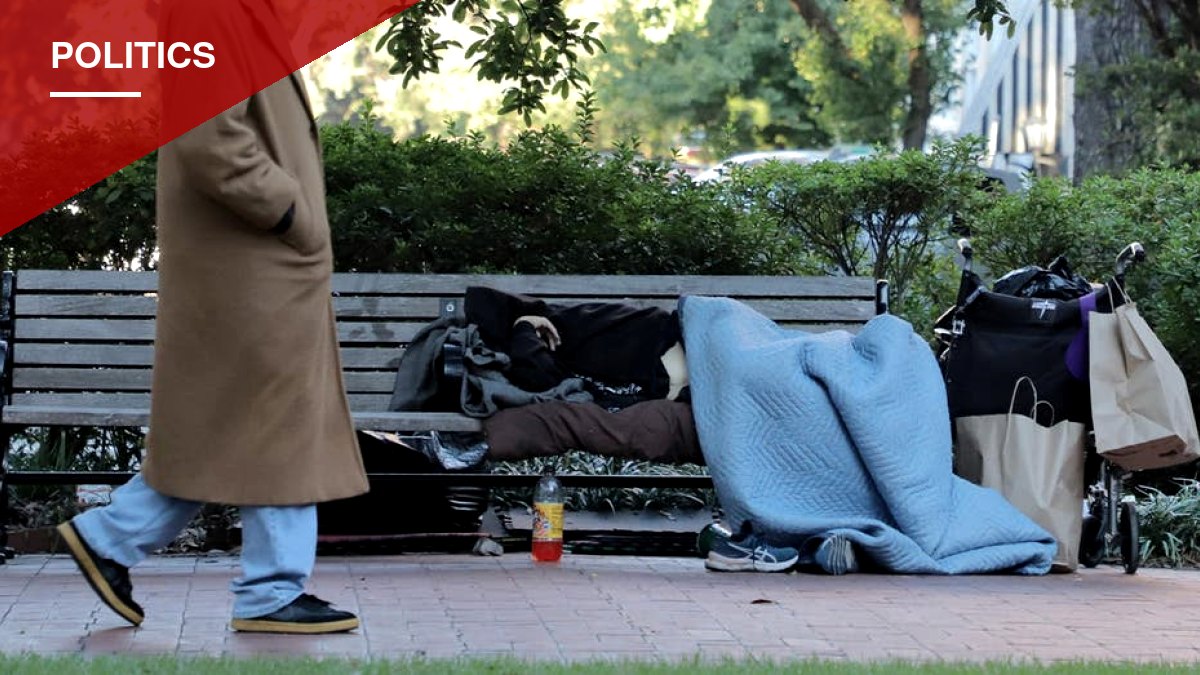

The First Circuit Court of Appeals ruled on Sept. 16 that the Department of Housing and Urban Development can proceed with a set of reforms to federal homelessness policy, following months of litigation aimed at blocking the changes. The decision allows HUD to alter how it defines success in homelessness programs and how it directs funding toward programs it says produce better outcomes.
The case and the underlying policy shift are detailed in a Fox News opinion piece by Michele Steeb, who argues that federal homelessness policy has for more than a decade emphasized permanent housing placement over recovery, employment, treatment and self-sufficiency, and that the statistics used to track progress have masked what is actually happening on the ground.
According to Steeb, the current approach traces back to 2013, when the Obama administration made “Housing First” the government’s dominant model, pledging to end homelessness within a decade by prioritizing housing placement without requiring sobriety, treatment or other conditions. Steeb writes that by 2025, despite a 151% increase in taxpayer-funded beds, homelessness had risen 27% and chronic homelessness had climbed 81%, reaching what she describes as the highest levels ever recorded.
Disputed Counting Methods
Steeb’s piece lays out several ways she says federal statistics have understated the scope of homelessness. She notes that HUD’s Point-in-Time count excludes people already living in taxpayer-funded permanent housing for homeless individuals, even though roughly 83% of HUD’s homelessness resources go toward that housing.
She also points to the treatment of “rapid rehousing,” a program offering rental assistance capped at 24 months, which HUD classifies as permanent housing — meaning families enrolled in it disappear from the official homeless count. By contrast, families in transitional housing programs, which can last up to the same 24 months, continue to be counted as homeless. Steeb notes that HUD itself attributed declines in reported family homelessness in 2018 “largely” to the shift toward rapid rehousing.
Combining the populations counted as homeless with those in subsidized housing, Steeb calculates a total of 1,456,923 Americans in 2025 who were either homeless or in taxpayer-subsidized housing — nearly double the 745,652 figure captured by the standard point-in-time count.
Children and Families
Steeb writes that one of the more significant discrepancies involves how HUD counts homeless children and families. In 2011, HUD adopted a narrower definition of homelessness than the one used by the Department of Education under the McKinney-Vento Act, which covers children living doubled up with others or in motels not funded by the government. The Department of Education counted roughly 1.5 million homeless K-12 students in the 2023-24 school year — a figure that does not include parents, younger siblings or other family members. Steeb estimates that with a household adjustment, the broader population could exceed 2.3 million people.
Because of the narrower HUD definition, Steeb argues, most homeless families are excluded from HUD’s official homelessness count and therefore do not qualify for HUD-funded assistance.
Steeb also writes that HUD has repeatedly altered its calculation of “chronic” homelessness over the past 12 years, making year-to-year comparisons difficult, though she says this year’s HUD figures show chronic homelessness 81% higher than in 2013.
With the appeals court’s ruling now allowing the reforms to move forward, HUD under the Trump administration is positioned to redefine how success is measured in federal homelessness programs — shifting emphasis, according to Steeb, from housing placement statistics toward outcomes such as recovery, employment and self-sufficiency.





You must be logged in to post a comment Login