
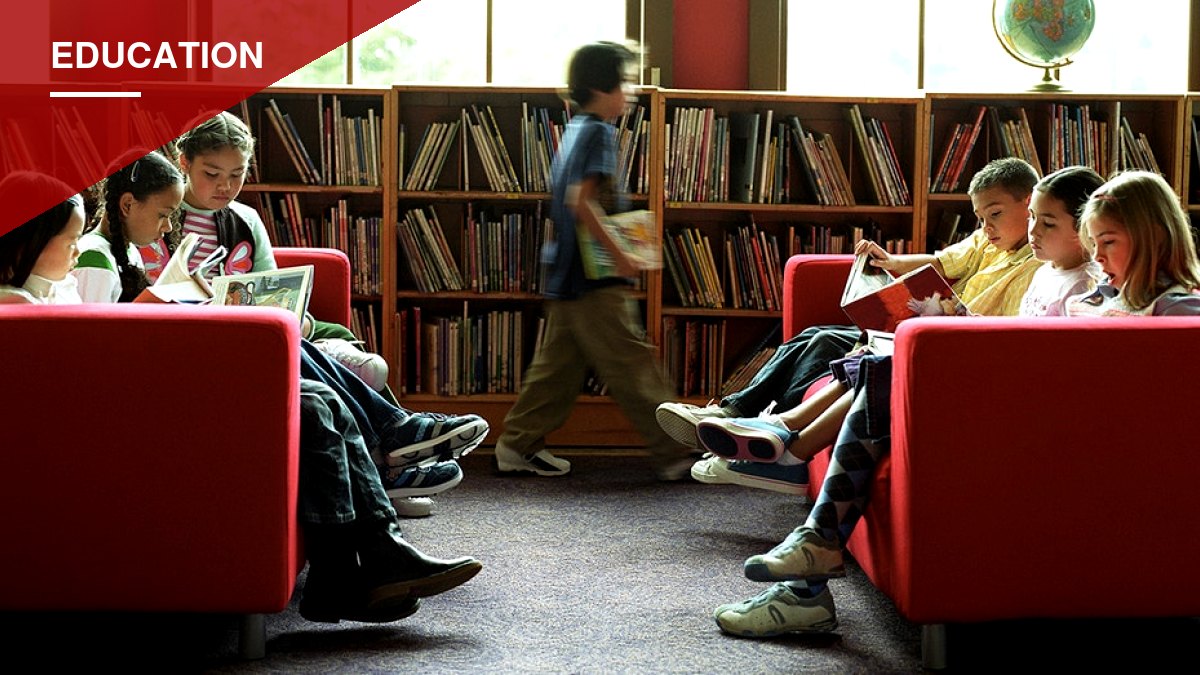

As the school year settles into routine, one education writer is urging parents and teachers to reconsider what their children are reading, arguing that traditional textbooks and screen-based lessons are failing to spark genuine curiosity in students.
In an opinion piece published by Fox News, Beth Herman, a visiting fellow at the Independent Women’s Education Freedom Center who is completing a master’s degree in Classical Education at the University of Dallas, revives the ideas of Charlotte Mason, a British education reformer who lived from 1842 to 1923. Mason’s philosophy, largely known within the American homeschooling movement, centers on what she called “living books” — works written by a single author with genuine passion for the subject, rather than material assembled by committee.
Herman writes that most textbooks used in public schools today fall into one of two categories: bland and inoffensive, or shaped by an ideological agenda. Mason, she argues, offered a better path more than a century ago.
“For the best thought the world possesses is stored in books,” Mason wrote in her work “Parents and Children.” “Children must have books, living books … the best is not too good for them; anything less than the best is not good enough.”
According to Herman, Mason believed children need ideas the way they need proper nutrition — as something essential to their growth. Living books, unlike textbooks, are meant to engage a child’s imagination and emotions rather than simply deliver facts.
What counts as a ‘living book’
Herman offers a list of recommended titles by age group. For early learners in grades one through four, she points to “The Trumpet of the Swan,” “Black Beauty,” and “A Little Princess.” For middle schoolers, she suggests “My Side of the Mountain,” “Around the World in 80 Days,” “To Kill a Mockingbird,” and C.S. Lewis’s “Narnia” series. For high schoolers, she recommends “Pride and Prejudice,” “David Copperfield,” “Through Gates of Splendor,” and the “Lord of the Rings” trilogy.
Herman argues these books challenge young readers with unfamiliar vocabulary and complex sentence structures, which she says expands children’s grasp of the English language rather than turning them away from reading. She cites E.B. White, author of “Charlotte’s Web” and “The Trumpet of the Swan,” who she notes never hesitated to use words like “radiant” and “humble” in his writing for children.
“Anyone who writes down to children is simply wasting his time,” White once said. “You have to write up, not down. Children are demanding. They are the most attentive, curious, eager, observant, sensitive, quick, and generally congenial readers on earth…. Children are game for anything. I throw them hard words and they backhand them across the net.”
Herman also points to Louisa May Alcott’s “Little Women” and Mark Twain’s “The Adventures of Huckleberry Finn” as examples that teach lessons about family, sacrifice, friendship and moral courage — themes she says are better absorbed through narrative than through textbook summaries.
She concludes by quoting Mason directly: “Education is an atmosphere, a discipline, a life.” Herman argues that reintroducing living books into classrooms and homes could restore that vision for both children and the adults teaching them.





You must be logged in to post a comment Login