
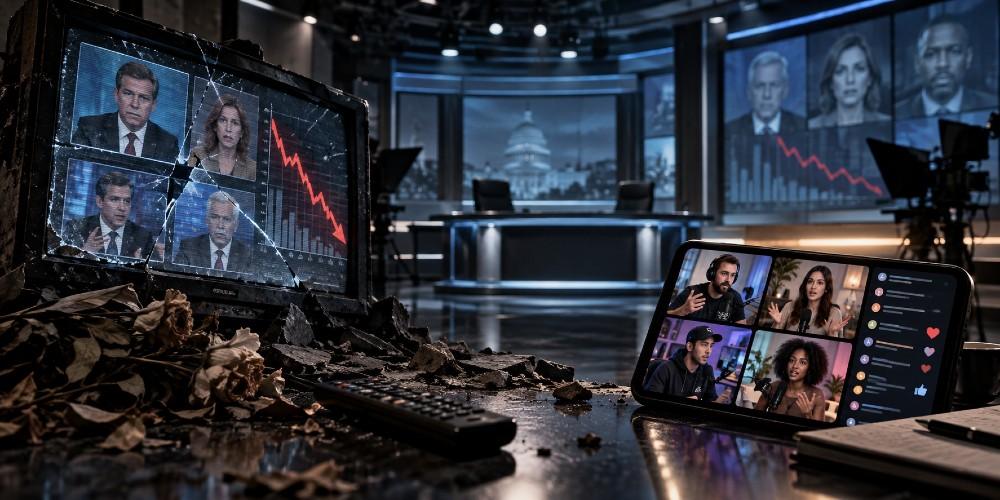

Networks act like gatekeepers while the audience has already left; trust has evaporated, the old advertising-and-boardroom model squeezed independent voices, and creators filled the gap with speed, receipts, and direct funding. This piece argues that ratings are only a symptom, corporate caution and brand safety choked honest reporting, and the public now prefers platforms and creators they can check. It also warns that independence is not an automatic virtue and that the test for any outlet or creator remains correction, money without selling the microphone, and hosting the other side long enough to hear a clash. The old cameras stay, but the country grabbed the remote and moved on.
Television still likes to talk like it owns the public square, but the public checked out years ago. What we’re seeing is not a temporary slump; it feels like a funeral where the corpse keeps trying to be the emcee. Fox leads cable, sure, but the fortress looks porous when the audience is older and less patient with two-hour blocks of managed talking points.
The deeper problem is trust. Polls show the public isn’t buying what broadcast and print outlets have been selling, and Republican distrust sits far lower than elsewhere. People remember when major narratives were presented as settled and later reversed with a shrug. Those late corrections killed credibility; viewers noticed that anchors returned to the set as if nothing had changed.
And judgment is turned away backward, and justice standeth afar off: for truth is fallen in the street, and equity cannot enter. You cannot expect a news business to survive long when the street has already judged the truth fallen and subscribers refuse to keep writing checks for spin.
Remember that legacy media is a business, not a monastery. Boards, advertisers, and brand-safety firms shape what gets said. That pressure created a predictable product: safe narratives wrapped in lawyer-approved language. Viewers learned to spot staging rather than reporting and walked away from anything that smelled like protection for donors or partners.
Brand-safety vocabularies did real damage. Once a site or show was tagged with phrases like misinformation or unsafe adjacency, advertisers quietly pulled funding. That slow withdrawal acts as a muzzle; winning ratings and settling lawsuits are not bravery, they are a pragmatic rewrite of what a public company will tolerate. The result is an industry that punishes risk and rewards cautious sameness.
The White House access dustups exposed the theater. When a pool was suspended and major networks refused to let another camera take the slot, the moment looked less like a defense of independence and more like a guild protecting credentials. The administration answered with direct streams and found an audience that no longer needed media critics to interpret every move. The public had already been decoding the playbook for a decade.
At the same time, the room actually moved. Cord cutting, streaming, and creator-led news changed how Americans consume information. Younger viewers never fully enrolled in the evening news model; they never bought a ticket to that show. Instead they listen to hosts who speak like people, publish receipts fast, and let communities enforce accountability in real time.
That speed is a real advantage. A creator can post raw video, host a reply thread, and correct course before the network finishes its makeup meeting. Communities form around that immediacy, and direct funding through memberships, Substack, Rumble, X Premium, and other platforms replaces Madison Avenue’s veto. Audiences now fund what they want to preserve, not what a brand-safety checklist permits.
But independence doesn’t guarantee honesty. A man with a ring light can lie as fluently as a man with a TelePrompTer. Outrage algorithms reward heat over verification, and some independent corners built their own unchallengeable catechisms. The core test remains: will you correct mistakes, refuse money that buys silence, and host opposing views long enough for genuine argument?
Platforms will still throttle and demonetize. Redundant hosting and direct funding are survival gear, not vanity projects. Legacy outlets can keep their cameras if they want; the country already kept the remote and moved on to voices people trust, messy truth and all.




You must be logged in to post a comment Login